
Concussions | Part 1
Your Brain on Fire: What a Concussion Actually Is (and Why the MRI Says You're Fine)

Aaron Hartman MD
July 22, 2026
Subscribe
Never miss out on new content from Dr. Hartman.

A young man in his late twenties came to see me a while back with a pile of problems that didn’t add up. Chronic fatigue. A gut that was a wreck. Some Lyme in the mix, plus the usual scattered symptoms that land people in my office after they’ve already seen four or five other doctors. We started working through it, and we kept getting stuck. Every path we went down dead-ended.
So we ran a specialized scan called a NeuroQuant, a volumetric MRI that measures the actual size of different brain structures. And there it was: signs of an old traumatic brain injury. When I asked him about it, the story came out. He’d played soccer competitively through middle school and high school. Years of headers, collisions, the occasional hard knock. A stack of small micro-concussions nobody thought twice about at the time. Those old injuries were the setup. They’re what left his brain primed so that a tick bite years later could tip him into full-blown chronic illness.
That reveal is what finally unlocked his case. And his story is not rare. It’s one of the most overlooked things I see in functional medicine, and once you understand what a concussion actually is, a lot of mystery illness stops looking so mysterious.
A Concussion Is a Spectrum, Not a Knockout
When I started my training, a concussion meant one thing: you got your lights knocked out. Loss of consciousness was the whole definition. If you didn’t go down, you didn’t have one, and you went back in the game.
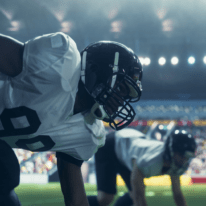
I spent a lot of that training on the sidelines at football games. A kid takes a hit, comes off buzzing and tingling, and I’d run the checks. What play did you just run? He couldn’t tell me. Count backwards from a hundred by sevens? Couldn’t do the math. His brain was clearly rattled, so we’d hold him out until he got back to “normal,” then send him back in. We now know that last part was probably the wrong call. But that buzzing kid who couldn’t subtract had a brain injury right in front of me, and nobody was calling it a concussion.
A traumatic brain injury is an external force to the head that disrupts normal brain function. That’s the event. A concussion is the description of what that injury does to you afterward, the altered brain function that follows. And you don’t have to lose consciousness to have one. Confusion counts. So does dizziness, a headache that won’t quit, blurred vision, a mood that’s suddenly off, sleep that stops working. I use the words concussion and traumatic brain injury more or less interchangeably, because in real life they sit on one continuous spectrum.
That spectrum is wider than most people think. At the mild end is the little bonk on the head that makes you dizzy for a minute. Keep going and you reach chronic traumatic encephalopathy, CTE. If you saw the Will Smith movie Concussion, you already know the shape of it: the boxing and football worlds, repeated hits over a career, and men who ended up with serious mood disorders, some of them suicidal. It’s the same category of injury at both ends, running from trivial to life-destroying.
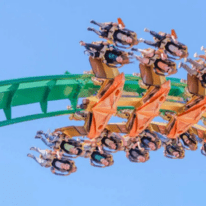
And the events that put you on that spectrum are more ordinary than you’d guess. I had a patient, an executive in her thirties, who developed a concussion from riding a rollercoaster here in Richmond, at Kings Dominion. That particular ride became known for it and eventually got shut down. She didn’t hit her head on anything. The G-forces alone, the violent acceleration and deceleration, were enough to injure a susceptible brain. I had another patient who was at Home Depot looking at cabinets, stood up, and cracked the back of her head on an open cabinet door. That was it. That was the whole event. She had post-concussive syndrome for the next three months.
There’s one more corner of this spectrum most people never connect. A physical hit to the brain and nervous system can light up the same stress and trauma pathways that emotional trauma does. The brain doesn’t file “I got hit” and “I got overwhelmed” in separate drawers. Keep that in your back pocket. It matters more than it sounds like it should.
It isn’t only the one big hit that counts, either. The small ones stack up. They put G-force meters in football helmets and found the average linebacker takes around twenty micro-concussions in a single Friday-night game. Twenty. In one night. That’s why US youth soccer changed the rules and won’t let young kids head the ball (I think the cutoff is twelve; none of my kids played, so don’t quote me), because a young brain is more susceptible and those repeated little jolts add up. A childhood of headers, a decade of getting your bell rung, and none of it ever felt like an injury worth mentioning.
And this is the part that actually changes how I work. Someone comes to me doing basically fine, and then something small tips them over. A tick bite. A mold exposure. A stomach bug, the flu, COVID. And the illness that follows is way out of proportion to the trigger. Their story doesn’t quite add up. What I’ve learned to look for is the setup underneath: years of small brain injuries nobody counted, quietly priming the system, so a minor hit to a leaky gut and a leaky brain uncovers what was already there. Find the old injury and the story finally makes sense.
The Injury That Doesn’t Show Up as an Injury
You can have a real, significant brain injury and a completely normal scan.
When I trained, our first worry after a head injury was always a brain bleed. Someone comes in after a car accident or a bad hit on the field, you rush them for a CT scan, because a CT is the fastest way to catch bleeding in the skull. And that’s still the right call in an emergency. But when the CT comes back clean, the patient gets told they’re fine. Even an MRI, which is a much more detailed picture, will usually look 100% normal. It isn’t built to pick up the small, diffuse changes a concussion leaves behind.
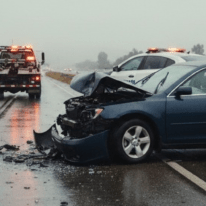
So you can walk out of the ER with a normal scan and a wrecked brain. Both things are true at the same time. The reason comes down to a distinction we use in this world: primary versus secondary injury.
- The primary injury is the direct mechanical damage, the moment of impact itself. The car accident, the cabinet door, the header. That’s the part everyone pays attention to, and often it’s minor.
- The secondary injury is what happens next: an inflammatory process that unfolds in the hours and days (and sometimes years) after the hit. That’s where the science is, and it’s where the illness lives.
And that secondary process is why the symptoms scatter so far from the head. You can’t do math anymore. Your focus is shot. Your sleep falls apart, your mood swings, your guts are wrecked with diarrhea or constipation. I’ve even had patients whose skin flared after a concussion, because every brain injury tends to give you a leaky brain and a leaky gut at the same time, and that gut inflammation runs straight to the skin through the gut-skin axis. One injury, in one organ, radiating out into the whole body. Conventional workups almost never account for that.
“Every brain injury tends to give you a leaky brain and a leaky gut at the same time, and that gut inflammation runs straight to the skin through the gut-skin axis. One injury, in one organ, radiating out into the whole body.”
What’s Actually Happening in the Tissue
Let me take you inside the injury, because once you see the chemistry, the rest of this series makes sense.
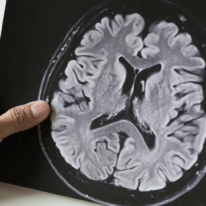
You take a hit. The mechanical force disrupts your blood-brain barrier and rattles the integrity of your cell walls and membranes. That kicks off chaos in your electrolytes: potassium, magnesium, calcium, all thrown out of balance. A receptor called the NMDA receptor gets over-excited. Potassium floods out of your cells, calcium floods in, and thousands of neurons fire off at once. All of them, together, in a burst.
Hold onto that image, because I’ll come back to it.
What comes next is an energy crisis. Your mitochondria (the little engines inside every cell that produce your energy) run on those same electrolyte gradients. When the ion balance goes haywire, the mitochondria can’t make energy properly, and your brain’s glucose metabolism goes into overdrive trying to compensate. The injury has become a metabolic problem, centered on energy and blood sugar.
This is where the story stops being only about the head. Some of the worst concussion cases I’ve treated were diabetics with uncontrolled blood sugar. Their terrain was already inflamed and metabolically stressed, so the same hit that another person might shrug off turned into a serious, drawn-out injury. It runs the other direction too: a brain injury can nudge your blood sugar, your insulin, and your A1C upward, so that what looks like new-onset metabolic trouble is actually a downstream effect of the concussion.
Meanwhile the axons, the long fibers that carry signals between your neurons, take a beating and start to break down. Blood flow to the injured areas drops. And the whole mess releases inflammatory messengers called cytokines, interleukin-1 and TNF-alpha, the same family of molecules you heard about during COVID with the phrase “cytokine storm.” I had about a month of anxiety after my own bout of COVID, and I could measure those markers in my blood. That was my brain on fire.

That’s the phrase that fits. Your brain is inflamed, and inflammation begets inflammation. Once you have the spark and the right conditions around it, a small injury can behave like a match dropped in a dry field. In most people the fire burns out. In some, it doesn’t turn off, and that’s how a minor hit becomes a chronic, years-long illness.
And this is what ties an old injury to a present-day illness. An injured patch of brain doesn’t just spike and settle. It can flip from burning hot metabolically to running cold, and then stay stuck in that low gear for years. It’s quiet. You don’t notice it. Then a second hit lands, or a third, and the dormant patch flares right back up. So the soccer injury from twenty years ago isn’t ancient history the body filed away. It’s a pilot light left burning, waiting for the next thing to feed it.
A Concussion Looks a Lot Like a Tiny Seizure
Now back to that image I told you to hold: thousands of neurons firing off at once.
In 2002, researchers looked at the EEGs of people right after a concussion. An EEG measures your brain’s electrical activity through little sensors on the scalp. What they found stopped me cold, and I think it’ll do the same for a lot of y’all. The brainwave pattern after a concussion looked like the pattern you see in someone right after a generalized seizure.
Wow.
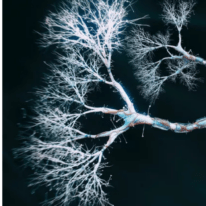
Line up the aftermath of a concussion against the aftermath of a seizure. Concussion: loss of consciousness, amnesia, confusion, the autonomic disturbances anyone familiar with POTS or dysautonomia will recognize. The postictal state, that foggy disoriented stretch right after a seizure, brings the same wobble. They look like the same thing. The theory is that a concussion sets off a brief, seizure-like electrical storm in the brain, and the symptoms that follow are your brain recovering from that storm.
That changes how you treat the injury. If a concussion behaves electrically like a miniature seizure, then the things that calm that kind of neuronal chaos start to matter: magnesium, omega-3 fatty acids, settling down the gut so it isn’t feeding inflammation upward. We’ll get deep into treatment later in this series, but the mechanism is the reason those tools belong in the conversation at all.
I saw this play out recently with a friend’s daughter. Car accident, post-concussive symptoms dragging on for days. Remember that NMDA receptor firing off at the moment of injury? One of the direct treatments for that kind of excitotoxicity is IV magnesium, which most people can’t easily get. But a flotation float tank and a magnesium bath aim at the same target, and floats are in most cities now. She did that, and her inflammation calmed down fast. A small story, but it’s the shape of the whole thing: understand the mechanism, and even simple tools start to make sense.
Severity Isn’t Set by the Force. It’s Set by the Terrain.
Here’s the idea that ties this whole series together.
How badly a concussion hurts you isn’t mainly about how hard you got hit.

Think about professional boxers. These are people taking thousands of full-force blows to the head over a career. Then think about my patient who tapped her head on a cabinet door at Home Depot and spent six months with post-concussive syndrome. If severity tracked force, that would make no sense. So what’s the difference?
It’s the milieu. The internal environment the injury lands in. Is your omega-3 to omega-6 balance off from years of processed, inflammatory fats? Is your gut already inflamed? Is your vitamin D low? Have you had mold exposure? Is there an old Epstein-Barr infection simmering in the background? Every one of those makes the ground more flammable, so the same spark does more damage and burns longer.
This is the thread you’ll see running through everything that follows, and it’s the same thread that runs through the rest of my work. A concussion isn’t a special, isolated category of illness. It’s another trigger of the exact inflammatory and immune cascade I see set off by mold, by chronic infections, by gut dysfunction, by autoimmunity. Different match, same fire. The head injury is one more way to light it.
A Silent Epidemic Hiding in Plain Sight
Once you see concussion this way, the scale of it gets hard to ignore. The CDC counts about 1.7 million traumatic brain injuries in the United States every year, with 275,000 hospitalizations. But that’s the old, narrow definition, the lights-knocked-out version. Use the broader one I’ve been describing, the one that includes the cabinet door and the rollercoaster and every one of those Friday-night micro-hits, and the real number is almost certainly five or ten times higher.

Look at who’s exposed. Around 38 million kids and adolescents play organized sports in this country, and about 170 million adults do some kind of physical activity, plenty of it involving the fast acceleration and deceleration that can rattle a brain. The most vulnerable ages are 15 to 17, the aggressive adolescent years, and 0 to 4, when little kids are falling and knocking their heads constantly. It runs higher in males than females, which fits, since males tend toward the rougher sports and the bigger risks.
And it reaches into corners nobody thinks about. I see a lot of women who ride horses. Ask one how many times she’s been thrown, kicked, or stepped on and you’ll lose count. My next-door neighbor had a horse break her foot, saw the on-call ortho, and was back out putting up pasture fences the next day, because in her words, someone’s got to do the work. That’s the mindset. You walk it off, and a decade of those falls never once gets logged as a head injury.
So here’s where it lands: this injury is common and serious, and it’s invisible to the way we normally look. It won’t show up on the scan, it doesn’t fit the old definition, and most of the time nobody even thinks to ask about it.
Which means the first move, the thing that unlocked that young soccer player’s case after everything else had dead-ended, is simply knowing to look. That’s not a small thing. For a lot of people carrying years of symptoms that never added up, knowing this injury exists and knowing it can hide is the beginning of the way out.
Your body was made to heal. Most of the time it just needs someone to find what’s in the way.
This is the first piece in a series on concussion and brain injury. Next, we’ll get into the symptoms almost nobody connects to a head injury: the gut problems, the palpitations, the hormone shifts, the mood changes, and the anatomy that wires one injury to your whole body.
If you want this kind of thinking in your corner, the parts of your health story that conventional workups skip right past, that’s what I write about in our newsletter. It’s where I keep teaching people how to find the root cause instead of chasing symptoms, and how to work with a body that was built to heal.
Subscribe to the Made for Health newsletter here. You don’t have to figure this out alone.