
Chronic Lyme
Why the Tick Bite Is Rarely the Whole Story

Aaron Hartman MD
January 14, 2026
Subscribe
Never miss out on new content from Dr. Hartman.
 In December of 2025, the U.S. Department of Health and Human Services convened clinicians, researchers, and patients to discuss Lyme disease diagnostics and clinical needs. The focus of that roundtable wasn’t politics. It was reality.
Specifically, the reality that Lyme disease is often missed, misunderstood, and inadequately treated, and that a significant number of people continue to suffer long after standard care is complete.
For many of us working with complex chronic illness, this recognition is overdue.
 Lyme disease is not rare. It is not simple. And for a growing number of patients, it is not resolved by a single course of antibiotics. If you’ve followed our work for any length of time, you know this is something we’ve been saying for years.
So when Lyme disease finally starts being discussed openly as a complex, persistent, multi-system condition, it’s worth slowing down and asking a deeper question:
Why does Lyme become chronic in the first place?
A Conversation That Needed to Happen
Recently, I sat down with Veronica De La Torre, PA-C , a clinician who works extensively with patients dealing with Lyme disease and other complex, chronic conditions. Our conversation spanned several hours and, like most real clinical discussions, it didn’t move in a straight line.
It circled. It doubled back. It touched on immune dysfunction, toxins, nervous system stress, co-infections, and the long road many patients walk before anyone connects the dots.
That meandering wasn’t accidental. It reflects the nature of Lyme itself.
As Veronica put it early in our discussion:
Most people think Lyme is about a tick bite and a bacteria. But by the time patients get to us, Lyme is rarely the only problem they’re dealing with.
That sentence alone explains why so many patients feel dismissed or confused. They’re not wrong about their symptoms. They’re just operating within a model that’s too small.
Why the Tick Bite Is Rarely the Whole Story
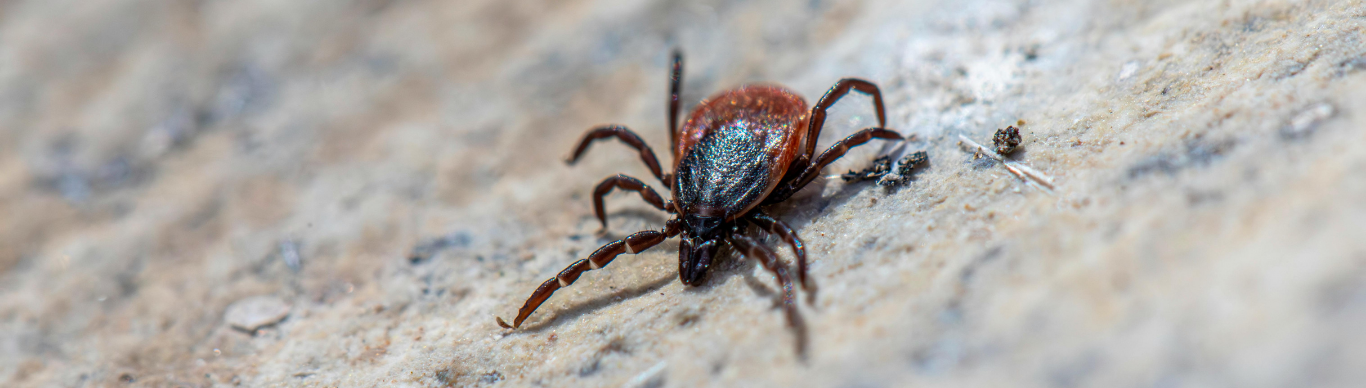 Lyme disease does begin with an infection. That matters. But focusing exclusively on the moment of infection misses what actually determines long-term outcome.
In clinical practice, what matters most is terrain: The total physiological environment the infection enters.
Two people can have the same exposure and very different outcomes. One recovers quickly. The other develops years of fatigue, pain, cognitive symptoms, and immune dysfunction.
That difference is rarely explained by the bacteria alone.
As Veronica explained:
By the time someone is chronically ill, we’re looking at immune suppression, toxin burden, often mold exposure, sometimes multiple co-infections, and a nervous system that’s been under stress for a long time.
This isn’t fringe thinking. It’s pattern recognition.
And it aligns with what national conversations are now acknowledging: current diagnostics and treatment pathways often fail to account for the complexity of real patients.
When Symptoms Don’t Match the Simple Model
One of the most consistent frustrations we see is this: patients who did everything they were told to do and still didn’t get better.
 They took antibiotics.
They followed instructions.
Their labs may even look “normal.”
And yet, they still feel unwell.
That doesn’t mean Lyme is “all in their head.” It means the body has adapted into a chronic stress state that doesn’t automatically resolve when the initial infection is treated.
Veronica described this clearly:
We see people who technically treated the infection, but their immune system never re-regulated. The body stays in defense mode.
This is where Lyme starts to look less like an acute infection and more like a systems problem.
Co-Infections, Toxins, and the Load the Body Carries
Another theme that came up repeatedly in our conversation was how rarely Lyme shows up alone.



Patients often carry:
- co-infections like Bartonella or Babesia
- environmental toxin exposure
- mold-related illness
- gut dysbiosis
- mitochondrial dysfunction
Any one of these can strain the immune system. Together, they can overwhelm it.
As Veronica noted:
If you don’t address the total load the body is carrying, you can chase infections forever and never get traction.
This is exactly what we discussed earlier this month in The 3 Types of Stress. Lyme fits squarely into biochemical stress, but it almost always overlaps with physical and emotional stress as well.
That overlap matters.
Why Antibiotics Alone Often Fall Short

Antibiotics can be helpful. They can reduce bacterial burden. They are not useless.
But antibiotics do not:
- dismantle biofilms
- repair immune signaling
- restore detox pathways
- calm a chronically activated nervous system
Which means that for many patients, antibiotics are necessary but insufficient.
As Veronica put it:
We’re not anti-antibiotic. We’re anti-oversimplification.
That distinction is important. We’ll discuss this in greater detail in the next article.
Lyme as a Model for Modern Chronic Illness
One of the reasons Lyme disease generates so much controversy is because it exposes cracks in our healthcare model.



Lyme behaves like many other chronic conditions:
- symptoms fluctuate
- tests don’t always correlate with suffering
- patients are told conflicting stories
- care becomes fragmented
In that sense, Lyme is not an outlier. It’s a case study.
It forces us to ask better questions about immune resilience, environmental load, nervous system regulation, and recovery capacity.
And that’s why the national conversation is finally shifting.
What This Reframing Makes Possible
 If chronic Lyme is not just a lingering infection, but a systems-level condition, then recovery requires a different approach.
Not more intensity … or protocols … or blame.
But better sequencing. Better load reduction. Better understanding of what the body is responding to.
That’s where functional medicine has something meaningful to contribute.
Closing
Lyme disease may begin with a tick bite.
 But chronic Lyme is shaped by everything that comes after.
The immune system.
The environment.
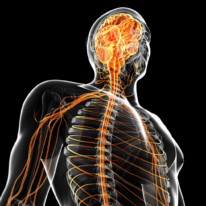
The nervous system.
The stress the body has been carrying for years, often unnoticed.
Understanding that doesn’t complicate healing.
It finally makes it possible.