Medical Blindspots | Part 1
How Often Is Modern Medicine Wrong?
The Pattern No One Wants to Talk About

Aaron Hartman MD
April 22, 2026

Subscribe
Never miss out on new content from Dr. Hartman.
There’s a saying that medicine progresses one funeral at a time.
It’s a dark joke, but it points at something real. Physicians who challenge accepted practice don’t usually get celebrated. They get marginalized. Sometimes worse.
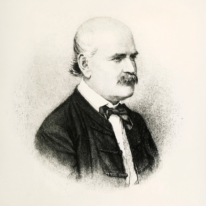
Ignaz Semmelweis, the Hungarian doctor who figured out that physicians were killing women in childbirth by delivering babies without washing their hands after performing autopsies, lost his career over it. He was eventually jailed and beaten. He died from the same infection he’d spent years trying to prevent. That was the 1840s.
The last frontal lobotomy for mental illness was performed in France in 1991.
These aren’t cautionary tales from a primitive past. They’re data points in a pattern, one that keeps running in every era, including this one. The healthcare system doesn’t just make mistakes. It normalizes them, defends them, and delays correction for decades, sometimes longer. And when correction finally comes, it gets reframed as progress rather than acknowledgment of harm.
But it’s not enough to look back and say “can you believe we used to do that?”
The harder question is: “what are we doing right now that we’ll be saying that about in 20 years?”
That’s what this article is about.
What a Medical Blind Spot Actually Is

A blind spot isn’t a mistake at the margins. It’s a belief the system holds as correct, defends as correct, and in many cases punishes people for contradicting (often long after the evidence suggests otherwise).
The distinction that matters is duration. Individual errors happen in every field. Blind spots persist. They persist because the system is structured in ways that make correction slow and costly: legal risk discourages deviation from accepted standards of care, institutional incentives reward diagnostic confidence over diagnostic humility, and reversals are reputationally expensive for the people who would have to make them.
Put simply, we’ve gotten things so wrong, so many times, that if we’ve done it this badly in the past, we’re almost certainly doing it now.
The Historical Record

I opened with Semmelweis because it’s almost impossible to believe. Physicians performing autopsies in the basement… then walking upstairs to deliver babies without washing their hands. A 25% maternal mortality rate. A colleague who identified the cause, proposed a solution, watched it work… and was jailed for the suggestion. He died from the same infection he’d been trying to prevent.
But Semmelweis isn’t the anomaly. He’s the template.
Frontal lobotomies
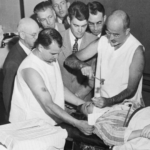
Surgical removal of portions of the brain was mainstream treatment for mental illness well into the 20th century. Jack Nicholson’s character receives one in One Flew Over the Cuckoo’s Nest. Not as horror-movie invention, but as an accurate depiction of standard practice. The last frontal lobotomy performed in Europe for mental health purposes was in France. In 1991.
Smoking

This one took more than 50 years and over 7,000 research articles before the U.S. Surgeon General formally stated that smoking causes cancer. In the 1950s, physicians appeared in cigarette advertisements. Marlboros, Lucky Strikes, Camels. Doctors endorsed them by name. By the early 1970s, the American Medical Association was still calling the smoking-cancer link “controversial” and calling for more research. At that point, the AMA had received $20 million in research funding from Philip Morris. The Surgeon General’s definitive statement came in 1982 or 1983.
What these three examples share isn’t ignorance. It’s structure. In each case, contradictory evidence existed. In each case, the same institutional forces kept the incorrect belief in place long after it should have fallen: hierarchy, legal exposure, financial interest, professional reputation.
It’s Not Just History
The same pattern shows up in recent memory, in areas most people alive today were personally affected by.
Dietary Fat

For roughly half a century, fat was the dietary villain at the center of American health policy. The 1977 food pyramid put it at the top as something to avoid. Physicians repeated it. Public health campaigns built on it. Meanwhile, basic biochemistry had always been clear: cholesterol is essential to cell membrane structure. Omega-3 and omega-6 fatty acids are called “essential” because the body cannot function without them. Physicians and researchers who said so publicly were dismissed, sometimes professionally penalized.
The U.S. food pyramid was officially reversed in January 2026. The science didn’t change. The institutional willingness to acknowledge it finally did.
Hormone Replacement Therapy (HRT)

In 2002, the Women’s Health Initiative published a study linking hormone replacement therapy to increased breast cancer risk, strokes, and blood clotting. The findings triggered a mass withdrawal from HRT. A black box warning was issued. Within weeks, physicians were already raising questions about the study design: it used an older smoking population, relied on oral conjugated equine estrogen (derived from horse urine), and used synthetic progestins already known in lab research to cause tumors in rats. Blood levels weren’t monitored. The methodology had significant problems.
None of that mattered. The horse was out of the barn. Women were scared, physicians didn’t want to get sued, and the warning stood for 23 years. It was removed in November 2025.
In that window, an estimated 140,000 – 160,000 women may have died prematurely from lack of access to HRT. Between 40 and 70 million women were undertreated. We now know that hormone replacement therapy can reduce cardiovascular disease risk in women by up to 50% and dementia risk by up to 38%. If a woman on HRT is diagnosed with breast cancer, it is less likely to be invasive.
We got that wrong for almost a quarter of a century.
Medical Error Is a Blind Spot Too

When I was in medical school, I was taught that iatrogenesis (harm caused by medical treatment) was the fifth leading cause of death in the United States. That’s still a significant number. But a study published in the British Medical Journal by Marty Makary, drawing on Medicare data from Massachusetts General Hospital, found that in that population alone, medical error appears to be the third leading cause of death. Expand the population beyond Medicare patients and the number could be higher. It may be first or second.
The reason this stays invisible is partly structural. Aviation has an anonymous near-miss reporting system: a pilot reports a close call, gets full exoneration, and the incident feeds into a database that the whole industry learns from. Medicine has no equivalent. Malpractice exposure, institutional reputation, and professional culture work against the kind of honest accounting that would make the problem visible and correctable.
We can’t fix what we won’t measure.
The Pattern Is Running Right Now
History doesn’t repeat itself, but it rhymes. The same structural forces that kept handwashing controversial and smoking “unproven” are visible in conditions being contested today.
Vaping

Medical societies were recommending vaping as a smoking cessation tool as recently as a few years ago. Fifteen years into widespread use, we’re seeing popcorn lung, a type of chemical emphysema previously associated with factory workers inhaling powdered butter, appearing in people in their thirties. Cerebral atrophy is showing up in young users. When I raised concerns about this publicly, the response was immediate: I was called a fake doctor, a charlatan. The science wasn’t the issue. The pushback was.
Lyme disease

When I moved back to Richmond after leaving the military in 2007, I called my local infectious disease doctor about a patient with a positive Western blot. The response: we don’t take Lyme disease consults. It doesn’t exist in central Virginia. I remember thinking: how can you say it doesn’t exist if you literally refuse to see it? The federal government now recognizes that more cases of Lyme disease occur in this country every year than breast cancer. State medical boards are still threatening physician licenses over antibiotic treatment protocols.
“I remember thinking: how can you say it doesn’t exist if you literally refuse to see it?”
Long COVID

I saw my first Long COVID case in May 2020. At that point, naming it could get you in serious trouble: canceled online, flagged by your medical board, labeled anti-science. It is now fully recognized, actively researched, and linked to both neurological and cardiovascular consequences in a significant percentage of those infected. Six years ago, it didn’t officially exist.
What to Do With This

The point of all this isn’t guilt. It’s not to shame medicine or dismiss it. I’ve practiced for decades and I believe in what it can do. The point is orientation.
If the system has produced this pattern repeatedly, across centuries and specialties and conditions, it is producing it right now. The errors aren’t distributed randomly. They cluster around conditions that are hard to measure, populations with less institutional power, and treatments that threaten existing financial or professional structures. Knowing that changes how you engage.
As a patient, that means asking questions. It means not taking the absence of a diagnosis as evidence that nothing is wrong. It means understanding that the expert in the room has been trained inside a system with a documented history of getting things badly wrong. The most educated, most credentialed physicians have sometimes been the last ones to correct course.
You have to be an advocate for yourself. You have to be educated. Read. Learn your body. Know yourself. Be engaged with your health.
Half of all published clinical research findings are later found to be false. That’s not a fringe statistic. That’s the current medical literature’s own accounting of itself.
The next article in this series looks at what happens at the patient level when medicine encounters something it can’t explain. The pattern has a name, and most people who’ve spent time in the healthcare system have experienced it firsthand.
Discover the full story behind Dr. Hartman’s methods.
His new book, UnCURABLE: From Hopeless Diagnosis to Defying All Odds, reveals the principles that helped thousands of patients — and his own daughter — heal when the system had no answers.