
What If Some Alzheimer’s Begins as Lyme Disease?
A new case study challenges which direction the causal arrow points

Aaron Hartman MD
September 2, 2026
Subscribe
Never miss out on new content from Dr. Hartman.

A 67-year-old woman had been dealing with joint pain for fifteen years. It moved around (a detail I’ll come back to). Knees mostly, sometimes hips and shoulders. She’d had several embedded tick bites over the years and a rash that got diagnosed and treated.
Her doctor ran a blood test called p-tau217. It came back at 0.33 picograms per milliliter. Normal is under 0.15.
P-tau217 is currently the most sensitive and specific blood marker we have for Alzheimer’s pathology. Hers was more than double the threshold.
She then took a nine-week course of oral antibiotics. Two to three months after finishing, her p-tau217 was retested. It came back at 0.12. Normal range.
Nobody gave her an Alzheimer’s drug. Her doctor treated a chronic infection.
So if treating Lyme disease moved an Alzheimer’s biomarker, what exactly was that biomarker measuring?
One more detail, because it closes off the easiest way to dismiss this. Her APOE status was 3/3. That’s low genetic risk for Alzheimer’s. Whatever was pushing her p-tau217 to twice the normal limit, it wasn’t her genes.

The Case Study
That case was published this past April in the Journal of Alzheimer’s Disease Reports. The physician behind it is Dr. Richard Horowitz, probably the top Lyme expert in the world, and if you’ve been reading my work for a while, you’ve met him before.
Dr. Horowitz is a board-certified internist and medical director of the Hudson Valley Healing Arts Center in New York. He’s a founding member and past president of ILADS. For over four decades, he’s treated upwards of 13,000 patients with Lyme and other tick-borne illness, and he wrote Why Can’t I Get Better?, which has been on my recommended reading list for years. I consider him the most knowledgeable person alive on this disease.
I sat down with him again in August. Our first conversation, back in 2024, walked through his sixteen-point MSIDS model and how it applies to Lyme, long COVID, and mold. That interview covered ground I mostly knew, and most of it is in my overview of how we diagnose and treat Lyme.
This one didn’t. He’d started in on the numbers before we were even recording, and once we had the microphones on I asked him to go back and say all of it again, because it was a bit mind-blowing for me.
A 2025 analysis in Nature Medicine put the lifetime risk of dementia for adults over 55 at around 42%. Four out of ten. And nowhere in that paper did anyone ask why.
Then he told me what he had published.
“It was the first ever time in the world we proved that there’s a direct relationship between Borrelia burgdorferi and Alzheimer’s in a live human being.”
That’s a big claim. He also told me why he thinks it worked.
“Because the spirochete was driving amyloid production and driving phosphorylated tau.”
That sentence is the reason I wanted this conversation on the record. It reverses the direction everything else in Alzheimer’s medicine assumes.
The Alzheimer’s story we tell starts downstream
Here’s the sequence most people encounter.
Someone starts having memory trouble. Testing shows Alzheimer’s-associated changes, elevated phosphorylated tau, an abnormal amyloid ratio, sometimes imaging that confirms plaque. So treatment targets those abnormalities, and right now that mostly means the anti-amyloid drugs, lecanemab and donanemab.
Dr. Horowitz’s objection isn’t only that those drugs underperform, though he thinks they do. He pointed me to the Cochrane review of the literature, which he characterized this way: “the amyloid’s coming down, but we’re really not seeing a big difference in people’s symptoms.”
His objection runs deeper than efficacy.
“We’ve gotten into this problem in medicine where we’re naming diseases [and then] throwing drugs at them. It’s too late. You’ve got to get to the root causes of why so many people are sick.”
That made me think of a detail I’ve experienced in my practice.
P-tau217 and the amyloid 42/40 ratio became available through Quest around the beginning of last year. That’s recent. And notice the order in which they arrived. The anti-amyloid drugs came first. The blood test came second. A test gives you a way to justify the drug. Run it, find an elevated number, and now that person is on the drug pathway.
I’d been using p-tau217 anyway, as a risk screen, because it correlates strongly with cerebrospinal fluid levels and it’s a lot easier to get than a spinal tap. Somebody comes in worried about their memory, I can give them real information.
I didn’t think about it being a marker for potential Lyme. That never occurred to me. Which means every elevated p-tau217 I’d looked at, I’d interpreted as an answer rather than as a question. That’s the opposite of how I try to use testing everywhere else in my practice.
Finding a biomarker is not the same thing as finding its cause.
Your brain makes amyloid for a reason
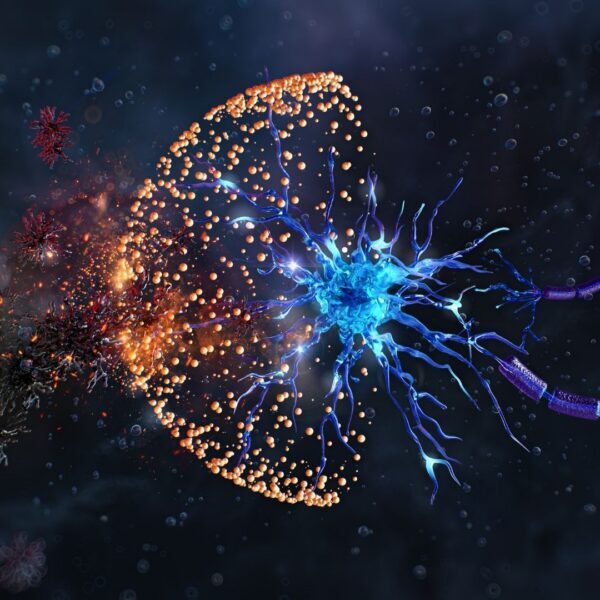
Beta amyloid has antimicrobial properties. That’s established, and it’s been established for a while. It’s a peptide that fights pathogens.
Dr. Horowitz put it plainly: “Beta amyloid just doesn’t show up in your brain for no good reason. It shows up when you have infections. Your brain is actually trying to protect your neurons.”
That changes what the plaque is.
The conventional read is that amyloid accumulates, amyloid is toxic, therefore remove the amyloid. If amyloid is part of an immune response, the read changes. Something may be provoking amyloid production. What’s provoking it?
My own reasoning had gotten stuck one step short of that, and the correction happened in real time while we were recording.
I’ve been working through the lectures from last year’s A4M conference, and one of them made the case that beta amyloid is essentially a byproduct of oxidative stress, which means an elevated amyloid marker is telling you something about depleted glutathione inside the brain. The therapeutic implication is direct. Use a glutathione precursor that crosses the blood-brain barrier, gamma-glutamylcysteine, and address the oxidative stress.
I found that convincing. It’s mechanistically sound and actionable.
But Dr. Horowitz pushed me one step further upstream. Fine, the oxidative stress is real. Why is it happening? What if there’s an organism in the brain generating it?
And sitting there on the recording I thought, wait a second. If I run a beta amyloid 42/40 and a p-tau and they come back elevated, that person probably does have low glutathione. But the issue is, do they have a brain infection that I need to start treating … rather than just giving them this glutathione precursor?
I’d almost say CNS Lyme. Neuro Lyme. An infection in the nervous system driving oxidative stress, which drives beta amyloid.
I changed my interpretation on the spot. Not the biochemistry, which I still think is right. The order of operations.
The Lyme connection isn’t new. Seeing it in a living patient is.
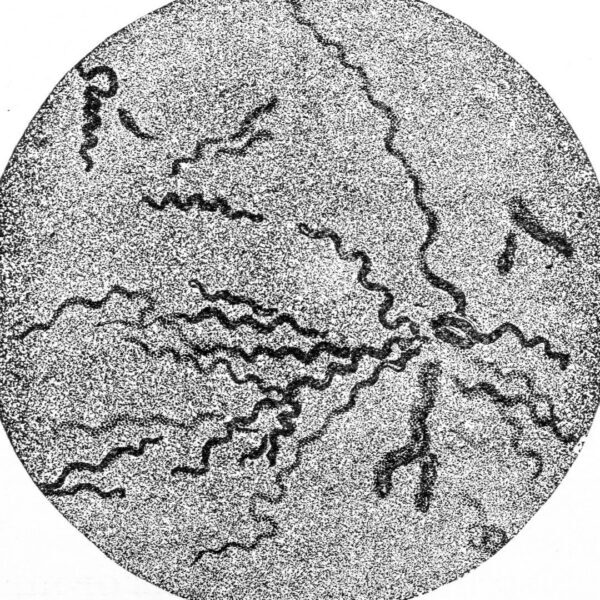
None of what Dr. Horowitz is arguing about spirochetes and dementia is a new idea. He’s blunt about that: “Spirochetes have been talked about like syphilis as a relationship with dementia for a century. This is not new material.”
He’s right, and syphilis is the precedent that matters here. General paresis, the dementia of late-stage syphilis, was one of the most common causes of institutionalization in the psychiatric hospitals of the early twentieth century. A spirochete infects the brain and, years later, cognition falls apart. We’ve known that since before we had antibiotics.
Borrelia burgdorferi, the organism that causes Lyme disease, is also a spirochete.
I’d heard about this before he brought it up. I wrote about it myself two years ago, in a piece on the six types of Alzheimer’s. Lyme sits in there under what Dale Bredesen calls Type 3, the toxic type, alongside heavy metals and mold. I cited a study showing that up to 80% of Alzheimer’s patients had a spirochetal infection in the brain, which could have been oral organisms rather than Lyme.
So the association wasn’t news to me. But I had it filed as one item on a list of contributors. What Dr. Horowitz did was go test it.
Researchers have been finding spirochetes in the brains of Alzheimer’s patients for decades. Lyme spirochetes. Oral Treponema from periodontal disease. Others. They turn up alongside beta amyloid, alongside phosphorylated tau, alongside biofilm, inside the plaques themselves.
Going back through the literature for this, the numbers are sharper than the one I’d cited. A meta-analysis of case-controlled studies found more than a tenfold increased occurrence of Alzheimer’s disease where spirochetal infection was detectable. In Miklossy’s analysis of Alzheimer’s brain tissue, spirochetes of some kind turned up in over 90% of cases. Borrelia burgdorferi itself was in the brain in 25.3% of them. Thirteen times the rate in controls.
So why hasn’t this been front-page medicine for thirty years?
Two reasons. The first is that all of it was autopsy. You find the organism in the brain of someone who has died with Alzheimer’s, and you’ve established an association. You haven’t established direction. Maybe the spirochete drove the pathology. Maybe a failing brain with a compromised blood-brain barrier is easier for organisms to colonize. From a slide of postmortem tissue, you can’t tell.
The second reason is the one Dr. Horowitz names. “Because of the dysfunctional medical politics surrounding Lyme disease. Otherwise, I believe the Alzheimer’s-Lyme connection would have been made a long time ago.” I’ve written about how that history got so tangled before.
The clinically decisive question, the one autopsy studies structurally cannot answer, is whether treating the infection changes the Alzheimer’s-associated biology in someone who’s still alive.
As Dr. Horowitz says of the underlying idea, the infection-amyloid-tau hypothesis: “This has been a hypothesis in Alzheimer’s for decades. But it’s been just that.”
What the published case reports
Here’s the case as the paper reports it. The patient had chronic Lyme disease with documented exposure to four co-infections: Ehrlichia, Babesia, Bartonella, and Coxiella burnetii, the organism behind Q fever. Her Lyme immunoblots stayed positive across fifteen years, her immune system still recognizing Borrelia-specific proteins long after she’d been treated. That persistence is itself the finding Dr. Horowitz has spent decades arguing about.
And the joint pain that moved around, the detail I opened with, is why anyone thought to test her for Lyme in the first place. Migratory pain is one of the few findings in medicine that genuinely narrows the field. I’ll take that up properly in a later article, because it deserves more than a paragraph.
She had been treated, repeatedly. Here I need to correct the record. In our conversation, Dr. Horowitz described her as never having taken antibiotics, and I think that’s how he holds the case in his head, but the published record shows otherwise. Over those fifteen years she received doxycycline, hydroxychloroquine, atovaquone/proguanil, cefdinir, rifampin, and multiple herbal protocols. She’d had a lot of treatment.
What she’d never received was a regimen aimed at the biofilm and persister forms of the organism. That distinction is the entire argument.
Her labs before treatment: p-tau217 elevated at 0.33 against a threshold of 0.15. P-tau181 normal. Amyloid 42/40 ratio normal, at 0.185 against a floor of 0.170. Rheumatoid factor elevated at 20, indicating ongoing inflammation somewhere in the body. APOE 3/3, low genetic risk.
She took nine weeks of double-dose dapsone combination therapy, which is Dr. Horowitz’s published persister protocol. I’m going to write about that protocol in detail in a separate article, because it deserves the room and because it’s where most of the clinical controversy lives. For now, it’s an oral regimen built from generic drugs and designed to reach organisms that standard antibiotics don’t.
Labs drawn 2–3 months after she finished:
- P-tau217: 0.12. Down from 0.33, and inside the normal range. Not just reduced. Normalized.
- Amyloid 42/40 ratio: 0.216, up from 0.185. Worth noticing that this number started out normal and improved anyway.
- Rheumatoid factor: 12, down from 20, normal for the first time in years.

And then the part I keep thinking about. She hadn’t complained of cognitive problems going in. She’d credited her daily meditation practice for her focus, and she was satisfied with it. After the protocol, she described concentration and recall that arrived faster and cleaner than before, and used the words “immediate, accurate concentration, insight and memory recall.” She’d assumed her meditation was finally paying off. Then she saw her p-tau numbers and made the connection herself.
She didn’t know what she’d lost until it came back.
How far this goes
We need to be careful. This is exactly the kind of finding that gets oversold.
It’s not evidence that Dr. Horowitz has found the cause of Alzheimer’s disease. It’s not evidence that treating Lyme reverses Alzheimer’s. It’s still only one patient.
This finding is narrower and to my mind more interesting. It’s a published demonstration that an Alzheimer’s-associated biomarker moved substantially when the intervention targeted a chronic infection rather than the pathology itself.
Dr. Horowitz draws a harder conclusion than I might from the same data: “It proves that Lyme is a persistent infection. There’s no other reason it would’ve worked.”
I’d say it more cautiously. But I’d also point out one sentence in his paper that ought to bother anyone reading this. Current guidelines from the Infectious Diseases Society of America, the American Academy of Neurology, and the American College of Rheumatology do not recommend routine Lyme testing in patients with dementia.
Given a tenfold association in the literature, that’s a strange place for medicine to have landed. It isn’t the only place I’d say that about.
Lyme is one driver among several
If the takeaway here were “Alzheimer’s is really Lyme disease,” this would be a worse article and a worse idea. But that isn’t Dr. Horowitz’s position. He thinks somewhere between 30–40% of people currently being diagnosed with Alzheimer’s dementia may turn out to have what he calls Lyme-MSIDS or Bartonella-MSIDS. That’s his clinical estimate from four decades of practice, not a finding from a study. He’d say the same.
His actual model is multifactorial. Lyme is one inflammatory driver among several: Bartonella, mold toxins, heavy metals, viral reactivation, microbiome disruption, mitochondrial dysfunction. Multiple pressures converging on neuroinflammation in the same brain. It’s why the tick bite is rarely the whole story. I’ve written about that framework at length in our first conversation about the MSIDS model, so I won’t rebuild it here.
I trained through the Institute for Functional Medicine and learned their model. Afrin has his. Dr. Horowitz worked out something similar on his own and then separated it into sixteen systems. I’ve taken all of it and put it together, because you have to treat people as individuals. You’re functional. No, you’re integrative. No, you’re chronic Lyme. It’s all one big soup.
The second case in Dr. Horowitz’s paper makes the point better than the framework does.
A 58-year-old woman, also with chronic Lyme, also with a history of Babesia and Bartonella, completed the same protocol. Afterward, her Alzheimer’s biomarkers were entirely normal. P-tau181 normal, p-tau217 normal, amyloid ratio normal, neurofilament light normal.
She still had cognitive symptoms.
The sixteen-point workup found high levels of mold toxins, ochratoxins and trichothecenes both above range, plus prior West Nile virus exposure. Clean biomarkers, ongoing problems, a different driver upstream.
Dr. Horowitz also notes something that ties these two cases together: “The dapsone protocol does not work as well when mold is there.” Mold and Lyme both suppress immune function, and roughly 90% of his chronically ill Lyme patients now test positive for environmental toxins like mold.
I’ve watched this play out in my own office. A woman came to me after working for about a year with a well-known Lyme clinic in DC that puts most of its patients on IV ceftriaxone. She’d done the year. She wasn’t any better.
Come to find out she had mold. She was hypermobile, had POTS and dysautonomia, all of which are on Dr. Horowitz’s list. I told her I wasn’t going to give her more Amox, because she’d already failed that. So we went after the mold instead, and over about two years I got to watch her Lyme titers normalize on their own.
The mold was the reason she couldn’t clear the infection. Nobody had looked for it.
That sequence turns out to be common enough that Dr. Jenski and I have devoted a whole article to it. The short version is that the environmental exposure comes first, wears the immune system down over years, and the infection surfaces only after the immune system stops holding it in check. Which means the infection you find is sometimes the last domino rather than the first.
Chronic infection is one upstream process among several that can end in the same pathology. It’s the one we’ve built a system around not looking for.
This changes the order of operations
Dr. Horowitz now recommends running Alzheimer’s biomarkers on his Lyme patients. Amyloid 42/40, p-tau181, p-tau217, neurofilament light, GFAP, and APOE to establish genetic risk. His observation from doing it: “Half of my Lyme patients were showing up with these inflammatory markers in the brain.”
Half.
He asked me directly, on the recording, to start checking these before and after treatment in my own patients. I’m going to.
This isn’t as much of a leap for me as it might sound. In the autoimmune world we already know that to develop an autoimmune disease you need about four things lined up, and one of them is a chronic infection of some sort. So when somebody comes into my office with Hashimoto’s, or rheumatoid arthritis, or inflammatory bowel disease, I’m routinely checking infection markers, and Lyme is one of them. Dr. Horowitz is asking me to do for an Alzheimer’s biomarker what I already do for a positive antibody.

I’m deliberately not turning this into a list of labs to go request. These markers mean very little without clinical context and somebody who knows what to do with them.
And there’s a sequencing problem underneath all of this. It’s like an onion. You’ve got to know which layers to peel at what point in time.
When an Alzheimer’s biomarker comes back elevated, the conventional question is how we reduce the pathology.
Dr. Horowitz would add a second question: Why is this person’s brain producing it?
That’s not a rejection of the first question. It’s a claim about sequence.
I raised one more thing with him, and this part is speculation on my part rather than established fact.
If beta amyloid is serving a defensive function, and you use a drug to strip it out of a brain that still has an active infection in it, what happens? You’ve removed a protective response while leaving the thing it was responding to.
I asked because of the side effect profile of these drugs. In the TRAILBLAZER-ALZ program, amyloid-related imaging abnormalities, meaning brain swelling or bleeding, occurred in 37% of donanemab-treated patients against 14.2% on placebo. Across the phase 3 trials of the three anti-amyloid antibodies, the range runs from about 21–44%. Most cases are picked up on routine imaging and don’t cause symptoms, but this is not a small number, and it’s occasionally fatal.
My question was whether some of that could be the predictable consequence of removing an antimicrobial peptide from an infected brain. If you strip out the protection, these people are more prone to inflammation from the infections that are still in there. We’ve recognized the side effect for years. And yet we push the drugs anyway, because in our conventional thinking that’s all we have.
I asked him whether that was a plausible way to connect those dots, or whether I was reaching. Dr. Horowitz didn’t take the easy route with it, and his answer was better than my question.
He doesn’t think the anti-amyloid drugs are bad. He thinks they may be badly sequenced. His view is that lecanemab and donanemab might prove considerably more useful after infections, mold, and other inflammatory drivers have been identified and addressed. Clear the thing that’s driving amyloid production, then clear the amyloid. “First you have to figure out, is there an active infection that’s driving beta amyloid and p-tau.” And then, on the drugs themselves: “They might just work a lot better than they’re working right now.”
There’s a mechanistic wrinkle that complicates Dr. Horowitz’s story, and he was quick to point it out himself. Dapsone, the anchor drug in his protocol, is an NLRP3 inflammasome inhibitor with good penetration into the central nervous system.
NLRP3 is not a new name to me. When COVID started, one of the first things the Institute for Functional Medicine began talking about was the association between NLRP3 and acute COVID. Same pathway, different disease, and now it turns up again here. NLRP3 is an inflammatory pathway that both amyloid and tau can trigger. Which means dapsone may lower brain inflammation independently of whether it’s killing anything.
There’s a Korean study he cites on this, a fifteen-year cohort of 3,035 leprosy patients where those receiving dapsone had significantly lower rates of Alzheimer’s disease. Nobody knows whether those patients had Borrelia.
And here Dr. Horowitz argues against his own interest, which is why I trust him. In his paper he says outright that he has no evidence Borrelia activated NLRP3 in his patient, that he can’t rule out dapsone’s anti-inflammatory effect as the whole explanation, and that the Korean study is a historical cohort prone to confounding and can’t prove causation.
He may have improved her brain by killing an organism. He may have improved it by lowering inflammation through a completely different mechanism. One case can’t distinguish those.
What one case can’t settle
Now the argument against all of this.
P-tau217 hasn’t proven to be a reliable stand-in for how a patient does.
A Neurology editorial published in late 2025 laid this out. In a phase 2 trial, donanemab reduced plasma p-tau217 by nearly 30% relative to placebo with no correlation to change in clinical function. Worse, a tau aggregation inhibitor called ceprograstat reduced p-tau217 by as much as 71% while cognition worsened by as much as 58%. The marker went the right direction. The patients went the wrong one.
So a normalized p-tau217 in one patient isn’t a cure. It’s a reason to run the study.
The comparison that made the rounds when Dr. Horowitz’s paper came out, that the anti-amyloid drugs lower p-tau217 by 23% while his protocol lowered it 63%, needs a footnote. The 23% figure is real, from donanemab in TRAILBLAZER-ALZ, but it’s measured at 76 weeks, roughly eighteen months, not the six or seven years the number sometimes gets attached to. And Dr. Horowitz’s nine weeks refers to the protocol length, with the labs drawn two to three months after it ended.
The case study still comes out ahead of the drugs on that measure, so there’s no reason to pad the margin.
What would settle this is a trial.
Dr. Horowitz applied to the NIH for an R34 grant to run a multicenter randomized placebo-controlled trial. A quarter of a million dollars, which in the context of Alzheimer’s research is a rounding error.
It was declined. The reviewers’ reasoning, as he describes it, was that Lyme disease is not a persistent infection.
Which was the proposition the study existed to test.

The arrow became unstable
The model we’ve been working from runs one direction.
Amyloid and tau, therefore Alzheimer’s, therefore target amyloid and tau.
What Dr. Horowitz’s case raises is a second possible direction: Infection and inflammation, therefore amyloid and tau, therefore the pathology we’ve been calling Alzheimer’s.
If that pathway operates in even a meaningful subset of patients, then clearing amyloid without asking why it accumulated means walking into the story several chapters late.
I’m fifty-three right now. Four out of ten people my age are expected to develop dementia in our lifetime. And maybe, just maybe, Lyme disease might be at the base of some of it.
Meanwhile, roughly one in seven people on the planet has been exposed to Borrelia burgdorferi, according to a 2022 seroprevalence analysis in BMJ Global Health. And we don’t test for it in dementia patients, because the guidelines say not to.
When I came back to Virginia after leaving the military in 2007, I was told by my local infectious disease doctor that this thing, chronic Lyme disease, didn’t exist.
We’re in central Virginia. It’s kinda everywhere.
I’ve written elsewhere about why medicine gets stuck this way. What I’d add here is narrower. I’ve spent nearly twenty years taking care of patients with a disease I’d been told wasn’t real. Now the question is whether some of them were also on their way to a dementia diagnosis nobody was going to connect to it.
Those are the questions I spend most of my time on. The ones worth asking before there’s a guideline telling anyone to ask them.
I send out a newsletter with what I’m reading, what I’m seeing in the office, and where I’ve changed my mind. If that’s useful to you, sign up here.