
Peptides & Biological Signaling | Part 1
Weight Loss is the Least Interesting Thing GLP-1s Can Do
You’ve Been Fed The Wrong Story About Semaglutide

Aaron Hartman MD
May 27, 2026
Subscribe
Never miss out on new content from Dr. Hartman.
Heart, kidney, brain, sleep, metabolism, inflammation. A molecule with FDA approvals spanning all of these systems is sitting at the intersection of overlapping biological networks, not functioning as an appetite suppressant with an unusually long list of side benefits.

For several years now, I’ve been using low-dose GLP-1 in patients who had nothing to do with weight loss: patients with MCAS, chemical sensitivity, POTS, alpha-gal syndrome. These aren’t the patients in the Ozempic commercials. Yet again and again, I was watching something shift. Mast cell flares calming down. Dysautonomia becoming more manageable. The inflammatory baseline, that constant, low-grade immune activation so many of my most complex patients live with, beginning to quiet.
The public conversation about GLP-1’s is almost entirely about the most visible thing they do. But the most visible thing may not be the most important thing.
These Aren’t New Drugs
The cultural discovery of GLP-1 medications happened roughly between 2021 – 2023, when Wegovy and tirzepatide entered the market and celebrity transformations began circulating on social media. That’s when most people first encountered the word “semaglutide.”

But the science behind these molecules goes back nearly a century.
Researchers first observed that the gut sends signals to the pancreas before blood sugar rises, a phenomenon called incretin signaling, as far back as 1902. The specific structure of GLP-1 was identified in 1983. By the time Byetta came to market in 2005, scientists had been studying this pathway for decades. I started prescribing it in 2006, while I was still in the military, back when twice-daily injections were considered a real clinical advance over what came before. For those of us who’ve been in this world a long time, the current controversy isn’t about new science. It’s about old science finally reaching a mainstream audience.
The drug class evolved through iteration, not revolution:
GLP-1 Drug Class Evolution
twice-daily injections
once-weekly dosing
entered popular culture
Cultural moment
dual GLP-1 + GIP agonist
More potent
+ glucagon receptor
Coming
Each generation solved a limitation of the one before it, a drug class earning clinical confidence incrementally over two decades of real-world use.
What GLP-1 Actually Does in Your Body
GLP-1s are peptides, signaling molecules your body already makes. They’re the most publicly visible member of a much larger family of compounds that work through the same basic principle: amplifying or restoring communication signals the body depends on.

Your gut cells release GLP-1 after every meal, every day, as part of the ordinary process of coordinating digestion, blood sugar, and satiety. Certain beneficial gut bacteria produce compounds that act similarly.
Your body was already running this program. What GLP-1 medications do is amplify a signal the body already knows. That’s a very different starting point than introducing a foreign chemical mechanism, and it makes a big difference when to start talking about dosing.
Yes, GLP-1 peptides travel to the pancreas when your gut releases them after a meal … but also to the brain, the heart, the kidneys, the gut lining, and the immune system. By design, it’s a multi-system signal. Those broad effects are the mechanism, not an incidental feature of the molecule.
The FDA-approved indications for this drug class show the breadth of that signaling:
FDA-Approved Indications — GLP-1 Drug Class
The original indication. Improves insulin secretion, reduces glucagon.
Meaningful reduction in heart attack and stroke risk in patients with existing heart disease.
In diabetic kidney disease, demonstrably slows disease progression.
A striking recent addition. Sleep apnea is not simply a weight problem — the approval suggests something beyond fat loss.
Now being studied seriously. The president of Eli Lilly has spoken publicly about the mental health implications of this drug class.
Heart, kidney, brain, sleep, metabolism, inflammation — a molecule sitting at the intersection of overlapping biological networks.
The body’s metabolic, immune, inflammatory, and neurological systems are not as separate as modern medicine’s disease categories tend to imply. They share communication infrastructure. A signal that modulates blood sugar after a meal is traveling through the same channels that regulate inflammation, cardiovascular tone, and neurological function. Those systems developed together. They depend on each other. And they talk through many of the same molecular messengers.
What I’ve been watching in my mast cell patients, my POTS patients, my chemically sensitive patients is, I believe, a downstream expression of that overlap. These patients aren’t losing weight and incidentally feeling better. They’re experiencing something that looks like a shift in the underlying signaling environment. The inflammatory baseline is changing. The nervous system reactivity is changing. And we’re only beginning to understand why.
The Five Types of Obesity: Why This Changes Everything

The conventional model for obesity is simple: too many calories in, not enough calories out. Eat less, move more, lose weight. And for a subset of people, that’s genuinely accurate. But for a larger group… the patients who have tried every diet, who exercise faithfully, who do everything right and still can’t move the needle, that model is more than just incomplete. It’s missing the actual problem.
In my clinical experience, obesity is better understood as five distinct conditions that share a common visible expression.
Dr. Hartman’s Five-Type Obesity Framework
Excess intake relative to expenditure, without a significant underlying biological driver. The version the conventional model accurately describes.
GLP-1: Limited
Driven by chronic low-grade inflammation that disrupts fat storage regulation, insulin sensitivity, and leptin response. You can restrict calories in an inflamed body and fight the biology the entire time.
GLP-1: Addresses
Rooted in gut microbiome disruption. When the gut ecosystem is disturbed, metabolic function shifts in ways that make fat storage far easier than fat burning — independent of what you’re eating.
GLP-1: Addresses
Driven by obesogens — environmental chemicals that act as pseudo-hormones, disrupting endocrine signaling. Found in plastics, pesticides, and industrial chemicals. This category has almost nothing to do with willpower or caloric math.
GLP-1: Limited
Driven by nervous system dysregulation: disrupted feeding cycles, altered stress responses, and changes in the neurological architecture governing hunger, satiety, and reward. Trauma and chronic stress can reorganize these systems for decades.
GLP-1: Addresses
GLP-1 directly addresses the underlying mechanism
GLP-1 does not meaningfully address this type
GLP-1 medications directly address three of these five: inflammatory, metabolic, and neurological/traumatic. They don’t meaningfully address toxic or purely caloric obesity.
The pattern is explainable: The people experiencing transformative outcomes are the ones whose obesity was being driven primarily by the mechanisms GLP-1 actually targets: inflammation, gut signaling, neurological dysregulation. For those patients, GLP-1 is correcting the upstream biology that was generating the problem, which is a different thing than suppressing appetite.
The people experiencing transformative outcomes are the ones whose obesity was being driven primarily by the mechanisms GLP-1 actually targets: inflammation, gut signaling, neurological dysregulation. For those patients, GLP-1 is correcting the upstream biology that was generating the problem, which is a different thing than suppressing appetite.

For patients whose primary driver is toxic load or a fundamentally caloric imbalance, GLP-1 will do less, not because it’s failing, but because it was never aimed at their actual problem.
This framework also explains something clinicians have observed but struggled to articulate: why GLP-1 medications seem to help patients with conditions that have no obvious connection to obesity. Inflammatory dysregulation sits at the root of certain obesity patterns and at the root of mast cell activation, POTS, and chronic inflammatory illness. A molecule that modulates inflammatory signaling reaches all of it for the same reason: the underlying mechanism is shared.
What the Unexpected Responders Revealed

The patients who changed my thinking most weren’t the ones who lost sixty pounds. They were the patients who didn’t lose much weight at all but got substantially better.
The category I think about most is what I’ve started calling microinflammatory conditions. I coined the term myself; so don’t go looking for it in the medical literature yet. But the clinical pattern is real: patients with MCAS, POTS, dysautonomia, multiple chemical sensitivity, and related conditions who exist in a state of chronic, low-level immune activation that conventional medicine struggles to categorize and largely fails to treat. They react to things that shouldn’t cause reactions. Their nervous systems are perpetually on alert. Their inflammatory baseline is elevated in ways that standard testing often doesn’t capture.
These patients weren’t candidates for weight-loss drugs. But they started responding to GLP-1 microdosing in ways that were hard to ignore.
One observation worth flagging specifically: tirzepatide, the dual agonist that targets both GLP-1 and GIP receptors, appears to reach this population more effectively than single-agonist predecessors. That extra potency from the dual action seems to matter in patients with significant mast cell activation. I don’t yet have a clean mechanistic explanation for why, but clinically I’ve noticed it consistently enough that it’s changed how I approach this patient type.
The Dosing Problem: Why Side Effects Are Often a Protocol Failure
People have experienced serious problems on GLP-1 medications. Gastroparesis. Intestinal obstruction. Profound nausea that lasts for weeks. Muscle loss. These outcomes are documented, the backlash is real, and it deserves an honest response.

But almost all of the serious complications cluster in patients who were started at high doses and escalated aggressively. The serious side effects are a dosing problem masquerading as a drug problem.
I’ve now been using (prescribing) this medication class for twenty years. In that time, I’ve watched the clinical culture around GLP-1s split in two directions. One direction is careful, methodical, and patient-specific, starting low, moving slowly, monitoring for individual response, and treating the medication as a tool within a broader approach to health. The other direction is the weight-loss industry, which discovered an extraordinarily powerful molecule and immediately optimized it for speed and volume.
I recently saw a social media ad from a weight-loss clinic with copy that read something like: Don’t lose weight slow. Lose it fast. We start everybody on 7 to 10 milligrams of tirzepatide. My first thought was: no wonder people are having problems.
At standard and high doses, GLP-1 agonists are operating 30–40 times above the body’s natural physiologic baseline. At those levels, the gastrointestinal effects, slowed motility, delayed gastric emptying, and nausea, shouldn’t surprise us. They’re predictable consequences of pushing a signaling system far past its natural operating range.
The Microdosing Solution

Microdosing starts far lower: I’m typically beginning patients at 0.25 – 0.5 milligrams, compared to the standard starting dose of 2.5 milligrams and the aggressive commercial protocols that begin at 7–10 milligrams.
It’s more than your body would produce naturally, but it’s operating closer to the range the body’s signaling receptors were designed to work with. Microdosing changes the risk profile significantly. The body has time to adapt. The signaling system is engaged more gently. The GI effects are far more manageable, often minimal. And in my experience with complex patients, the mast cell, POTS, and chemically sensitive populations who cannot tolerate aggressive pharmaceutical interventions under any circumstances, this gentler approach has made GLP-1 therapy accessible to people who would have been completely excluded from it at standard doses.
Clinical Judgment

Two decades of use, tens of millions of patients worldwide, and a safety record that (when you look at the full body of evidence rather than the social media horror stories) is actually quite solid for a drug this widely prescribed. Used appropriately, this is a medication class that has earned its clinical confidence. Used carelessly, in the wrong patients at the wrong doses for the wrong reasons, it produces the outcomes you’ve been reading about.
The molecule is not the variable. The clinical judgment surrounding it is.
What This Actually Means for Chronic Illness
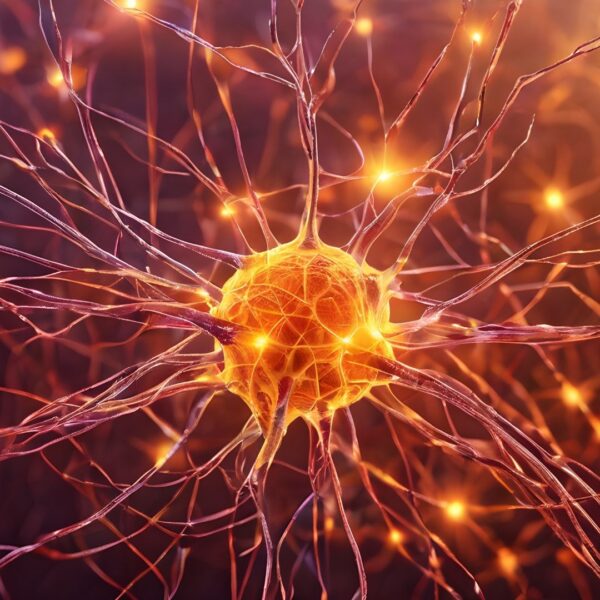
What I’ve come to believe, after two decades of caring for these patients, is that a significant number of them are experiencing something that looks less like a collection of separate diseases and more like a breakdown in the signaling architecture that coordinates biological function across systems. The gut isn’t talking to the immune system the way it should. The nervous system isn’t regulating inflammation the way it should. The feedback loops that should be damping down reactivity are instead amplifying it.
GLP-1 medications are one tool — one entry point into that architecture. The foundational work still has to come first: real food, restorative sleep, reduced toxic load, movement, addressing deficiencies, getting to the root of what disrupted the system in the first place. Diet and exercise alone can prevent roughly 80 percent of heart disease and 70 percent of most cancers. Peptides of any kind are built on top of that foundation, and they perform poorly without it.
But for patients who have done the foundational work and are still stuck, or who are dealing with a level of systemic dysregulation that has made even the foundational work difficult, GLP-1 signaling is worth understanding seriously — as a window into how the body’s communication systems are organized, and what happens when they stop working the way they should.
The weight-loss story around GLP-1s is real. But it may be the most visible downstream consequence of a much deeper biological shift — one that touches inflammation, immune regulation, neurological function, and the signaling infrastructure that ties those systems together. If that’s true, it raises a question that extends well beyond any single medication: how many conditions we treat as separate diseases are actually the same disrupted network showing up in different places?
That question is at the center of everything that follows in this series. And it starts with understanding what these signaling molecules actually are — not what the optimization culture says they are, not what the regulatory controversy implies. What your body has been doing with them your entire life, whether you knew it or not.
The next article in this series starts with a question that stopped me early in my career: if peptides are molecules your body already makes and depends on continuously — produced in your gut after every meal, released in your bloodstream when you’re injured, present in the food you eat — why do they feel so foreign? Why does the word itself signal “experimental” when the biology is anything but?
The answer reveals something about how the cultural conversation got the science exactly backwards. And it matters for understanding everything else in this series.