
Lyme Bingo: What a Negative Test Can't Tell You
The symptom pattern that should trigger the test, and how to read the result when it comes back.

Aaron Hartman MD
September 16, 2026
Subscribe
Never miss out on new content from Dr. Hartman.
What a negative Lyme test does and doesn’t rule out, and the symptom pattern that decides.
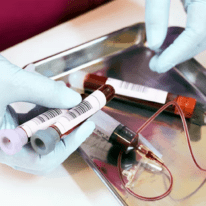
I have a patient in her 70s who spent 40 years being sick. Chronic fatigue starting in her 30s, then a fibromyalgia diagnosis on top of it, then decades of appointments where everyone agreed with everyone else. By the time she got to me she’d stopped expecting anything.
I ran a Western blot. It came back positive. Six months of amoxicillin later, her 30-plus year disease is gone.
I didn’t do anything clever. The blot is a routine send-out that any of the physicians she saw over four decades could have run. They didn’t, because nothing about her symptoms pointed anywhere in particular.
I recorded a conversation recently with Dr. Richard Horowitz, who has spent more than four decades and something north of 13,000 patients on this problem. When I asked him who gets missed, he didn’t hesitate:
“Anyone who’s been diagnosed with chronic fatigue syndrome, ME, or fibromyalgia is at the top of the list.”
He added something that matters more than the list itself: Even if a patient’s illness genuinely started with Epstein-Barr or HHV-6, that history doesn’t protect them. You can get mono at 19 and a tick bite at 34. One diagnosis doesn’t close the file on the next one.
When I came back to Virginia in 2007, out of the military and setting up practice, the local infectious disease doctor told me that this thing, chronic Lyme disease, didn’t exist.
I’ll come back to that.
The Problem With Lyme Disease Testing…The Algorithm Was Built to Count Cases

Almost nobody explains this to patients. The two-tier algorithm your doctor ordered was built so state health departments could count cases across a population. Diagnosing you was never its job.
Dr. Horowitz put the consequence bluntly. State health departments measure Lyme with an ELISA followed by a Western blot, and along the way something got dropped:
“They’re not even looking at erythema migrans rashes anymore.”
That’s a surveillance instrument doing what surveillance instruments are built to do. Specificity gets prioritized. An agency counting cases would rather undercount than publish inflated numbers. If you’re trying to track a disease across a state, that’s the correct trade. If you’re the person in the chair, you’ve been handed a tool optimized against your interest.
The numbers are worse than most clinicians realize. A 2026 study run through the Lyme Disease Biobank tested four FDA-cleared two-tier algorithms against serum from well-characterized early Lyme patients. At the initial blood draw, sensitivity ran from 22–36%. Specificity was 98–100%, which tells you exactly where the trade was made. Testing convalescent samples didn’t improve detection, and seroconversion turned out to be rare.
Earlier modeling work reached the same place from a different direction. Applying Bayes’ theorem to commercial test kits, the probability of a false negative in early-stage disease came out at 66.8% for a single test and rose to 74.9% once you added the second tier. Run the same math on the least sensitive HIV test in a two-stage protocol and you get a 1.3% false-negative rate. For late-stage disease, two-tier Lyme testing produced 16.7% false negatives against 0.095% for two-step HIV testing.
Adding a confirmatory step to an insensitive screen doesn’t rescue it. It compounds the loss.

Then there’s what the test is looking for. Standard serology is calibrated against Borrelia burgdorferi B31, a single reference strain cultured in a lab since the early 1980s. The B. burgdorferi sensu lato complex contains 15–20 recognized species, with the species status of several still unsettled. At the strain level, at least 16 strains are known to infect humans.
The counterargument is real. In that same body of work, the overwhelming majority of human infections traced to only four strains. So the diversity may matter less than it sounds like it should.
Except look at where that data came from. Culture-confirmed erythema migrans patients in the northeastern United States, enrolled between 1991–2005. Those are people who showed up with the textbook rash in the textbook region and grew the organism. That’s the population the whole algorithm was built around, and it’s precisely the population my patient in her 70s was never part of. What we know is narrower than the confidence attached to it. Genotypes in the northeastern US have been associated with disease severity, and the consequences of strain diversity for serologic test performance are only beginning to be explored.
Dr. Horowitz’s summary of the practical situation:
“You’re dealing with at least nine strains of Lyme that cause illness, Quest and LabCorp checking for one.”
I might frame the strain count more cautiously than he does, but the shape of his point survives. When a negative result comes back on a patient like mine, the honest reading is that the instrument didn’t find what it was calibrated to find.
I’ve written elsewhere about how often medicine turns out to be wrong about things like this, and about where the Lyme testing controversy came from. The cornerstone piece on Lyme covers the burden and the misdiagnosis problem in more depth. Given a test this unreliable, what do you actually do?
Migratory Joint Pain: The One Clue That Narrows the Field
You start before the blood draw.
There’s one symptom pattern that changes the odds more than anything else in the history, and it’s the thing I now ask about first. Dr. Horowitz described it this way:

“You score high and you have migratory pain, where one day the pain is in your shoulder, and two days later it’s in your hips, and three days later it’s in your knees, there’s only six other diseases in medicine that cause migratory pain.”
Migratory pain means the same pain relocating. It’s not pain in several places at once, which is what fibromyalgia looks like and what most patients mean when they say they hurt everywhere. It’s one site clearing as another lights up, over days, in a pattern the patient can usually narrate if you ask them to.
Most of them have never been asked. They’ve been asked to rate their pain from one to ten, which flattens exactly the information that would have been diagnostic.
As for the short list of alternatives:
“I used to joke with docs that if you’re at the bottom of your medical school class, you still can identify lupus, inflammatory bowel, Reiter’s syndrome, hepatitis, acute rheumatic fever.”
His count of six isn’t quite right, and I’ve footnoted where the published differential runs wider.1 But arguing about the number misses what makes the finding valuable.
Every condition on his list, and most of the ones he left off, can be excluded with tests that cost almost nothing and that any primary care office can order. An ASO titer. An ANA. Hepatitis serologies. A gonococcal NAAT. Blood cultures. A chest film. None of that requires a specialist or a specialty lab.
So a patient walks in with pain that moves. Before the visit, the differential for “I hurt and I’m exhausted and nobody knows why” is effectively unbounded, which is how people end up seeing 10, 20, or 30 physicians. After that one question, it’s a short list you can work through in a week or two of ordinary labs. When those come back clean, you are looking at a patient whose remaining explanation is a tick-borne infection, and you have arrived there without ordering a single Lyme test.
There’s a way to make this systematic, and it’s been validated. Dr. Horowitz and two colleagues published a screening questionnaire in the International Journal of General Medicine in 2017, tested across three separate studies. It’s the Horowitz MSIDS Questionnaire, MSIDS being his framework of Multiple Systemic Infectious Disease Syndrome, and the abbreviation is HMQ. It’s free at cangetbetter.com.
The published cutoffs are worth having precisely. Under 21 makes Lyme unlikely. Between 21–36 is possible. From 36–62 is likely, and follow-up testing is advisable. At 63 or above, Lyme is strongly indicated and testing is highly recommended.
The factor analysis in that study pulled out six underlying dimensions from the questionnaire, and four of them mapped onto the symptoms he’d identified clinically years earlier: neuropathy, cognitive dysfunction, musculoskeletal pain, and fatigue. A clinical hunch that survives factor analysis is worth more than a clinical hunch.
Which means a patient can arrive at my office having already done the most informative part of the workup on a laptop, for free, before anyone drew blood.
Migratory Nerve Pain, and the Difference Between Wandering and Accumulating
The pattern gets sharper when it moves into the nerves.
Dr. Horowitz doesn’t treat any single band as sufficient on its own. He attaches a condition to it, and the condition is the symptom picture: migratory pain, symptoms that come and go with good days and bad days, fatigue, aches, and in particular neuropathy. His description of what that neuropathy feels like:
“Tingling, numbness, burning, stabbing, vibration sense that moves around the body.”
Then he made the strongest claim in our conversation, without a hedge anywhere in it:
“The only disease that causes migratory nerve pain is Lyme. There is no other disease on the planet that does it.”

That may be an overstatement as I’ve noted below.2 Migratory involvement of individual nerves is a recognized clinical entity with a long list of causes, and Lyme sits on that list rather than alone on it. But something in his claim is right, and finding it took me a while.
Mononeuritis multiplex, the textbook entity, accumulates. Discrete named nerves are damaged in sequence, asymmetrically. The damage is structural. A patient develops a foot drop, then months later loses function somewhere else. There’s usually a systemic illness attached, the deficits are visible on exam, and nerve conduction studies show the axonal loss. It gets worse and it stays.
What Dr. Horowitz is describing does the opposite. It wanders and it remits. Vibration sense that moves. Tingling that’s in the left hand this week and the right calf next month and gone by the time of the appointment. No fixed deficit. The exam is usually normal, and so is the nerve conduction study.
His own published data supports the narrower version. When that 2017 questionnaire was analyzed, three migratory pain items robustly identified patients with verified Lyme disease: persistent muscular pain, arthritic pain, and nerve pain or paresthesias. Paresthesias. Sensory symptoms, not deficits. The thing his study actually measured is the thing that wanders, and that pattern is close to unaccounted-for elsewhere.
Now put yourself in the chair. You describe burning that moves around your body. Your neurologic exam is normal, because at the moment of the exam there’s nothing to find. Your EMG is normal, because there’s no axonal loss to detect. Every objective measure of nerve damage comes back reassuring.
A workup designed to detect damage returns normal on a finding whose defining feature is that it moves. So the patient gets told the good news, and goes home, and stays sick.
Lyme Bingo: How to Read Western Blot Bands
Say the symptom picture fits and you order the blot. Now you have to read it, and this is where the standard criteria stop being about you at all.
Dr. Horowitz has a name for how he does it:
“I play this game with patients called Lyme Bingo.”
The rules are simple. Five bands matter: 23, 31, 34, 39, and 83/93. In the right clinical setting, any single one of them counts. Not five positives out of ten, which is what the CDC’s IgG criteria require. One.
Those numbers are kilodalton weights, and each corresponds to a specific protein:
| Band | Protein | Why it matters |
|---|---|---|
| 23–25 | OspC, outer surface protein C | Specific to B. burgdorferi. Expressed early, once the tick starts feeding. |
| 31 | OspA, outer surface protein A | Specific to B. burgdorferi. Basis of the old Lyme vaccine. |
| 34 | OspB, outer surface protein B | Specific to B. burgdorferi. |
| 39 | BmpA, basic membrane protein A | Widely described as the most specific single band on the blot. |
| 83/93 | High molecular weight antigen | Probably one protein migrating slightly differently between patients. |
Notice which band isn’t on that list. Band 41 is flagellin, the tail protein, and it’s shared across every spirochete there is. A positive 41 is compatible with Lyme, with syphilis, with relapsing fever, and with the spirochetes living in your mouth. It’s also usually the first band to appear after infection, which is a cruel piece of test design. The earliest signal is the least informative one.
Bands 31 and 34, OspA and OspB, appear on neither CDC scoring list. Not the IgM criteria, not the IgG criteria.
I’ve been told plenty of things about Lyme that turned out to be politics. This isn’t one of them.
The interpretation criteria were built by selecting the band combinations that best discriminated Lyme patients from controls. Antibodies to OspA and OspB didn’t make the cut, and there’s a clean mechanistic reason. B. burgdorferi expresses OspA while it’s sitting in an unfed tick, and shuts that expression off once the tick takes a blood meal and hits mammalian body temperature. OspC gets switched on instead. So in early infection, patients mount an OspC response and essentially no OspA response, and a criteria set optimized on early infection correctly leaves OspA out.
In later manifestations, especially Lyme arthritis, some patients do develop antibodies to OspA and OspB, because OspA expression gets upregulated in an inflammatory environment like an arthritic joint.
The scoring criteria were derived from patients with early disease, and they exclude the two bands that show up in patients with late disease. That’s a defensible decision that becomes indefensible the moment you apply it to somebody who’s been sick for years.
And it’s worse than a scoring problem. On most standard blots, bands 31 and 34 aren’t unscored. They aren’t there. The IGeneX immunoblots are, as best I can determine, the only FDA-cleared Lyme tests that include OspA and OspB antigens at all. You can’t decide to weigh a band your lab never ran.
In fairness, IGeneX’s own criteria call a blot positive on two or more bands, so Dr. Horowitz’s single-band rule is a step looser than the specialty lab’s. I said it back to him to be sure. Not three, not five, but one of 23, 31, 34, 39, or 83, with symptoms. He immediately added the condition:
“Having done a differential diagnosis and ruled out, of course, other [causes].”
That condition carries the whole rule. One band means something in a patient you’ve already narrowed down, and not much in one you haven’t.
IGeneX vs Quest: Why the Order of the Questions Decides the Answer
I have a patient in California I’ve been working with. Their IGeneX immunoblot came back with six positive bands.
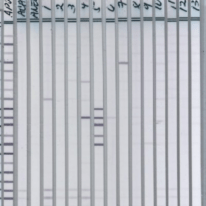
They weren’t getting better, for reasons that had nothing to do with the diagnosis, so they went to see a Lyme specialist out there. That physician ran a Quest panel four months later. Zero bands.
I got the results and I’m thinking, did it go away? Her symptoms were no better. She was actually worse. So we repeated the IGeneX, and the same bands came back.
Six bands on one platform, nothing on the other, on the same patient, confirmed on a repeat draw. And the second test was ordered by another Lyme-literate clinician, so this isn’t a story about a careless doctor.
There’s published work pointing the same direction, and it comes out of the same state. A serologic survey of 90 patients in California and Mexico who met the clinical case definition of chronic Lyme used an immunoblot built from recombinant Borrelia membrane proteins. 42 were seropositive for sensu lato species. Of those, only 14 reacted to B. burgdorferi sensu stricto. The rest reacted to B. californiensis, B. spielmanii, B. afzelii or B. garinii, and in three cases B. mayonii. The authors concluded that testing focused on sensu stricto may be producing missed diagnoses.
That’s the mechanism underneath my patient’s discordant results, and it’s the version of the strain argument I’m willing to defend. Not a scary total count of strains in the world. A specific finding that most of a chronic-Lyme cohort reacted to something the standard test isn’t built to see.

That same Bayesian analysis I mentioned earlier ran the numbers on what a positive result is worth. Using a C6 ELISA, the probability that a patient actually has Lyme given a positive test ranged from 26.4% when the disease was present in 5% of samples sent for testing, up to 95.3% when it was present in 75%.
Same test. Same positive band. Wildly different meaning, and the only variable is who you decided to test.
So the questionnaire and the band reading do one job between them. The questionnaire decides what the band is worth. The reason a single band can be read as meaningful in Dr. Horowitz’s practice is that he’s already selected for migratory pain and an HMQ score above 63, which puts his tested population at the high-prevalence end of that curve. Run the same permissive band rule on an unselected patient with vague fatigue and you’ll likely generate false positives.
Migratory nerve pain plus a score of 70 is what makes the band result interpretable at all. My colleague Dr. Christian Jenski has written about why the sequence of testing decisions matters more than the tests themselves, and this is that principle landing in a specific place.
A Negative Lyme Test Has a Shelf Life
Something else changed how I order these.

In autoimmune disease, we’ve known for a while that you need four things to line up, and one of them is a chronic infection. So when someone comes in with Hashimoto’s or rheumatoid arthritis or inflammatory bowel disease, I check infection markers, Lyme included, as a matter of routine.
I had a patient with eosinophilic esophagitis and SIBO. Working through his case took about three years, and I kept checking markers the whole way.
His standard Quest Lyme marker was negative. Negative. Negative.
At year three it popped positive.
And treating the Lyme was what took him from 80% to 100%. The gut work had already gotten him from 60 to 80. But the infection that finished the job didn’t show up on a standard test until after we’d dealt with the EOE and the SIBO.
Serologic testing never looks for the bacteria. It looks for your immune system’s response. In a patient whose immune system is depleted, a negative antibody test is a statement about the immune system, not about whether the bacteria are there.
Serologic testing never looks for the bacteria. It looks for your immune system’s response. In a patient whose immune system is depleted, a negative antibody test is a statement about the immune system, not about whether the bacteria are there.

My foundational Lyme article already states that patients with long-term infection often stop producing antibodies, which is why the CDC’s screening test comes back falsely negative in that population. What this case adds is the practical consequence. If the reason a test was negative was immune suppression, and you then treat the things causing the suppression, the test can convert. Not because the patient caught Lyme in year three. Because they finally had enough immune function to make antibodies.
Which means “negative” is a timestamp, not a verdict. A negative Lyme test on a profoundly depleted patient tells you what his immune system could do that spring.
He had mold, too. That thread runs through most of these cases, and I’d send you to Dr. Jenski’s piece on how one infection can hide behind another rather than rehearse his argument badly here.
What a Negative Immunoblot Still Doesn’t Rule Out: Borrelia miyamotoi
At the end of our conversation I asked Dr. Horowitz the practical question, because this is where people get stuck. What’s the right test? Is it LabCorp? Is it Quest? Is it the immunoblot from IGeneX? Is it a FISH test for Bartonella? Is it a PCR?
His answer had a sequence to it. Say the local labs have all come back negative: an immunofluorescent antibody test, a Western blot, an ELISA, a C6. At that point, $200 to $300 for an IgM and IgG immunoblot from IGeneX will usually surface one of the Bingo bands.
Then he undercut his own recommendation, which is a habit of his I’ve come to trust:
“Maybe one out of 100 times it won’t.”
And when it doesn’t, there’s a specific reason it doesn’t:
“Borrelia miyamotoi and other ones could also look like Lyme, and it’s not gonna show up on classic testing.”

That one-in-a-hundred is his clinical estimate rather than a published miss rate, and I’d hold it loosely. The category it points to is solid. Tick-borne relapsing fever is caused by at least 15 different pathogenic Borrelia species, and it’s a separate group from the Lyme spirochetes.
Go back to those 90 patients in California and Mexico. 42 were seropositive for Lyme-group species. 56 were seropositive for relapsing fever Borrelia: B. hermsii in nine, B. miyamotoi in seven, B. turicatae in nine, B. turcica in two. More of that cohort reacted to the relapsing fever group than to the Lyme group.
Serology also isn’t the only tool. Dr. Horowitz noted that in patients who’ve been treated for Lyme but never received drugs that reach the dormant forms, “the Lyme PCR will be positive after decades of taking regular treatments.” That opens onto the question of why standard antibiotics leave something behind, which I took up in the second article in this series.
I’d rather end where he did. Run the questionnaire, order the right blot, read the bands correctly, and you will still occasionally be looking at a negative result on a patient who has a spirochete. The algorithm I’ve just spent most of this article defending has a small hole in it, and the hole has a name.
Everywhere, Apparently

At the close of the interview I mentioned where I practice. We’re in central Virginia, where I was told there’s no chronic Lyme disease, and it’s kinda everywhere. It’s crazy, what I’ve been told by my infectious disease colleagues.
One more correction while I’m at it. Dr. Horowitz mentioned in passing that alpha-gal allergy, the tick-borne red meat allergy, has now hit over 500,000 Americans. His number runs ahead of the published one. The CDC estimates as many as 450,000 people may be affected, extrapolated from more than 110,000 suspected cases identified between 2010–2022.
The better number came out this year, and it’s closer to home. The CDC tested 3,000 residual blood donor samples collected across 2024 and 2025. In the five states with the highest alpha-gal IgE seroprevalence, 24% of samples were positive. Those five states are Arkansas, Kentucky, Missouri, Tennessee, and Virginia.
The CDC attaches a caveat to that figure, and it’s the argument I’ve been making all along, only in reverse. Only a small minority of people with alpha-gal antibodies actually have the syndrome. So providers should test patients with clinically compatible symptoms, and not everybody who walks in.
A positive result on an unselected patient means very little. A positive result on the right patient means almost everything. The clinical question is what converts one into the other, and no lab can do that part for you.
If you want the argument for why any of this matters beyond joint pain, the first article in this series covers what a missed diagnosis can do to a brain over 30 years. If you’ve got the diagnosis and want to know what to do with it, the second covers why standard antibiotic courses leave the infection standing. And if you’re earlier than that, still trying to work out whether any of this describes you, the cornerstone piece is the place to start.
My patient in her 70s spent 40 years waiting for somebody to ask her whether the pain moved.
When you talk to somebody who’s spent a whole career on one thing, there are always hidden gems, the stuff there’s never time for. That’s why I do these. I write up what’s worth keeping and send it out to our readers. If you want the next one, you can sign up here.