
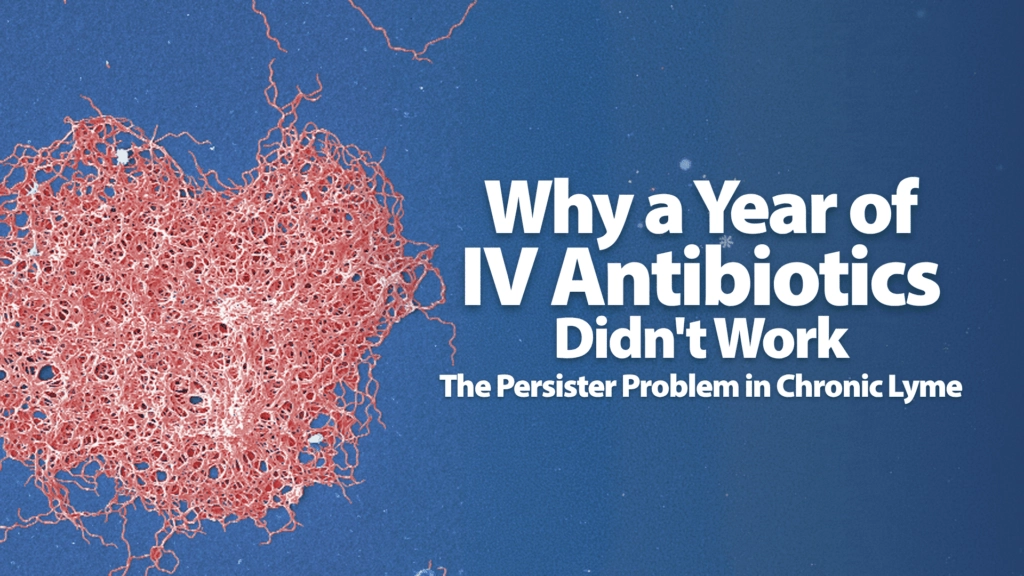
Why a Year of IV Antibiotics Didn't Work: The Persister Problem in Chronic Lyme
What the leprosy literature taught Dr. Richard Horowitz about dosing, dormancy, and the forms of Borrelia that standard treatment leaves behind

Aaron Hartman MD
September 9, 2026
Subscribe
Never miss out on new content from Dr. Hartman.
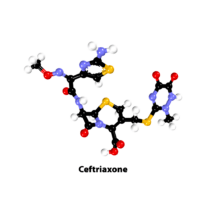
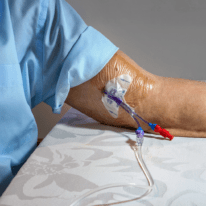
A few years back, a patient came to me after spending about a year at a well-known Lyme clinic in Washington, DC. The clinic put most of its patients on IV Rocephin, and she was no exception. A PICC line, ceftriaxone, months of it. She came back to Richmond no better than when she left.
I’ve written about her before, because of what we eventually found. She had mold exposure. She was hypermobile, she had POTS and dysautonomia, and once we went after the mold instead of the infection, I got to watch her Lyme titers normalize on their own over about two years.
But there’s a second question in her chart that I skipped past at the time. What was the year of IV ceftriaxone actually doing?
Not nothing. Ceftriaxone is a good drug. But she took a lot of it for a long time and her disease didn’t move, and that’s a pattern I see often enough that it stopped feeling like bad luck and started feeling like information.
Here’s the version of it that shows up most: a patient gets better on antibiotics. Genuinely better. Then they stop, and within days the whole thing comes back.

I sat down with Dr. Richard Horowitz in August, and if there’s one person who has watched that pattern more times than anyone alive, it’s him. He’s been in practice more than four decades and has treated over 13,000 Lyme and tick-borne patients. He’s a founding member and past president of ILADS. Our first conversation, back in 2024, walked through his sixteen-point MSIDS model, and most of that is in my overview of how we diagnose and treat Lyme.
This time we spent most of an hour on a single drug, and on why the timing of relapse tells you something the relapse itself doesn’t.
Because think about what that interval means. If the organism were gone and you were dealing with residual immune activation or nerve sensitization or tissue damage, stopping an antibiotic wouldn’t matter. Antibiotics don’t treat any of those things.
Something that responds to a drug being present, and un-responds when the drug leaves, is behaving like something alive.
What a persister actually is
The word that unlocked this for me is persister. What’s that?
A persister isn’t an antibiotic-resistant bacterium. There’s no mutation, no resistance gene, nothing you’d pick up on a sensitivity panel. It’s the same organism with the same genome. What’s different is its metabolic state. It has essentially powered down, and that changes what a drug can reach.
That distinction matters because of how our antibiotics work. Most of them target processes that only happen in a growing cell (e.g. cell wall synthesis, protein synthesis, DNA replication). A dormant cell isn’t building a cell wall, so a drug that interferes with cell wall construction has nothing to interfere with. The organism never has to resist anything. It only has to be asleep when the drug arrives.

Then the course ends, drug levels fall, and the survivors wake up and repopulate. Which is what my patients tell me when they say they crashed four days after finishing a round.
Borrelia does something else too. It forms biofilm, a polysaccharide matrix that physically shields the organisms inside it from both antibiotics and your immune system. Eva Sapi’s group at the University of New Haven characterized this in vitro back in 2012. I’ve written more about the biofilm and persister forms of the organism elsewhere, so I won’t rebuild the whole picture here.
The part that surprised me

In 2019, researchers at Johns Hopkins infected mice with three different forms of Borrelia: actively growing log-phase spirochetes, stationary-phase free cells, and biofilm-like microcolonies. The microcolony and stationary-phase forms produced more severe arthritis and more inflammation than the actively growing organisms did.
I’d been carrying around a mental model where the dormant forms were the leftovers. The stragglers. Hard to kill, sure, but quiet. That study says the opposite. The forms that survive treatment may be the ones driving the most disease.
Which reframes the problem. A regimen that clears actively growing organisms and leaves persisters behind hasn’t removed the least important fraction. It may have removed the least troublesome one.
Where medicine had already solved this problem
How Dr. Horowitz got to dapsone is more ordinary than where it ended up.

He starts with the IV drug:
“IV Rocephin, as good as it is, it’s only for actively growing bacteria. It’s not for the biofilm persister forms.”
Then on the 2015 finding:
“I went to the literature and I went, ‘Oh, you mean like leprosy, you need rifampin and dapsone?’ … I said, ‘I wonder what happens if I add doxycycline to rifampin and dapsone,’ which is how they cure leprosy, and it was a home run out of the park.”
The 2015 work he’s referring to came out of Ying Zhang’s lab at the Johns Hopkins Bloomberg School of Public Health, which published on persister mechanisms in Borrelia burgdorferi that year. Kim Lewis’s group at Northeastern, working with Linden Hu at Tufts, published on drug-tolerant Borrelia persister cells the same year.
Two labs, same conclusion, and neither of them was thinking about leprosy. Dr. Horowitz was, because the analogy runs the other direction. Tuberculosis and leprosy are the two diseases where medicine already confronted an organism that goes dormant and hides in biofilm, and already built regimens that work. Multiple drugs at once, given long enough that the dormant fraction gets caught when it eventually wakes up. Nobody treats leprosy with a two-week course of one drug.
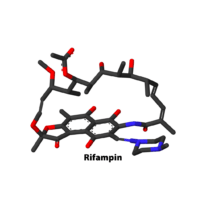
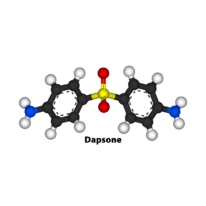
So he went and read how they do it, took rifampin and dapsone off that shelf, added doxycycline, and published his first study in 2016. A hundred patients. Seven of eight tracked symptoms improved to statistical significance, including fatigue, joint pain, muscle pain, neuropathy, and memory and concentration.
His own paper flags the thing that would occupy him for the next decade. In leprosy, dapsone plus rifampin needs a minimum of twelve months to work. His protocol runs about nine weeks. So what’s a nine-week course doing that takes twelve months in leprosy?
Hold that question.
The dose turned out to be the argument
“It turned out it took me almost a decade to figure out how to get the dosing right.”
That sounds like a note about patience. It’s the strongest piece of evidence in the story.
His first two studies used dapsone somewhere between 25–100 mg a day, across a total of 300 patients. Symptoms improved reliably. Relapse after stopping was common.
In 2020, he published in Antibiotics on a higher dose. Same drug combination, but dapsone at 100 mg twice a day during the second month, for a total of 7–8 weeks. Forty patients, and 98% improved their tick-borne symptoms. 45% had complete resolution of all active Lyme symptoms for a year or longer, and that figure held only in patients without active co-infection. The three patients he wrote up in detail stayed in remission 25–30 months after just eight weeks of oral generic antibiotics.
Then he went higher still, in short pulses. 200 mg for 3–4 days, or 200 mg twice daily for four days, layered on top of the eight-week course. His 2023 chart review of 25 patients on that combination found that all of them improved, and 7 of 23 who completed the full sequence were in remission for 3–9 months.
Look at the shape of that. Low dose improves symptoms, and then they come back. Double it and about half of patients stay well for years. Adding short high-dose pulses on top of that pushes a further group into remission.

And there’s a lab correlate that isn’t his. Sapi’s group at New Haven tested these drugs against Borrelia biofilm directly and found dapsone, alone and combined with doxycycline and rifampin, produced the largest reductions in biofilm mass and viability of the combinations they tried. When they compared dapsone concentrations, the higher one did significantly more damage to the protective matrix than the lower one.
So the dose-response exists in a dish and in a clinic, measured by two different groups.
I’ll take the strongest objection to this seriously further down. But the inference keeps pulling at me. An anti-inflammatory effect doesn’t have a dose-response curve that looks like this, and it doesn’t produce two years of remission after you stop taking the drug.
“Something that gets better in proportion to how much of a drug you use, and stays better once the drug is gone, is behaving like a population that got smaller.”
The numbers get specific from here. What follows is a physician’s protocol as its author has published and described it. It requires baseline lab screening, weekly blood monitoring, and someone experienced enough to manage a serious hematologic side effect if it shows up. It’s not something to assemble on your own, and no part of this article is a recommendation that you try.
Why these drugs get pulsed
This is where the leprosy question gets answered.
Dr. Horowitz has patients who can’t tolerate the full course, and for them he uses a lower dose in a start-stop pattern. He explains it this way:
“Every time you stop it, though — and the labs will always come back to normal — you’re lowering the biofilm persister forms of the bacteria. Let’s say you lowered them by 30% the first time you took dapsone, you stop it. They’re not going to grow back. How do I know that? I’ve seen it. I’ve seen it where people stay at a certain level of health. … Because the way you get rid of biofilm persister bacteria like Lyme and Bart is you have to pulse these regimens. You cannot give continuous antibiotics to people. It’ll lower the load, but it won’t get rid of it. And I think that’s what Lyme docs out there really kind of need to realize.”
This touches on a theme that comes up consistently in my writing: the difference between “data” and clinical observation. How does Dr. Horowitz claim to know? “I’ve seen it.” That’s clinical observation. It’s four decades of watching patients hold a level of function they didn’t have before. That’s real evidence of a specific kind. It’s not a controlled experiment. Nobody has randomized pulsed dapsone against continuous dapsone. Clinical observation isn’t the same thing as controlled data, but that doesn’t make it less valid evidence.

The logic is coherent, and it lines up with the biology. Persisters don’t stay dormant forever. They resuscitate. A drug that’s continuously present keeps the growing population suppressed, which is why patients feel better on it, and keeps selecting for the dormant fraction, which is why they crash when it stops. Pulsing does something different. You hit hard, you stop, the survivors wake up into a growing state where they’re vulnerable again, and you hit again. Zhang’s group found that persisters hold their tolerant phenotype for days to weeks after a drug is withdrawn, which is roughly the window that strategy depends on.
That’s the answer to the leprosy puzzle. Leprosy protocols run twelve months because they run continuously. Dapsone combination therapy gets away with nine weeks because it stops and starts. The dose and the interruption are doing the work that duration does in leprosy.
For patients who need the gentler version, Dr. Horowitz uses 25 or 50 mg with stops built in, stretched across 6–9 months. Some of his patients pulse for as little as two weeks and still see benefit.
The case that took twenty-five years
His wife had chronic Lyme disease for 25 years.
He told me she had all sixteen factors on the MSIDS map, and published her case in Antibiotics in 2020. The paper identifies her only as a 39-year-old woman who first came to his office in July 1995. He’s the one who told me who she is.
Her chart is a catalog. Borrelia by ELISA, CDC-positive IgM Western blot, and serum PCR. Babesia, Ehrlichia, Anaplasma, Rocky Mountain spotted fever, Bartonella. A Mycoplasma fermentans PCR that kept coming back positive through years of intracellular antibiotics. Black mold growing on the beams under her bedroom, which had to be remediated. Elevated mercury, cadmium, and aluminum. Mast cell activation. POTS. Sleep apnea. Two decades of antibiotic rotations, including a month of IV ceftriaxone.
And every single time they addressed something on that list, she got better. And every time anti-infective therapy stopped, she relapsed within days.
In 2015 he put her on dapsone at 50 mg a day. She improved, stayed on it about six months, and came off feeling well. Within a few months the symptoms were back, and in January 2016 an IGeneX Borrelia PCR came back positive. Twenty years into treatment, the organism was still there and still detectable in her blood.
Back on, this time working up to 100 mg a day for six months. She got close to normal function, stopped at the end of 2016, and relapsed in May 2017 with a rising 31 kDa band on her Western blot.
Then a coincidence did what deliberate dose-finding hadn’t.
A patient of his came in feeling terrible and, going through his medications, turned out to be taking dapsone twice a day instead of once. Dr. Horowitz told him to stop and come back in a month. The patient came back a month later and said he felt great. He’d been sick for seven years.
“I turned to my wife and I said, ‘Sweetheart, would you like to be a medical guinea pig?’”
She did one month at the doubled dose, as the second month of an eight-week course. Her hemoglobin fell from 13.1 to 8.8. She had a Herxheimer reaction for 3–4 days at the start of that month, and then, in the paper’s account, felt completely normal for the rest of treatment.
“She’s been in remission for eight years. It’s never come back despite getting COVID twice, despite getting the flu. … It hasn’t come out. She’s in full remission.”
Two notes on that. The published paper documents thirty months of remission as of August 2020, and says she was well for the first time in over 25 years. The eight years he described to me is his own update beyond what’s in print. And when he told me she tried 50 mg for a year, the paper says about six months. Small thing, but I’d rather you have the published version.
Ten years of deliberate clinical work, and then a patient’s mistake.
“I do believe I’ve discovered a cure for this disease.”
What it costs to leave persisters alone
How many patients do you know go for hip replacements, shoulder replacements, and knee replacements when they have chronic Lyme and Bart? Why? Because it eats away at your bone and they go bone on bone.

Dr. Horowitz also thinks a meaningful number of dementia diagnoses belong in the same category, and I’ve written about where that argument stands and what one case study can and can’t settle.
Neither of those is published outcome data. Nobody has run the cohort study that would tell us how many joint replacements trace back to untreated persistent infection. But the asymmetry is what gets me. If he’s wrong, some patients took nine weeks of generic antibiotics they didn’t need. If he’s right, then we’re replacing joints in people whose bone is being eroded by something we decided wasn’t there.
If he’s wrong, some patients took nine weeks of generic antibiotics they didn’t need. If he’s right, then we’re replacing joints in people whose bone is being eroded by something we decided wasn’t there.
Do no H.A.R.M.
My own experience with this drug hasn’t been clean.
Dr. Horowitz and I talked about dapsone about a year before this interview, and I started using it in a limited way after that. It’s a little scary. I told him as much.
One of my patients got a horrible hemolytic anemia from it.
I asked him about that directly. Could a reaction that severe mean there’s underlying Bartonella in the picture? He went to dapsone’s broader safety profile, then to G6PD, and never came back to the question. I don’t think that was evasion. I think it’s an honest reflection of where the evidence is, which is that nobody has characterized who gets hurt by this drug or why in enough detail to answer me.
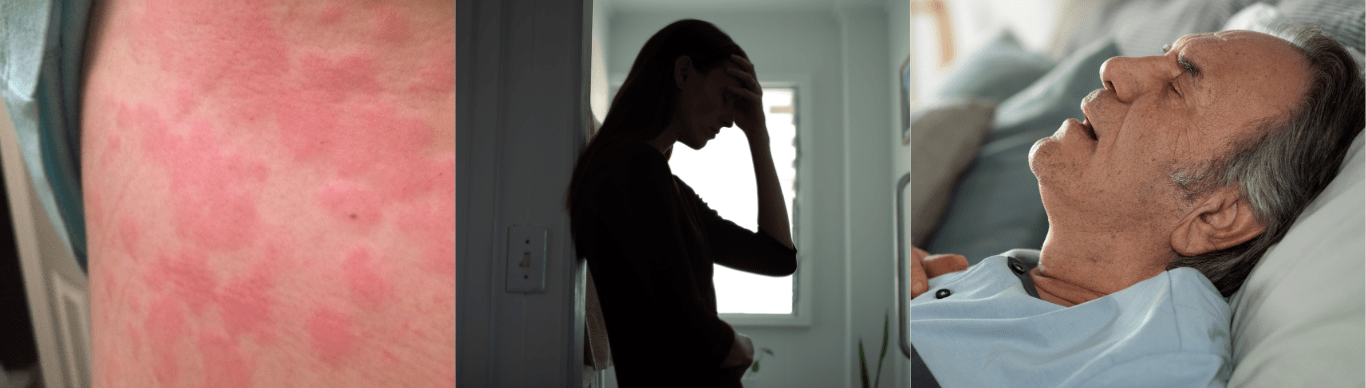
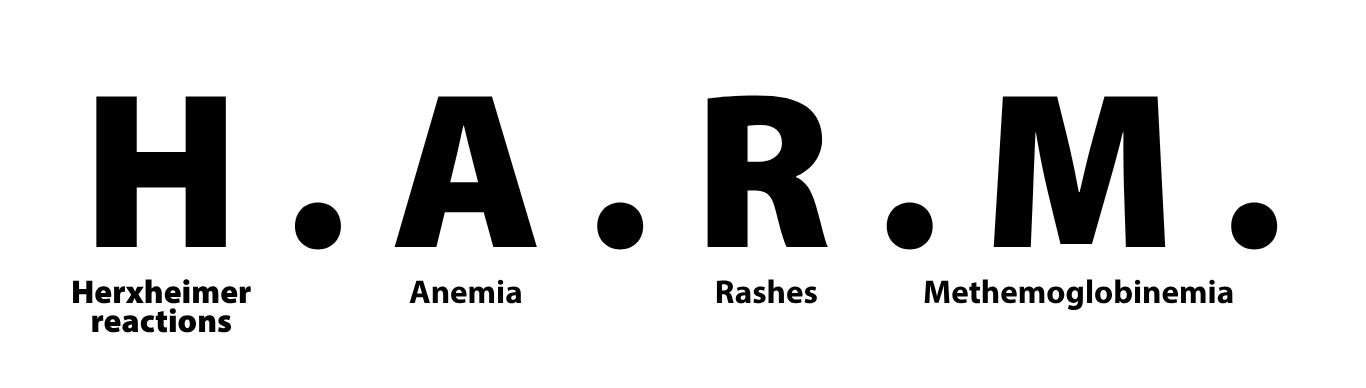
He organizes the side effects with a mnemonic from his own papers. Do no H.A.R.M.: Herxheimer reactions, Anemia, Rashes, Methemoglobinemia. They also arrive roughly in that order, which is worth knowing if you’re the one taking it.
Herxheimer reactions
These come first, usually in the first week or two, and again when the dose steps up. His protocol handles them with alkalinization, either sodium bicarbonate or fresh-squeezed citrus, and higher doses of glutathione as needed. Four high-quality probiotics twice a day go alongside, for gut protection across the course.
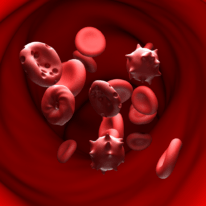
Anemia
This one builds more slowly. It comes from dapsone blocking folate metabolism, and separately from hemolysis in anyone with G6PD deficiency. G6PD deficiency isn’t a caution here, it’s a hard exclusion. His published trials disqualified those patients outright, and so should anyone using this.
He told me the deficiency is rare enough not to worry much about, roughly one person in a thousand, with Mediterranean ancestry as the exception. That’s the one place I’d correct him, and it matters.[1] G6PD deficiency is the most common enzyme deficiency in the world, affecting somewhere around 400 million people. In men it runs about 12% in African ancestry, 2 to 3% across Asia and the Middle East, and under 1% in northern European ancestry. The World Health Organization recommends routine screening wherever local prevalence tops 5%. And it’s usually silent, so a reassuring history proves nothing. You draw the level, and you don’t start until you have it.
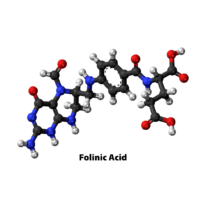
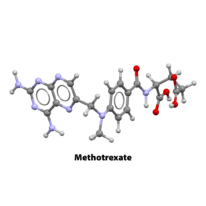
His answer to the folate problem borrows from rheumatology, where high-dose folinic acid rescues patients who’ve had too much methotrexate. He described giving 320 mg of folate a day, split as 200 mg of leucovorin and 120 mg of L-methylfolate.[2] He says that holds hemoglobin drop to about 3.5–4 grams in most patients, and that levels return to normal within 6–8 weeks of finishing.
He’s watched it come back faster than that when he’s had to. He described women arriving with hemoglobins of 6.5 who reached 8 within three days on high-dose folic acid, and 9.3 three days after that. Dapsone itself clears the body in three or four days once you stop. The two situations where he says you genuinely have to stop are G6PD deficiency and a woman bleeding heavily through a period while she’s on the protocol.
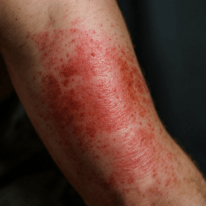
Rashes
He never brought this one up with me, so it comes from his papers rather than our conversation. Dapsone is a sulfa drug, and the rash risk is sulfa sensitivity. What his published protocol does about it is simple and worth copying. In one of his 2020 cases he notes the patient had already taken Bactrim without trouble, which made a sulfa reaction unlikely. Prior tolerance of a sulfonamide is a free pre-screen, and it belongs next to the G6PD level as something you check before anyone starts rather than after.
Methemoglobinemia
This is the second-month problem. It means blood that carries oxygen poorly. His countermeasures are methylene blue, plus vitamin E at 300–400 units twice daily, glutathione at 2,000 mg up to three times daily, N-acetylcysteine to regenerate glutathione, and NADH, because the enzyme that reverses methemoglobin is NADH-dependent.[3]
He says the average methemoglobin level in patients who complete the full protocol runs about 5–6%.[4] He’s candid about what that feels like: Blue hands, blue lips, some shortness of breath. His position is that there’s no danger at that level, and on the numbers he’s right. Dangerous methemoglobin starts around 45%.
Then the highest he’s seen:
“We’ve never seen anyone go above 23%, and that was with a 13-year-old who didn’t take his methylene blue and didn’t tell his mother.”
He offers that as a ceiling, and as a ceiling it holds. But consider how it got reached. A teenager quietly stopped taking the drug that prevents the side effect and told nobody. It surfaced at 23% rather than somewhere worse because somebody was drawing his blood every week. The ceiling held because someone was checking. That’s what the weekly labs are for.
Then he says this:
“Dapsone has no long-term side effects. None. Zero. As long as you follow the protocol…”
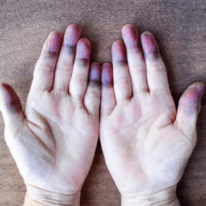
I’m printing that next to the 13-year-old at 23% methemoglobin and next to my own patient’s hemolytic anemia, and letting you hold all three at once. I think what he means is that the effects are reversible and don’t leave permanent damage, which the published labs support. As stated, though, it’s a larger claim than the evidence carries.
He told me he’s seen three patients in more than four decades who couldn’t take dapsone.[5] That’s his experience of thousands of patients, and I don’t doubt it. Other clinicians who use this drug report far higher discontinuation rates. Whatever the real figure is, I’d suspect something well above three in 13,000.
The risk-benefit tradeoff
“Everything we do in medicine is risk-benefit. The benefit, it’s a thousand times more than the risk.”
A thousand times is rhetorical, but the underlying framing is right, and it’s the framing I’d use with a patient. Nine weeks of a monitored oral regimen against 10, 20, or 30 years of illness is a real trade to consider. It’s also a different trade for someone at 85% of normal than for someone who can’t work.
He said one more thing and moved past it:
“I would only do a protocol that I myself would take.”
Where the evidence runs out
We’re swimming in deep water here. It’s worth stating a few cautions.
No randomized trial of dapsone combination therapy exists. Dr. Horowitz says so himself, repeatedly, and it’s the thing he most wants to change. Every study behind this piece is a case series or a retrospective chart review. Same author, one clinic, unblinded, no control arm, with self-reported percentage-of-normal as a primary measure. The 2026 case study in the Journal of Alzheimer’s Disease Reports is his tenth published study on this protocol, and between them they cover more than 365 patients over a decade.
That’s a lot of patients and it’s a thin form of evidence, and both facts are true at once. No group outside his practice has replicated it. His own 2020 paper closes by calling for the randomized, blinded, placebo-controlled trial that hasn’t happened.
Dapsone may be doing something other than killing. Dapsone inhibits the NLRP3 inflammasome, an inflammatory pathway, and it penetrates the central nervous system well. I went into this at length in the article on Lyme and Alzheimer’s biomarkers. Dr. Horowitz raises it himself, without prompting:
“I think eventually it’s going to be repurposed even for Alzheimer’s dementia, independently of whether people have Lyme or Bartonella driving it or not, simply because it lowers inflammation in the brain.”
If dapsone helps brains with no Borrelia in them, then symptom improvement on dapsone doesn’t prove anything was killed. He raised that before I could, and he says the same thing in print. In his published papers he states outright that he can’t rule out dapsone’s anti-inflammatory effect as the whole explanation.
Where that leaves me is with a question rather than an answer. An anti-inflammatory effect accounts easily for why someone feels better while taking a drug. Whether it accounts for years of remission after the drug stops, I don’t know, and I haven’t seen anyone test it. That’s the hinge the whole argument turns on, and it’s still open.
And it doesn’t work for everyone. The exclusions are specific.
“The dapsone protocol does not work as well when mold is there, because mold will affect your immune system just the way Lyme and Bartonella knock out your B cells.”
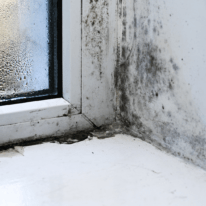
What I take from that is a sequencing rule, and it’s changed how I work. Mold assessment goes before this protocol rather than after it fails. My DC patient is why. A year of IV ceftriaxone reaching the wrong form of the organism, in an immune system that mold had already compromised. Two problems, and the drug addressed neither.
The same holds for Bartonella. In his 2020 cohort, not one patient who tested FISH-positive for active Bartonella reached remission, though most improved. Which is presumably why he states the remission figure with both conditions attached: about 50% of patients who take the nine-week protocol, who don’t have active Bartonella, and who don’t have mold.
He has an analogy for this that explains the number better than any statistic:
“I describe it like someone going into a doctor’s office with 16 nails in their foot saying, ‘I have foot pain,’ and the doctor finds one nail, pulls it out, and says, ‘Come back in a month and tell me how you’re feeling.’ … And it’s like, ‘Nah, you still got 15 nails you got to figure out.’”
Dapsone pulls a big nail. Fifteen to go.
The trial nobody will fund
Dapsone came off patent decades ago.
“a generic drug that’s been out for 50, 60 years, so nobody’s making money on it, so they’re not doing studies on it.”
Dr. Horowitz applied to the NIH for a randomized placebo-controlled multicenter trial and was turned down, and I’ve written elsewhere about how often medicine’s settled positions turn out to be wrong, so I won’t relitigate that here.

The trial he’s describing isn’t expensive. He asked for a quarter of a million dollars. In a field where a single anti-amyloid drug program runs into the billions, that’s a rounding error. It hasn’t been run because nobody stands to make money from the answer, in either direction.
There’s a second half to that, and it belongs to the patient rather than the researcher. Nobody making money on a drug is why it doesn’t get studied. It’s also why it’s cheap. Nine weeks of generic doxycycline, rifampin, hydroxychloroquine and dapsone costs a small fraction of a year of IV ceftriaxone with a PICC line, the nursing visits, and the line care. My DC patient spent a year on the expensive version. The monitoring labs aren’t free either, but they’re blood counts.
So the evidence stays where it is. Case series, chart reviews, one clinician’s outcomes, and a treatment that either works in a well-selected patient or doesn’t, with no way to settle it without a study nobody will pay for.
What I’m doing with this
I’m using dapsone. Carefully, in selected patients, with the monitoring the protocol demands, and with more respect for the drug than I started with.

What changed after this conversation is the order of my thinking. I’m less interested in how long someone has been on antibiotics and more interested in whether they’ve ever had anything aimed at the persister and biofilm forms. Those are different questions, and for years I was asking only the first one. A patient who has been on continuous doxycycline for eighteen months has had a lot of treatment. They may have had none of the right kind.
Which is a hopeful thing to realize about someone who has been told they’ve tried everything.
Dr. Horowitz, for his part, offered twice in one conversation to work on cases with me. On a podcast, he gave out his cell number:
“If you ever have questions, I’ll give you my private cell phone. I’ll give you whatever you need. I will work with you to put 10, 20, 30 patients, whatever you need. … I will work with you, and I’ll show you the results myself.”
At seventy, with a book coming out and a wife who has waited thirty years for him to have a life, that’s what he wanted to talk about. Teaching, as he put it, and holding hands.
If the person who developed this protocol thinks it needs two physicians holding a patient’s hand through it, that tells you what kind of thing it is.
One question comes before all of it. Is the infection there at all? Standard Lyme testing is built in a way that misses a great deal, and the tools that don’t miss it aren’t the ones most labs run. That’s the next thing I’m going to write about. In the meantime, everything I’ve written on testing and diagnostics is here.
If you found this useful, I write about this kind of thing regularly. Subscribe to the newsletter for more clinical insights like this one.
Footnotes
-
Global prevalence estimates put G6PD deficiency at roughly 5 to 7.5% of the world population, or more than 400 million people, making it the most common enzyme deficiency known. A 2021 analysis of whole-genome data across seven populations estimated disease prevalence in men at 12.2% in African ancestry, 2.7 to 3.5% across Asia, 2.1% in Middle Eastern ancestry, and under 0.3% in European ancestry. The WHO recommends routine testing in populations exceeding 5%. Because the condition is clinically silent in most carriers, the majority of cases are undiagnosed. | Back
-
The doses here are as Dr. Horowitz described them in our conversation. His published protocol in Antibiotics (2020) used folinic acid, or leucovorin, at 50 to 75 mg per day and L-methylfolate at 30 to 45 mg per day, totaling 80 to 120 mg. The figures he gave me total 320 mg, and they’re internally consistent, so they appear to reflect a deliberate escalation since publication rather than a misstatement. | Back
-
The 2020 published protocol used N-acetylcysteine at 600 mg twice daily, alpha lipoic acid at 600 mg twice daily, and glutathione at 1,000 mg twice daily, increased to 2,000 mg once or twice daily for Herxheimer reactions, with methylene blue at 50 mg twice daily as needed. Vitamin E and NADH do not appear in that protocol. | Back
-
The published protocol aimed at keeping methemoglobin below 5 percent, with normal reference range under 1.5 to 2.9 percent depending on the lab. The 5 to 6 percent average he described to me is above that target. | Back
-
He said “42 years” in our conversation. His published materials say 41 years of practice, which is why I’ve used “more than four decades” throughout. | Back