
Peptides & Biological Signaling | Part 3
When the Body Forgets How to Heal
What Peptides Are Actually For

Aaron Hartman MD
June 10, 2026
Subscribe
Never miss out on new content from Dr. Hartman.
Your body doesn’t usually stop healing because it runs out of raw materials. It stops healing because the communication systems that tell those materials where to go (and when) go quiet.

About a year ago, I had a shoulder problem that wouldn’t resolve. Not a catastrophic injury. No tear or structural failure. Just the kind of persistent, nagging dysfunction that settles in at fifty-three and doesn’t leave on its own schedule.
I used a combination of peptides I’ll describe in this article, and the shoulder resolved in four to six weeks.
I’ve been practicing medicine for over two decades. I know what the evidence says about repair biology and aging. But watching it happen in my own body was different.
Why does the body stop healing the way it used to? Not catastrophically, not because something has broken… why does healing gradually leak away despite a clean lab panel?
The answer is less about our biological structure and more about signaling.
Aging Is a Communication Problem Before It’s a Structural One
Most people frame aging as wear and tear: a slow accumulation of damage that eventually becomes impossible to outpace. That framing is intuitive and partially true.
But our bodies don’t usually fail to heal because they’ve run out of building blocks for repair. Most of my patients in their forties, fifties, and sixties still have the structural materials available. What changes is the coordination: the molecular signaling that tells the immune system when to activate, tells stem cells where to go, tells damaged tissue to reorganize rather than scar. That communication becomes quieter, slower, and less precise with age. The downstream effects accumulate well before anyone would describe them as frank disease.
The Growth Hormone Signaling Story

Growth hormone is one of the clearest illustrations of this principle. It doesn’t flow continuously. It pulses throughout the day, with the largest pulse occurring during deep sleep. That pulsatile rhythm matters. The quantity of growth hormone matters less than the timing and amplitude of the signal. As we age, the pulsation declines. We pulse less frequently. The peaks get lower. Deep sleep becomes lighter and shorter, partly because the sleep architecture and the GH rhythm are functionally linked and each influences the other. What accumulates is a slow erosion of our bodies’ ability to initiate and complete repair sequences at the rate they’re being demanded.
You can sometimes see this change before it shows up in any labwork. If you’ve noticed that your forties brought a shift in where your body stores fat (lean arms and legs, accumulation in the center), that’s often a growth hormone signaling story, not a calorie story. The repair and metabolic instructions have changed.
What These Compounds Actually Reveal
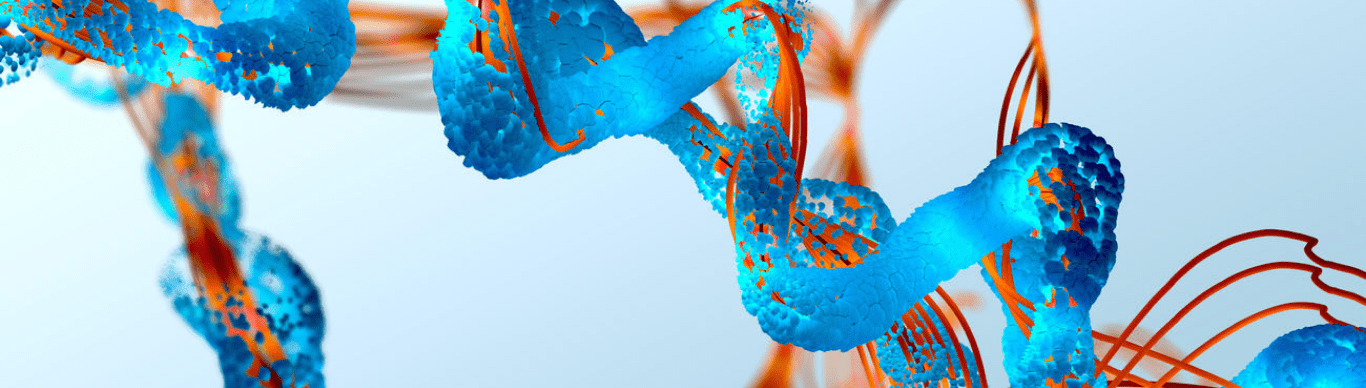
There are over 7,000 peptides identified in human biology. We’ve managed to synthesize roughly 70 of them therapeutically. The five I work with most represent distinct repair functions, but taken together, they describe something larger than any individual compound: a picture of how the body coordinates its own healing.
These compounds don’t operate in isolation. They cross-react with each other, because they’re all part of the same underlying communication architecture. If you’re here for a specific compound, use the headers to navigate. If you’re reading for the larger picture, the connective tissue between them matters as much as the detail inside each one.
Thymosin Alpha-1
What it does: trains the immune system to respond accurately
The thymus gland is not something most people think about past childhood. When you’re young, it’s really big and very active. It’s where the immune system learns. T cells mature there, acquire the ability to recognize novel threats, and graduate into circulation equipped to respond to things the body has never encountered before.
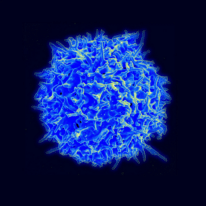
As we age, the thymus involutes. It shrinks. T cell maturation slows. The immune system increasingly relies on immunological memory rather than the capacity to mount fresh adaptive responses. When something genuinely new arrives (a novel pathogen, an unusual antigen), the aging immune system is working with diminished training infrastructure.
The same biology plays out at the very beginning of life. A newborn, one month old, is extraordinarily vulnerable. Not because of some design flaw, but because they haven’t been exposed to anything yet. Their thymus is enormous, revving up. In the meantime, the mother’s immune system bridges the gap: antibodies cross the placenta before birth, and then colostrum carries that protection through the first ninety days after. The mother is literally lending her immune system to the baby until the baby’s own gets up to speed. That’s how central thymus-driven T cell development is to survival.
The same biology explains why people over seventy are disproportionately vulnerable to infections that younger people fight off without much difficulty. The training infrastructure has been declining for decades.
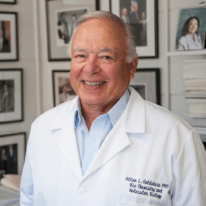
Thymosin Alpha-1 was isolated from thymus tissue in the 1970s by Alan Goldstein’s group at George Washington University. It enhances T cell maturation and activation, boosts natural killer cell activity (which matters in chronic Lyme, cancer surveillance, and general innate immune function), and modulates cytokine signaling. Cytokines are the molecular communication that can either coordinate healing or, when dysregulated, escalate into the kind of inflammatory cascade that became tragically visible during COVID. Part of what killed people in the worst COVID cases wasn’t the virus itself. It was the cytokine storm: the immune system going haywire and attacking the body’s own tissue. Thymosin Alpha-1 helps modulate that whole balance.
It’s been used clinically in over 35 countries for hepatitis B, hepatitis C, autoimmune conditions, and as cancer support during chemotherapy, specifically because it helps support white cell counts when treatment hammers the immune system. Over 11,000 human subjects have been studied in trials. The compound has been around for half a century with a substantial global safety record.
Its absence from U.S. clinical availability has nothing to do with the evidence base. There simply hasn’t been a pharmaceutical company willing to fund the approval pathway. That’s a structural reality about how medical legitimacy gets conferred in this country, and I’ll return to it in the next piece in this series.
Thymosin Beta-4 and TB-500
What it does: helps the body reorganize damaged tissue and know when to stop
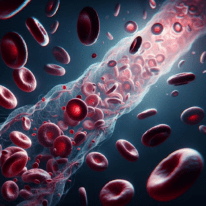
Thymosin Beta-4 (TB-4) was discovered by Goldstein’s same group at George Washington University, around the same timeframe. So again, we’re talking about biology that’s been understood for roughly fifty years. It’s found in high concentrations in platelets and in injured tissue that’s actively trying to repair. When the body sustains damage, TB-4 is part of the first wave of molecular responders.
What it does: it regulates actin synthesis, facilitates cell migration, and stimulates new tissue growth in injured areas. Clinically it’s been explored for musculoskeletal injuries including tendon repair, ligament healing, and wound healing generally.
One application that’s particularly relevant in the patient population I work with involves what happens when the body’s repair process doesn’t know when to stop. In these patients, healing doesn’t complete cleanly. It overshoots into scarring. Connective tissue stiffens. Lungs and kidneys fibrose. A surgical incision that should heal leaves a thick keloid instead. The repair machinery keeps running past the point where it should stand down.
The mechanism involves TGF-beta 1, a marker we measure in Chronic Inflammatory Response Syndrome (CIRS). TGF-beta 1 is an indirect readout of TH17 cell activity, part of the immune signaling that’s supposed to help regulate and calm the inflammatory response. When it’s chronically elevated, that off-switch stops working. TB-4 appears to modulate that cascade, helping restore the signal that tells the repair process to stand down.
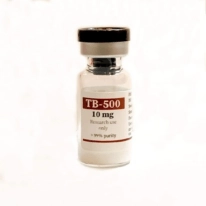
TB-500 (often discussed alongside TB-4) is a 17-amino-acid fragment of the full compound. It carries much of the activity but is not identical. It’s worth distinguishing, because the optimization world tends to use the names interchangeably when they’re not quite the same molecule.
A phase 2 human trial was completed in 2009 and never published. For those who follow research, this isn’t unusual. There are real publication biases at work, where findings don’t get into print because journals won’t pick them up, they don’t fit established narratives, or there isn’t enough funding pressure to push through. The animal data on TB-4 is strong. The clinical use in functional medicine has been ongoing for years. The biology works. The paper trail is just catching up.
BPC-157 (The “Wolverine Peptide”)
What it does: repairs barriers, supports tissue healing, and calms immune reactivity
In the optimization world, BPC-157 sometimes gets called the “Wolverine Peptide,” after the comic book character (one of my favorites) who famously heals from anything, instantly. The nickname captures the cultural expectation: fast, dramatic, almost supernatural recovery.
The actual biology is more interesting than the mythology, and it starts in a much more humble place: human gastric juice.
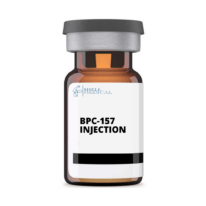
BPC-157 (body protection compound 157) was isolated in the 1990s at the University of Zagreb from the stomach’s own secretions. It’s something your stomach naturally makes to protect and repair its own lining. I know I keep repeating this with peptides, but it’s critical to understand: your body already produces this. Certain gut bacteria make analogs of it. Some probiotics activate similar pathways. Right now, you’re running a version of this program. The question is whether you’re running it at adequate levels.
What BPC-157 does spans a wide range of repair functions:
– It promotes angiogenesis (new blood vessel formation)
– It modulates nitric oxide production
– It interacts with growth hormone signaling to support tissue healing
– It has demonstrated neuroprotective effects in stroke and spinal cord injury models
There’s a 2025 systematic review of 544 papers on BPC-157, and one completed human trial involving intra-articular injection for knee pain. The compound has been used clinically for decades regardless of that gap in the formal trial record.
BPC-157 for Hashimoto’s & Leaky Gut
I use BPC-157 regularly with autoimmune patients, Hashimoto’s in particular. These patients have high antibodies and react to almost everything. Their immune systems are on constant alert, treating the body as a threat. The gut-barrier connection here is central: intestinal permeability (“leaky gut”) and immune dysregulation aren’t separate problems. The barrier failing is part of why the immune system is reactive. Just putting BPC-157 on board has consistently calmed that reactivity in ways that are hard to explain without the gut-repair mechanism underneath.

Any time there’s leaky gut involvement (which is present in virtually every autoimmune condition I see, and in many neurological presentations as well), BPC-157 helps reform those barriers. Leaky gut and leaky brain are not metaphors. They’re measurable failures of barrier integrity with systemic downstream consequences, and BPC-157 addresses the repair side of that equation directly.
BPC-157 for Hypermobility
I use it with my hypermobile patients, people with loose, unstable connective tissue that doesn’t hold repair well. Their tissues heal, but not efficiently. BPC-157 supports the tissue reorganization their biology isn’t doing naturally. “Loosey-goosey tissues” (as I sometimes describe it to patients) need something to help them reorganize.
The Safety Paradox
The safety profile is notable enough that BPC-157 holds GRAS (Generally Recognized as Safe) status, meaning it can be sold as a supplement from a supplement store. The regulatory situation around its compounded form is a separate and somewhat paradoxical story. If that doesn’t quite make sense to you yet, it doesn’t fully make sense to me either. That’s exactly what the next article addresses.
CJC-1295 / Ipamorelin
What it does: restores the body’s own growth hormone pulse
I’ll be direct: I love this stack. It’s the combination I used for my shoulder, and it’s the one I reach for most often when patients in their forties and beyond are dealing with slow, incomplete recovery that doesn’t have a clean structural explanation. When the underlying problem is declining growth hormone pulsation, it works with the biology in a way that restores something the body has been losing gradually for years.
CJC-1295 is a synthetic analog of growth hormone releasing hormone (GHRH). It stimulates your body’s own pituitary to produce growth hormone. Ipamorelin works differently: it mimics ghrelin, one of the satiety and energy-regulation hormones, and amplifies growth hormone release through a separate pathway while simultaneously blocking the enzyme that breaks GH down. Together they’re acting at two different points in the axis, one stimulating production and one preventing breakdown. That’s why they stack so well.
CJC-1295 and Ipamorelin work with your body’s pulsatile rhythm rather than overriding it.
Growth hormone receptors are saturable. There’s a threshold (in my clinical use, roughly seven to eight units) past which additional stimulus doesn’t produce additional effect. The receptors simply don’t have the capacity to respond to more. This is actually a safety feature: it creates a built-in ceiling. Once you’ve hit the threshold, more doesn’t mean more. It also doesn’t mean harm. The system stops responding rather than escalating.
CJC vs. DAC
Contrast CJC with DAC, a version I don’t use at all. The DAC component gives it a half-life of seven days. That turns a molecule designed for pulsatile behavior (in and out over a few hours) into something circulating at potentially 1,000 times normal elevation for nearly a week. You don’t want that. The goal is a 100–200% elevation over four to six hours, then normalization back to baseline. That’s working with physiology. A 1,000% elevation for six days is working against it, and that’s where legitimate cancer risk concerns around growth hormone (prostate, ovarian, lung, breast) begin to have real grounding. The DAC version can override the saturable-receptor safety feature. That’s the whole problem with it.
CJC & Sleep

Sleep is where many patients notice the most immediate benefit from CJC/Ipamorelin, and it makes sense once you understand the mechanism. Growth hormone secretion and deep sleep architecture are tightly coupled; they reinforce each other. When GH pulsation declines with age, you sleep less, and the sleep you get is shallower. Less depth, less restoration. Using this combination at bedtime on a fasting stomach can restore sleep architecture, and the downstream repair consequences of better deep sleep are significant on their own.
The abdominal fat redistribution I mentioned at the start of this article (lean everywhere else, accumulating in the middle) often shifts as GH pulsation is restored. Not because of any direct fat-burning mechanism, but because the hormonal signaling governing where and how the body stores energy has moved back toward a more functional state.
GHK-Cu
What it does: rebuilds structural tissue and resets the extracellular environment
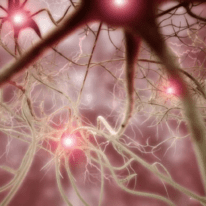
GHK-Cu (glycine-histidine-lysine copper) is the quiet one in this group. Well-studied, still fully available, and underrated. It doesn’t get much attention in functional medicine circles, and it gets almost none in the optimization or muscle-building conversation. But in the aesthetic medicine and plastic surgery world, it’s been used extensively for years. Same compound … completely different cultural containers.
It’s a tripeptide (three amino acids bound to a copper molecule) discovered in the 1970s. Your body produces it naturally, with levels highest in youth and declining with age (the same pattern as every other compound in this article). It stimulates collagen synthesis and the production of glycosaminoglycans (GAGs), the structural components of connective tissue, cartilage, and the extracellular matrix. It promotes nerve growth. Early-stage research suggests it may help reset gene expression in tumor cells toward more normal patterns, though that application is still early.
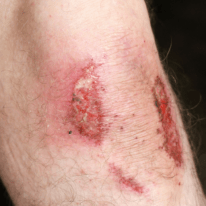
It wasn’t caught in the 2023 FDA crackdown that affected many of the other compounds in this series. It remains Category 1 and can still be compounded. I use it topically, often in combination with other regenerative treatments, for wound healing, skin regeneration, and tissue repair. For hair regrowth and skin quality applications, it’s been a staple in dermatology and aesthetics for a long time.
The reason you won’t hear about it much in the peptide conversation online is simple: it doesn’t do anything dramatic for building muscle, and it doesn’t fit the anti-aging optimization stack narrative. So it doesn’t generate clicks.
What these five compounds have in common — the thread that runs through all of them — is that each one is restoring a signal the body already knows how to use. None of them are overriding a system. None of them are introducing a foreign mechanism. They’re reinforcing communication pathways that have gone quiet. That’s the distinction that separates what I’m describing here from the optimization-culture version of this conversation.
The Foundational Work Still Comes First
Peptides belong after the foundational work, not instead of it.
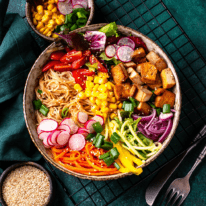
My clinical hierarchy in practice: address sleep, nutrition, and protein quality first. Replace documented deficiencies. Remove toxic and chemical exposures. Repair gut integrity. Then, if the body is still not healing and repairing adequately, and particularly in patients over forty, peptide therapy has a meaningful role to play.
Younger patients ask me about these compounds regularly. Teenagers. College students. People in their early twenties who are training hard and not recovering the way they expect. My answer is almost always the same: this isn’t what you need, and reaching for it now is a way to ensure you’re still struggling in your thirties and forties.
If you’re not healing well at nineteen or twenty, your body is sending a signal. Something in the foundation is off: a nutritional deficiency, a toxin exposure, a sleep problem, a gut issue, inadequate protein quality. Skipping past all of that and going right to the peptide when you’re nineteen or twenty-one doesn’t resolve the signal. It postpones the investigation. The underlying problem keeps running. The patients I’ve seen do this consistently end up having to do the foundational work anyway, a decade later, on a body that spent ten years compensating for something that should have been addressed directly.
The compounds in this article are tools for patients who have done the foundational work and whose repair signaling is still insufficient to meet demand. That’s most commonly because of the cumulative effects of aging, chronic inflammation, or years of biological dysregulation that lifestyle intervention alone hasn’t been able to fully reverse. That’s a specific clinical situation.
What Chronic Illness Looks Like Through a Repair Lens
The patients who have shaped my thinking about these compounds most are not the ones with straightforward injuries or clean diagnoses. They’re the ones who have done everything right and are still not recovering.

Diet is clean. Sleep and stress have been addressed. The gut work has been done. The inflammatory burden has been reduced as much as lifestyle intervention can reduce it. And yet they’re still not healing from injury at a normal rate. Still not recovering from illness the way they should. The connective tissue is still unstable. The immune reactivity is still elevated. The inflammatory baseline is higher than it should be for someone who has removed so many of the obvious drivers.
What I’ve come to believe, watching these patients over years, is that the problem is no longer in the inputs. It’s in the coordination. The body still has most of its structural resources. What it’s lost is the signaling coherence that allows those resources to be deployed in the right sequence, at the right time, in the right tissue.
This is precisely where these compounds do their work. Thymosin Alpha-1 restores the immune system’s ability to respond accurately rather than reactively. TB-4 and BPC-157 address barrier integrity and tissue reorganization — helping the repair sequence complete rather than stall or overshoot. CJC/Ipamorelin restores the overnight pulsatile rhythm that drives the body’s deepest repair work. GHK-Cu rebuilds the structural scaffolding those systems depend on.
These peptides address that coordination layer. They reinforce the communication those systems depend on to function, rather than overriding those systems. That distinction — restoration versus override — is the most important thing to understand about what these compounds are actually for.
What This Series Has Been Building Toward
We started with GLP-1s because they offered the most visible entry point: a medication the public already knew, whose most important effects turned out to be something other than what the public conversation assumed. From there we moved into peptide biology itself, and the question of why molecules the body already depends on feel so culturally foreign.

“Repair signaling” becomes visible in specific patient populations. The Hashimoto’s patient who reacts to everything and slowly stabilizes. The hypermobile patient whose tissues begin to hold repair differently. The fifty-three-year-old physician whose shoulder finally starts cooperating.
The next article takes a different angle. Everything we’ve discussed across this series — the compounds, the clinical evidence, the decades of use in functional medicine — exists in a landscape where access has been narrowing while demand has been expanding. Compounds I’ve relied on for years are disappearing from compounding availability. Some are being restricted not because they’ve been shown to cause harm, but because of how they fit — or don’t fit — into the regulatory categories that govern pharmaceutical legitimacy in this country.
What happens when the system restricts responsible clinical use while doing relatively little to prevent the gray-market sourcing that fills the gap? That’s the question the final piece examines — and it’s the one that determines whether any of what we’ve discussed in this series is actually accessible to the patients who need it.
The next article examines the regulatory paradox at the center of the peptide landscape, and what it reveals about how modern medicine handles interventions that don’t fit its existing categories.