
Migraines | Part 1
What Your Migraine Medications Are Trying to Tell You

Aaron Hartman MD
November 18, 2026

Subscribe
Never miss out on new content from Dr. Hartman.

Look at the list of drugs we use to prevent migraines and something strange jumps out. Blood pressure medications. Seizure medications. Antidepressants. Antihistamines. Nausea medications, dizziness medications, and Botox. When a single condition borrows tools from that many corners of the pharmacy, it makes me think we don’t quite understand what causes migraines and what’s really going on.
Migraines were one of the first places in my career where I started integrating functional medicine with conventional medicine. We had medications that worked well for some people, but not for everybody, and I kept wanting to know what was under the hood. When I look at those medications, I start asking what each one is doing and what that might tell us about the migraine itself. That’s where things get interesting, because some of those same processes can also be influenced through diet, lifestyle, and nutrients.
What a Migraine Actually Is
A migraine is an inflammatory condition of the brain that results in pain. That’s the basic concept.
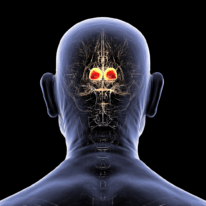
Migraines start deep in the brain, with dysfunction in the hypothalamus and brainstem, and work their way up through the thalamus to the outer layers of the cortex, where you feel the pain. The brainstem runs a lot of your autonomic nervous system, so as the migraine travels upward you can get nausea, vomiting, dizziness, vertigo, and anxiety along with the headache.
About a third of people get an aura first. The aura is a wave of electrical activity called cortical spreading depression, first described by the researcher Aristides Leão, that travels across the brain at about a millimeter or two per minute.1 I get them, and mine starts like a bright light hit me, and then my vision gets worse and worse. Auras vary a lot from person to person, and I suspect far more people have them than the usual numbers suggest. (I’ll cover the many forms auras and migraines take in Article 2.)
The Migraine Threshold
We all have a threshold, a level at which we’ll get a migraine. Some people’s thresholds are so high they never get headaches. I was a little frustrated to learn that. Those are the same people who can drink something ice cold and never get brain freeze. That’s not me.

For most of us, migraines happen when something pushes us over our threshold. Triggers vary from person to person:
- Light and sound changes
- Stress
- Poor sleep (a couple of bad nights can lower your threshold)
- Hormonal cycles and seasonal changes
- Inflammatory foods and fatty acid deficiencies
- Mold in your home or workplace
- Tick-borne illness and viral reactivation
- Gut inflammation
My own migraines started with a concussion in second grade. What kept them coming was pasta, wheat, and bread, which I ate a lot of in college, when my migraines were horrible.

This is why the first thing I ask migraine patients to do is keep a headache calendar. Patterns show up that you’d never notice otherwise. A headache can show up 48 hours after a food, and without writing it down you’d never connect the two. Headaches that disappear on weekends can point to a moldy school or workplace. Headaches that ease on vacation can point to a moldy home. Once you know what’s pushing you over your threshold, you can avoid it.
The next question is whether you can raise the threshold itself. That’s where prevention comes in.
Why Migraine Frequency Matters

Fire begets more fire, and pain is a spark that leads to bigger and bigger fires. When migraines come once a month, there’s time for the brain to settle between attacks. As they come closer together, two or three or four times a month, that recovery window shrinks. Eventually there’s no gap left in the inflammatory cascade, and the pain becomes chronic and low-grade. From there it can get worse and worse.
The headache societies recognize this. Once you’re having four to six debilitating migraines a month, your migraines are considered chronic, and preventive treatment is warranted.2 The goal is to stop that progression before the fire takes over.
The Drug List Is the Clue to Migraine Root Causes
If you take the medications we use one at a time and ask why each one works, you start to see the pieces of the migraine process.
Triptans and the serotonin clue
Triptans like Imitrex and Zomig are some of our best drugs for an attack in progress. For migraines that last two or three days, a longer-acting triptan such as frovatriptan or naratriptan can be a big help. Triptans work through serotonin pathways.3 Ninety percent of your serotonin is made in your gut. So maybe your gut has something to do with migraines.
Anti-inflammatories and blood vessel drugs
NSAIDs are anti-inflammatory, which fits a condition that’s inflammatory at its core. The ergot alkaloids, like DHE, derived from the ergot fungus, constrict blood vessels. I had one patient develop a stroke from DHE because she was using it so much, so I don’t use those medications anymore.
CGRP and the mast cell connection
The CGRP inhibitors, like Ajovy, are my favorite preventive, and they work amazingly well for some of my most difficult patients. They’re usually one of the later things I reach for, after dietary, lifestyle, and nutritional changes. CGRP is also where the genetics point. Somewhere between 30% and 60% of migraine risk is genetic, and one of the genetic regions tied to migraine involves calcitonin gene-related peptide, or CGRP. There are oral versions of these drugs now, though in my experience the injectables work a little better.4 What interests me is that they tend to work especially well in my patients with dysautonomia and mast cell activation syndrome (MCAS). As their headaches come under control, those other conditions tend to get better too.
Why would a blood pressure pill prevent a migraine?
Beta blockers like propranolol and metoprolol can prevent migraines. So can angiotensin receptor blockers (ARBs) like candesartan and telmisartan. Why does no one ask how a beta blocker works for migraines? We know candesartan is anti-inflammatory and helps with metabolism. Propranolol blocks sympathetic overdrive (the fight-or-flight response). Are these drugs blocking the sympathetic overdrive that drives the blood vessel changes in a migraine? Makes you kinda wonder. And if that’s part of it, are there things you can do, like breathwork and vagal nerve activation, that do something similar without a medication? The answer is yes.
Seizure drugs raise the threshold
Anti-seizure medications make sense to me. Drugs like Topamax and valproic acid basically take your seizure threshold and bump it up. Unfortunately, they can also leave you foggy and not thinking clearly.
Antidepressants and antihistamines
The tricyclic antidepressants, like amitriptyline and nortriptyline, have given me good results in certain patients, particularly those with other pain syndromes who are also dealing with dysautonomia and mast cell issues. Antihistamines help too. Hydroxyzine and Benadryl act on the central nervous system, while Claritin and Pepcid stay peripheral and work on histamine in your body and your gut. It’s interesting how you can use a mast cell angle to help with prevention.
So what are the medications telling us?
Inflammation, serotonin and the gut, blood vessel tone, sympathetic overdrive, how excitable the brain is, and mast cells all seem to have a hand in migraines. Botox, which neurologists use for some patients, adds the fascia to that list. Each drug works on one or two of those pieces, which may be part of why a medication that works well for one person does nothing for the next.

Many of those same pieces can also be influenced without a prescription. Breathwork and vagal nerve activation calm sympathetic overdrive. Cefaly, a device worn on the forehead, stimulates the V1 branch of the trigeminal nerve directly. Diet works on inflammation and the gut. Magnesium settles an excitable brain, and quercetin calms mast cells. Once you understand the mechanism, you can start to see how so many different things can affect this one condition.
In my clinic, I’ve been able to improve patients’ migraines without going to trigger point injections or nerve blocks. We do some of those in the office, and with some patients you can go in, hit the spots with a little procaine or lidocaine, and knock the migraine out. But can you treat people so they don’t need those things at all? Once you find what’s at the root and address it, you can literally make the headaches melt away. (I’ll walk through the food, gut, and nutrient side in Article 3.)
Catching a Migraine Attack Early
The time to act on a migraine is at the front end. During the aura, the blood vessels in your head dilate, and then as the headache develops, they constrict. That dilation phase is when you feel the aura, when you feel off or a little funny. It’s your window to stop the worst of it. Caffeine helps here because it constricts blood vessels, and if you use a triptan, this is when you want to take it.5

My own cocktail at this stage of my life is magnesium, caffeine from coffee, and an antihistamine like Claritin or Benadryl, plus or minus aspirin depending on how bad my aura is. Everybody’s is different. With my patients, I figure out a cocktail that works for them. For some people it’s a shot of Toradol. For some it’s Toradol with Phenergan, or Reglan, or IV Benadryl, or IV magnesium.
Back in the ’80s and early ’90s, before we had all these fancy medications, we’d give people IV magnesium in the ER for their headaches. That’s all we had, and it worked great. (I go into forms and home dosing in my post on magnesium for migraines.)
Vagal nerve activation can help during an attack too, whether that’s breathwork or something else that switches on the vagus nerve.
The Rebound Trap: Medication Overuse Headache
One thing you never want to do is get on opioids or opioid-like medications for migraines. They can make the pain worse over time. The same goes for frequent Tylenol or butalbital. If you’re using any of these more than two or three times a week, you can start getting withdrawal headaches.6 A lot of people don’t realize their chronic headaches are actually medication withdrawal headaches.
Migraine Red Flags and Stroke Risk

Migraines are a diagnosis of exclusion, which means the bad stuff has to be ruled out first. Infections, tumors, parasites, Lyme, brain bleeds, autoimmune disease, and sleep apnea are among the many things that can cause headaches. Red flags include neurological symptoms, headaches that nothing helps, and headaches that are new, changing, or getting progressively worse. Headaches that come with symptoms elsewhere in your body need a closer look too. Always work with a licensed practitioner who can rule these out.
If you have migraines with aura, you also carry an increased risk of stroke. That means you don’t want to be on estrogen-containing birth control pills, particularly as a woman over 35.7 You don’t want to smoke, and you want to avoid anything that drives your blood pressure up. As my patients go through menopause and get older, blood pressure and the usual cardiovascular concerns become a bigger and bigger deal.
Change From the Bottom Up

Every one of those medications is a clue to what’s happening in a migraine. So are your triggers, your gut, and your nutrient levels. The more of those clues we follow, the more options open up. Many of those options never come up in a typical appointment.
That changes when patients learn what’s possible and start asking their providers for it. As patients demand it, insurance companies will have to pay for it, and providers will have to change how they practice. That’s how we change our healthcare system from the bottom up, not the top down.
Knowing what to ask for is where that starts, and it’s what I try to give you in our newsletter every week.
Notes