
Long COVID
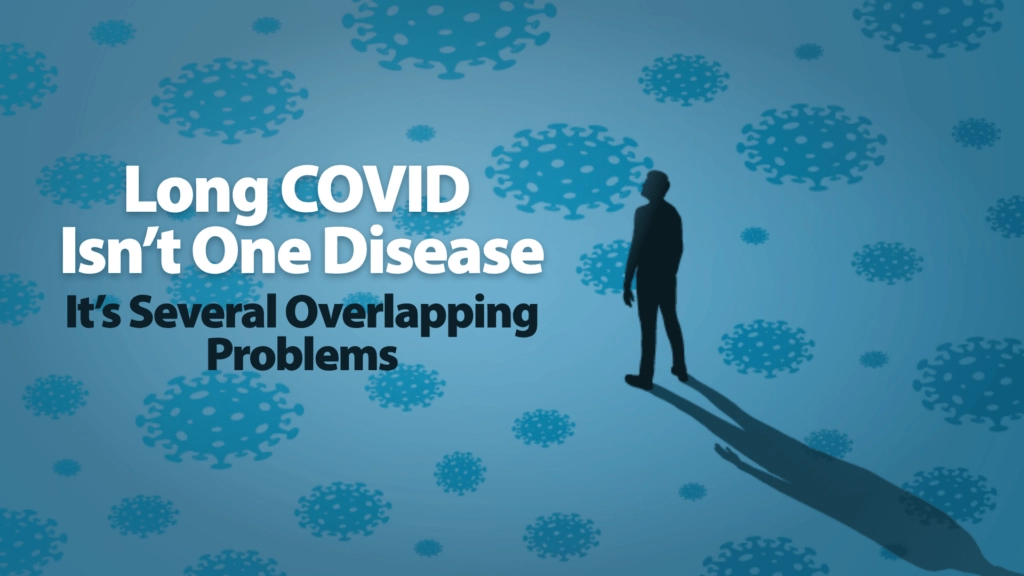
Long COVID Isn’t One Disease. It’s Several Overlapping Problems.
Aaron Hartman MD
July 1, 2026
Subscribe
Never miss out on new content from Dr. Hartman.
When the government walks away from Long COVID, who picks up the work?
On paper, the answer is your primary care doctor. In practice, think about what that visit looks like. You get ten minutes. In those ten minutes your doctor is supposed to screen you for depression, ask about your vaccines, maybe check your ID, and call your insurance about a prior authorization. So when, exactly, does he also work through something as complicated as Long COVID with you? Christian Jenski, my friend and co-host on these conversations, has a two-word answer for that: “You don’t.”
You can’t. You might try, but you won’t get far.
That’s not a knock on primary care doctors. It’s a description of a system that has no room in it for this kind of illness. And it’s worth being honest that Long COVID is exactly that kind of illness, because for five years now the search has been for the thing it is. The one test that nails it. The one marker on a panel. That search keeps coming up empty, which has quietly led a lot of smart people to wonder whether the illness is even real.
It’s real. The search keeps failing because Long COVID was never one disease with one cause and one test. It’s several different biological problems that overlap, in different combinations, in different people. The useful question isn’t “what is it?” The useful question is “what’s running in this person?” Answering that takes pattern recognition and time, and it takes a way of thinking about the body as a set of connected systems instead of a row of separate organs. That difference is the whole ballgame.
Why No Specialty Owns This
Christian spent years in emergency medicine before coming to functional medicine, and he doesn’t soften it:
No one’s claiming ownership over these cases. No one wants to steer the ship. So it’s like, okay, we need pulmonology because there’s clearly a respiratory issue. Oh, now we’re seeing cardiac sequelae, we need cardiology on board. Now we’re seeing all these neuropsychiatric issues, let’s get psych involved. But who’s guiding? Who’s really pulling the strings? They’re just weighing in on their separate organ systems, when the pathophysiology is so deep-rooted it goes down to a cellular level.
That’s the whole problem in one breath. Everyone weighs in on their own organ. Nobody is responsible for the system.

I watched this happen locally. Around 2021 the “multidisciplinary” clinics started popping up. A multidisciplinary clinic is a fancy way of saying a cardiologist, a pulmonologist, and a physical medicine doctor agreed to band together. The operating principle (as I heard it described) was “you stay in your wheelhouse and you stay in your wheelhouse.” Palpitations go to the cardiologist. Shortness of breath goes to the pulmonologist. Everybody minds their own organ.
The trouble is that this illness lives in between the wheelhouses. To chase it across the silos of conventional medicine, you need… eight specialists? Nine? Or, the way Christian finishes the thought, one functional medicine doctor. That’s not a boast. It’s a statement about where the illness actually sits. When I see one of these patients, I’m running several therapeutic trials in parallel, things that would take a year or two to work through if you sent them to one specialist at a time. We do it with one patient in one visit.
The siloed model isn’t failing because the cardiologist is bad at hearts. It’s failing because there’s no cardiologist for “the whole system has shifted into a different operating mode,” and that’s the actual diagnosis.
When Normal Tests Don’t Mean Normal Biology
A normal standard panel does not mean your biology is normal. It means the standard panel wasn’t built to see what’s wrong with you.
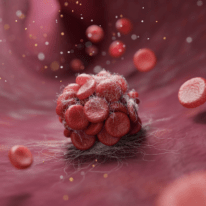
Christian describes a kind of patient we both see constantly. They have “air hunger,” this feeling of not being able to get a full breath. They get the workup. The spiral CT to rule out a blood clot comes back clean. The expensive cardiac workup shows no clot, no myocarditis, no heart attack, nothing. And so, in his words, “they were symptomatic, but everybody thought they were just crazy.” Except they weren’t crazy. When you looked at the right markers, “fibrinogen levels were spiking and D-dimers were spiking.” There were microclots and microemboli too small for the standard imaging to catch. The clots were real. The instruments just weren’t pointed at them.

This is the difference between basic testing and what Christian calls expanded, functional lab testing. The tests that can see this stuff exist. They’re mostly just not the ones you got.
Being told you’re fine when every cell in your body knows you are not fine is its own kind of injury. It makes people doubt themselves. It makes their families doubt them. By the time some of these folks reach me, the disbelief has done almost as much damage as the illness. So when I say your tests being normal is not the end of the investigation, I mean it medically and I mean it as a matter of basic respect. “Normal labs” may just be a signal that we’re looking in the wrong place with the wrong tool. It is not a verdict on whether you’re sick.
The question, then, is what we’ve been missing.
The Four Mechanisms
In my experience it comes down to a handful of mechanisms that keep showing up… alone and in combination. Here are the big four:
Mechanism One: Mast Cell Activation (MCAS)
Start with mast cells, because once you understand them, a lot of the weird, all-over-the-place symptoms stop seeming random.
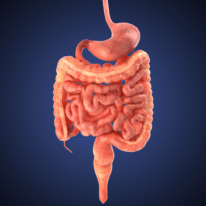
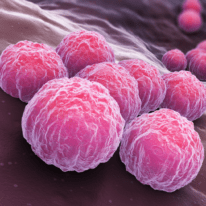
Mast cells line all the orifices in your body. They’re in your GI tract, packed around your blood vessels, around your nerve bundles. They’re stationed at the borders, the places where your body meets the outside world. Because they’re everywhere, when they misbehave they can cause almost any symptom you can think of. Flushing, hives, gut pain, racing heart, brain fog, the feeling that you react to everything. That’s why a mast cell patient’s symptom list can look like someone just opened a medical textbook and pointed at random.
What is a mast cell, actually? Christian’s description is the one I always come back to: they’re “little bags of inflammatory stuff.” They’re immune cells, they’re meant to be defensive, and when they get triggered they dump their contents and make you feel like garbage. Useful in the right context. Miserable when they’re firing for no good reason.
And here’s the good news buried in that: knowing that someone has a mast cell component immediately hands us a whole shelf of things to try, from simple over-the-counter antihistamines up through more targeted prescription and botanical options. I’m not going to lay out a protocol here, and you shouldn’t be building one off a blog post. The point is just that this isn’t a dead end. There are levers.
But mast cells are almost never the whole story. Christian says it plainly, and it lines up with everything I see: “I don’t know of any patients that have mast cell issues and that’s it. It’s usually under some umbrella.” The mast cell trouble is often the loudest symptom, the thing that sends you to the allergist. It’s rarely the root. It’s usually sitting on top of something bigger. Which raises the obvious question: what’s the umbrella?
Mechanism Two: the Cell Danger Response
Picture a bucket. Over a lifetime, your body is collecting exposures, what Christian calls a biotoxin or toxin load. Mold from a water-damaged building. Chronic infections. Chemical exposures. Old head injuries. The bucket fills slowly, and as it fills, your physiology starts shifting. Hormones drift. Inflammation creeps up. And then, at some point, the bucket overflows. That’s the moment, in Christian’s framing, when you flip into chronic inflammatory response syndrome (CIRS).
What happens at the cellular level when the bucket overflows is the part worth slowing down for. Here’s how Christian describes it:
“You’ve hit critical mass, and now the mitochondria just kind of shut down. They go into what’s called the cell danger response. Instead of the normal cell cycle, things go from power plant mode to battleship mode. The mitochondrial genes start to get dysregulated, and you start to have a whole array of pathology, whether that’s clotting or bleeding, whether that’s inflammatory or poor immune responses.”
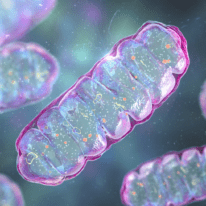
Your mitochondria are the little power plants inside every cell. When they decide it’s no longer safe to make energy, they stop generating power and start playing defense. Now multiply that by trillions of cells and ask what a body does when its cells have collectively stopped making energy and started bracing for attack. It can’t climb the stairs. That’s the fatigue. That’s the crash after exertion. That’s a body stuck in wartime.
What struck me about Christian’s experience is how many different roads lead to the same place. A water damaged building (which is most of them). Chronic Lyme or Bartonella. A history of concussions from contact sports, and then a COVID infection lands as the final straw. Different histories, same destination. And he takes it further:
“Every one of my Long COVID patients is a CIRS patient, and I don’t know if that’s coincidence, but they just are. Now, I’m not saying that COVID caused their CIRS. It was one of the inflammatory, immune-mediated… dare I say: biotoxin-associated hits that pushed them over the edge.”
He isn’t saying the virus created the illness out of nowhere. He’s saying it was one more drop in a bucket that was already nearly full, and it was the hit that tipped it over.
I come at this from a slightly different angle, and Christian and I have gone back and forth on it. There’s another model, the senescent cell model, that describes the same phenomenon from a different viewpoint. I tend to see the cell danger response and senescence as two sides of the same coin. When cells get stuck in this defensive crouch, they’re waiting for the environment to feel safe again before they’ll switch back on. Sometimes you have to gently force them to start turning over, which is why a few of my sickest patients can’t tolerate even a little B12 or folate without feeling worse before they feel better. The cell is stuck, and unsticking it isn’t always comfortable.
But here’s what I want you to take from all of this: a cell that got stuck can get un-stuck. The whole reason we’re mapping the mechanism is that the mechanism has an exit.
Related reading: Christian and I went deep on the mitochondria themselves, why they fail and what they actually control, in The One Ring: How Mitochondria Control Your Metabolic Fate.
Mechanism Three: the Virus that Won’t Leave…and the Autoimmunity that Follows
There’s a third pattern, and it’s the one that explains how somebody walks out of a COVID infection and, months later, has a brand-new autoimmune disease they never had before.

It starts with a broken handoff. Your immune system has two halves that are supposed to talk to each other: the fast, general first responders, and the slow, specialized weapons that make targeted antibodies and killer cells. Christian describes Long COVID patients as people whose two halves don’t communicate well. “Their immune system doesn’t communicate the handoff between the surveillance and the specialty weapons,” he says. “That bridge is broken.” When the bridge is broken, you don’t mount a clean response. You don’t fully clear the virus. And that’s where, in his words, “the persistence of virus lives,” and where a dormant old infection like Epstein-Barr can wake back up.
Now you’ve got a mess on your hands. Christian calls it a debris field:
There’s this debris field called DAMPs, or damage-associated molecular patterns, and then there’s PAMPs, or pathogen-associated molecular patterns, which is the actual infectious material. So you have persistence of virus, which is a PAMP, and you have your own cells that are dysfunctional, dying, and sending these chaos signals, which are DAMPs.
So your immune system is staring at a battlefield littered with both your own wreckage and enemy wreckage, trying to figure out what to attack.

I first heard about DAMPs and PAMPs back around 2012, from Dr. Mark Houston, who was talking about them in the context of vascular disease. So this is well-trodden ground in the literature. It just hadn’t been pointed at Long COVID until recently.
Here’s how the cascade ends. In all that confusion, your immune system starts making antibodies against your own tissue. When your body makes antibodies against itself, that has a name. It’s autoimmunity. And so, as Christian puts it, “now all of a sudden you got Hashimoto’s thyroiditis,” an autoimmune thyroid condition that wasn’t there before the virus. And in our broken system, that new diagnosis “gets you to a rheumatologist when you need an integrative specialist to walk it back.” You get routed to the organ, again, when the problem is the cascade.
I want to be careful to say what this means, because it’s the hopeful part and it’s easy to miss under all the biology. That new autoimmunity is a late chapter in a longer story. It’s a snowball that started rolling somewhere upstream and picked up size as it went. And a snowball that’s still rolling is a very different thing from a stone wall. If you can find where it started, you can often slow it, and sometimes you can walk it back. The fact that you have antibodies now that you didn’t have two years ago means there was a “before.” And a before implies a path. Treating the thyroid antibody by itself, without addressing the cascade that produced it, is treating the smoke instead of the fire.
And then there’s the one that surprises people, including doctors.
Mechanism Four: the Nervous System Holds the Pattern in Place
You can fix the biology, genuinely fix it, and the person can still be stuck. Because the nervous system has learned the pattern and won’t let go of it.
I say it this way to my patients: if the nervous system doesn’t realize the body is safe, it keeps you stuck. The original threat is gone. The infection cleared, the inflammation came down, the labs look better. But the nervous system is still running the emergency program, still bracing, still treating ordinary inputs as dangers. And a body that’s convinced it’s under threat doesn’t heal well.
I had a patient who shows exactly how deep this can go. Somewhere along the way, before she came to me, someone gave her NAC, which is a common, ordinarily gentle supplement. She had a near-death anaphylactic response to it. It messed her entire system up. By the time we were working together, her body had become so reactive that it took us about a year and a half just to get her to where she could tolerate more than three foods and start taking supplements again. And the work that got her there wasn’t another drug. It was resetting her nervous system, teaching her body, slowly, that it was safe again.
There’s a field of medicine for this: limbic retraining and the polyvagal approaches. I’m not going to detail techniques here. The point I need you to walk away with is that “retrain the nervous system” is a genuine lever (not a euphemism for “it’s all in your head”). Your nervous system is a physical system doing physical things… and those things can be changed.
This mechanism is also why two patients with nearly identical labs can recover at completely different speeds. It’s why “your tests are normal now, so why aren’t you better?” has an actual answer. The body learned the pattern, and it has to learn safety.
Same Mechanisms, Different Name Tags
Now step back and look at all four of these at once, because this is the part that reorganized how I think about every chronic illness I treat.
Long COVID. CIRS. Chronic fatigue syndrome. Fibromyalgia. Chronic Lyme. POTS and dysautonomia. Post-concussive syndrome. We treat these as separate diseases, each with its own specialist and its own name. But when you get down to the cellular level, they’re running the same handful of mechanisms I just walked through. I say this to patients all the time: this is also mast cell, this is also chronic Lyme, this is also post-concussive syndrome, this is also mold illness, this is also dysautonomia. The face under the mask keeps turning out to be the same face.

Two things follow from that, and they’re the practical payoff of the whole article.
The first: the same symptom can come from different mechanisms. Two people both have brain fog and crushing fatigue. In one, it’s mast cells. In the other, it’s mitochondria in battleship mode. Same complaint, completely different fix. If you treat them the same, you help one and you waste the other one’s time.
The second, which is stranger: the same mechanism can produce different symptoms. The cell danger response shows up as blood clotting in one person, as dysautonomia in another, as depression in a third. One root, three faces.
And the name you get hung with often has more to do with which door you happened to walk through than with what’s actually driving you. Walk into an endocrinologist’s office and you walk out with “Hashimoto’s.” Walk into a rheumatologist’s and it’s “fibromyalgia.” The label tells you which hallway you’re standing in. It doesn’t tell you what’s wrong.
This is the answer to the question I hear most often: why does my Long COVID look nothing like my friend’s? You’re both running some mix of the same four mechanisms, in different proportions and different orders. The illness is more like a recipe than a diagnosis. Same ingredients, different amounts, and you get two dishes that don’t look anything alike.
Where This Leaves Us

If the illness is a recipe rather than a diagnosis, then a one-size-fits-all Long COVID protocol was never going to work (for the same reason there’s no single recipe that makes every meal). You have to read what’s actually running in the person in front of you, and in what proportion, and decide what to address first.
And every one of those four mechanisms is something we can name, find with the right testing, and act on. The stuck cell can be coaxed back to power-plant mode. The snowball can be stopped while it’s still rolling. The reactive nervous system can be taught that the danger has passed. None of that is a promise that any one patient gets all the way back. It’s something better than a promise: a set of real, specific places to push.
Which brings up the question patients are most often told to stop asking. If these mechanisms are real, and each of them can be treated, then what actually happens when you start treating them? That’s the next conversation.
This is the second piece in a series. Next, we get to the part patients are most often told to stop hoping for: what actually happens when you start treating these mechanisms. If you want it when it lands, subscribe to Made for Health — our newsletter on the medicine that doesn’t make the headlines.