
How Oil Is Processed
The 60 Quintillion Problem in One Tablespoon

Aaron Hartman MD
August 12, 2026
Subscribe
Never miss out on new content from Dr. Hartman.
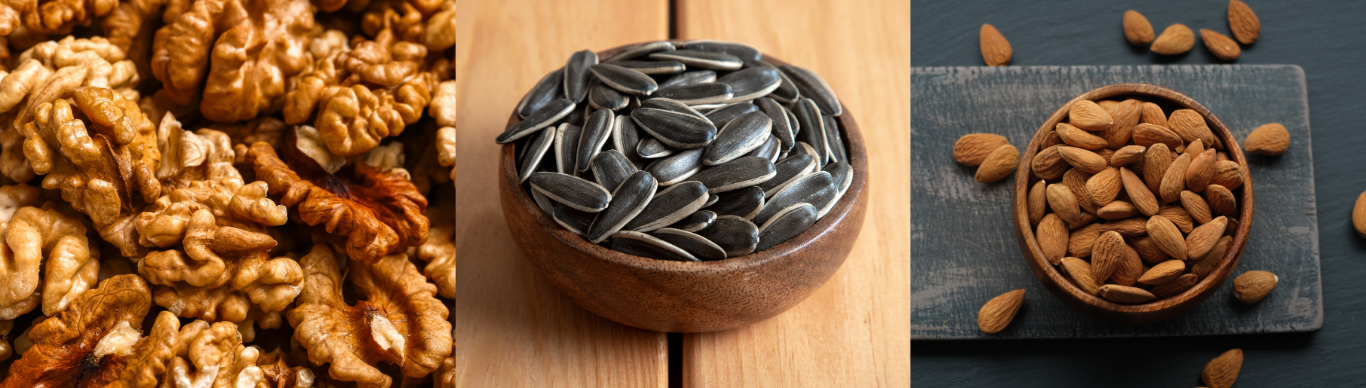
Here’s something that should bother you (it bothers me): A handful of walnuts, a scoop of sunflower seeds, a few almonds… Every one of those is tied to living longer. Eat the whole seed, and the research puts you ahead. Press the oil out of that exact same seed, put it in a clear bottle on a shelf, and somehow that (same?) fat is now supposed to give you cancer.
Same fat. Opposite story.
For about 50 years the rule in this country was simple: fats are bad. The food pyramid drilled it in. This past January the official guidance flipped and fats were fine again… except now seed oils are the new villain. People are confused. I don’t blame them.
Except it doesn’t add up. If the fat inside the seed were the problem, the seed itself would be the problem. It isn’t. The seed is still health food. So whatever turns that seed into something you should fear happens somewhere between the seed and the bottle.
I recently sat down with Udo Erasmus and put this exact paradox to him. He’s been working on it for 40 years, and his answer is the clearest way through the seed-oil noise I’ve come across.
Omega-6: Essential, and Blamed Anyway

Start with the fat everybody’s mad at. Omega-6 isn’t optional:
“Omega-6 is an essential nutrient. What does that mean? You can’t make it, you’ve got to have it, you’ve got to get it from outside. If you don’t get enough, your health will deteriorate. And if you don’t get enough long enough, you die.” — Udo Erasmus
Then he ran into the contradiction that set the next four decades in motion:
“The next study I got said omega-6 gives you cancer and kills you. So it’s essential and it’s going to kill you. I said, okay, I must be missing something.” — Udo Erasmus
Essential and lethal at once, from the same nutrient. How does that work? Udo’s one-line answer, after forty years of chasing it:
“The people who talk about seed oils are blaming an essential nutrient for what they should be blaming on the damage done to that essential nutrient by industry or in the frying pan.” — Udo Erasmus
Let’s be fair to the seed-oil crowd here, because they’re onto something real. People are getting sick off the modern fat supply. That part is 100% true. They’ve just fingered the wrong suspect. They’re right about the smoke and wrong about the fire.
Fat is bad for you when it’s the wrong kind of fat, and good for you when it’s a good fat. But you can also take a perfectly good fat and ruin it. Burn an omega-6 and load it with pesticide residue and yes, it will hurt you. Keep it clean and it’s one of the nutrients you literally cannot live without.
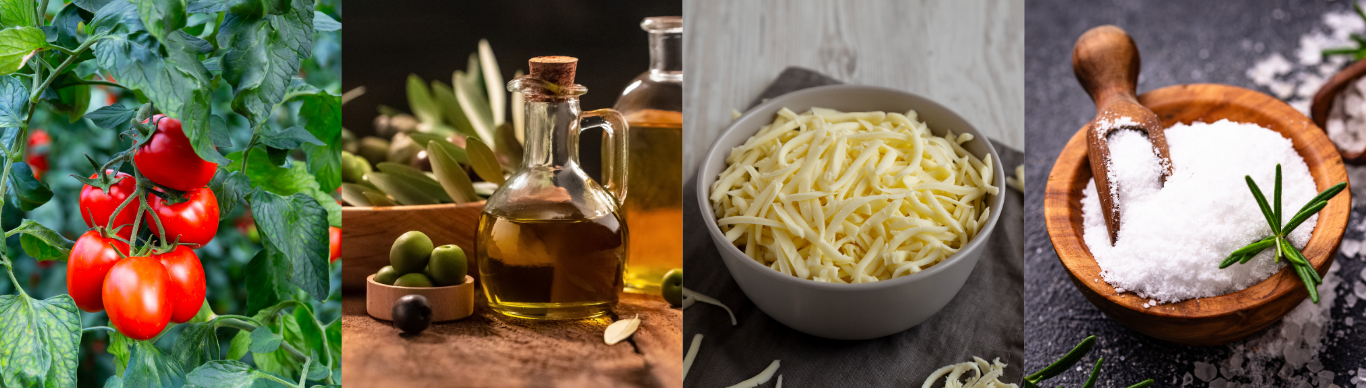
And clean fat does more than keep you alive. It’s what lets your body absorb a whole class of nutrients: vitamins E, D, A, and K need fat to get in, and so does lycopene, the compound that makes a tomato red. We’re in tomato season here in Virginia. A good tomato, real olive oil, a little mozzarella and salt. It just tastes so good, and the fat is quietly carrying the nutrition in while you enjoy it.
You need both omega-6 and omega-3, in something close to balance, and most of us are tilted hard toward the inflammatory side. Why that ratio matters so much, and what these fats are doing inside your cell membranes once they’re there, is a whole story of its own. If you want the mechanics, start with how fat actually builds and runs your cells.
The Man Who Figured This Out
So who is this guy, and why take his word over the loudest accounts in your feed?
Back in the eighties, Udo built the machinery and the method for pressing oils with health in mind instead of shelf life. He got inducted into the Canadian Health Food Association Hall of Fame for basically starting that industry from nothing. Forty years on the same problem.
But in four decades, the voices warning you off these oils have, by and large, never once picked up the phone to talk to the man who worked out how the damage actually happens. Don’t make the same mistake and simply accept the next scary headline about your cooking oil.
Let’s go to the source.
What Actually Happens When Oil Is Processed

Follow one bottle of ordinary supermarket oil through the plant. Here’s the sequence, in Udo’s own words:
“To give them a long shelf life, the industry treats them with harsh chemicals like sodium hydroxide and phosphoric acid, then with bleaching clays to take out the color molecules that absorb light. Then the oil goes rancid, so they heat it to frying temperature for about half an hour before it goes in the bottle, to blow off the rancid molecules.” — Udo Erasmus
Before the oil ever reaches you, it gets heated to frying temperature for half an hour. It has been fried once already, in the factory, and you haven’t even opened it yet.
That final heating step has a name: deodorization. And this is where Udo found the thing nobody talks about. He called a processor and asked why they run it (knowing full well it damages the oil).
“I called them and said, why do you do this when you know it damages the oil? The guy said, one reason we do it is because we can get rid of half of the pesticides in the oil. And in my head I’m going: oh, the other half of the pesticide stays in.” — Udo Erasmus
Half of the pesticides. That’s the sales pitch. Which means the other half rides along into the bottle, and pesticides are fat-soluble, so oil is exactly where they concentrate. Many of these compounds are petroleum distillates to begin with, the same family of chemistry as the food dyes and industrial residues that saturate the modern world. You aren’t buying sunflower oil. You are buying sunflower oil plus half its pesticide load…cooked.

And the bleaching step does its own quiet violence. Strip the color molecules and you kick off a chain reaction:
“The color molecules absorb light. The light damages the oil by free radical production. A single electron will go steal an electron from a pair, and that goes through 30,000 times on average before the electrons settle down again.” — Udo Erasmus
One damaged electron and 30,000 reactions before the dust settles. Heat and hydrogenation don’t just spoil the oil either, they change its shape, and your body ends up building that misshapen fat into your cell walls. What a plastic-like fat does to a membrane once it’s lodged in there is its own mechanism, and I’ve written it up in full: how damaged fat gets built into your cells and stops them working.
Sixty Quintillion Damaged Molecules. In One Tablespoon.

When Udo pushed the processor on all this, the guy gave him the answer the whole industry gives:
“He got mad at me. He said: it’s only 1% damaged, it’s 99% good. If you got 99% on an exam, you’d be damn happy, wouldn’t you?” — Udo Erasmus
It’s a good line. 99% sounds like an A. So Udo started asking audiences a question, and I’ll ask you the same one before I give you his numbers. A tablespoon of oil that’s only 1% damaged: how many damaged molecules are you actually swallowing?
When he put it to me, I did the math in my head and guessed. Somewhere between three and ten billion, I figured.
“Your estimate is 10 zeros too short. It’s a sixty followed by eighteen zeros. Your estimate is 60 billion times lower than it actually is. So it’s 60 quintillion damaged molecules.” — Udo Erasmus
60,000,000,000,000,000,000

Numbers that size stop meaning anything, so here’s what it works out to in your body:
“That’s more than a million damaged molecules for every one of your body’s 60 trillion cells, in that one tablespoon. And we use 2–4 tablespoons a day.” — Udo Erasmus
A million damaged molecules for every cell you have. From one tablespoon. And then it compounds:
“We have plastic in the oil, because plastic leaches into oil faster than into water. When we fry them, multiply that number by another 5–10 times. Do that for 30 years, and you should be shocked if you’re not completely messed up.” — Udo Erasmus
That’s the number the “only 1%” line is built to keep you from ever running.
How a Health Scare Gets Manufactured
Once you see the pattern, you catch it everywhere, including in the studies that get turned into headlines. Here’s one I worked through myself.
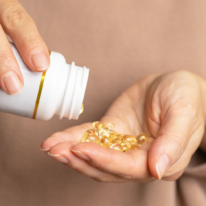
Maybe 15 years ago an article came out saying fish oil causes prostate cancer, and everybody got upset. It didn’t feel right to me, so I actually read it. They checked blood levels of omega-3, noticed higher levels tracked with more prostate cancer, and assumed those people were taking fish oil. But they never asked whether they were supplementing.
Read that carefully. They saw a correlation, higher omega-3 in the blood alongside more cancer, and then filled in a cause they never checked. Nobody asked the men whether they took fish oil at all.
Udo knew the study and closed the loop on where it really went wrong:
“They concluded flax oil causes prostate cancer, but they never used flax oil. They used alpha-linolenic acid out of ampoules, and ampoule oils are highly refined, highly chemicalized, highly processed. It’s the damage done to the alpha-linolenic acid that causes the problem.” — Udo Erasmus
And the kicker:
“They didn’t even study prostate. They just did cell cultures.” — Udo Erasmus
No flax oil, no men, no prostates. A cell-culture study on damaged refined oil, reported to the public as “flax oil causes prostate cancer.” It’s the exact same error as the seed-oil panic, just one layer down. Blame the molecule, miss the damage. Keep that template handy the next time a nutrient you’ve relied on your whole life suddenly gets a scary headline.
So What Do You Actually Do?

By now you’re probably convinced the damage is real, and you can feel the size of it. But here’s what keeps me hopeful after years of watching this in the clinic: a mother can bottle-feed her kid rancid oils, a person can eat this way for decades, and what still amazes me is how long it takes to get sick, and how fast people turn around once they change it. I’ve watched people who were sick for years, kids with autism, adults with traumatic brain injuries, start healing surprisingly fast once the body finally has the right fats to work with.
The honest answer to what comes next has two moves: stop pouring the damaged fat in, and help your body clear out what’s already stuck. Both are more doable than the size of that number makes them sound.
1. Stop the input first.
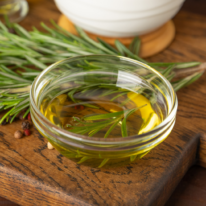
The fastest win is swapping the oils you cook with, since those are the ones you use in the largest amounts and heat the hardest. Working out which specific brands are actually clean is the tedious part, and somebody’s already done it for you: audit your kitchen in fifteen minutes, or go straight to the brand-by-brand sourcing guide.
2. Clear what’s stuck.
The damage isn’t permanent. Your body can run its own oil change: flood it with clean fats and help it lift the old, damaged fat back out. There’s a real clinical protocol for that, and it’s the payoff to everything you just read: how to do an oil change on your own body.
The Point of All of It

I’ll give Udo the last word:
“You inherited a genetic program that has never failed reproductively for four and a half billion years. Don’t screw it up in your lifetime.” — Udo Erasmus
Four and a half billion years of biology got you here, intact. The bottle on your counter is one of the few variables in that whole chain you get to decide today.
Where to go next. If you’re ready to act, pick the move that fits where you are. To stop the input, audit your kitchen and check the sourcing guide. To clear what’s already stuck, read how to do an oil change on your own body.