
Demystifying Mast Cell Activation Syndrome (MCAS)
A Conversation with Dr. Lawrence Afrin

Aaron Hartman MD
September 11, 2024
Subscribe
Never miss out on new content from Dr. Hartman.
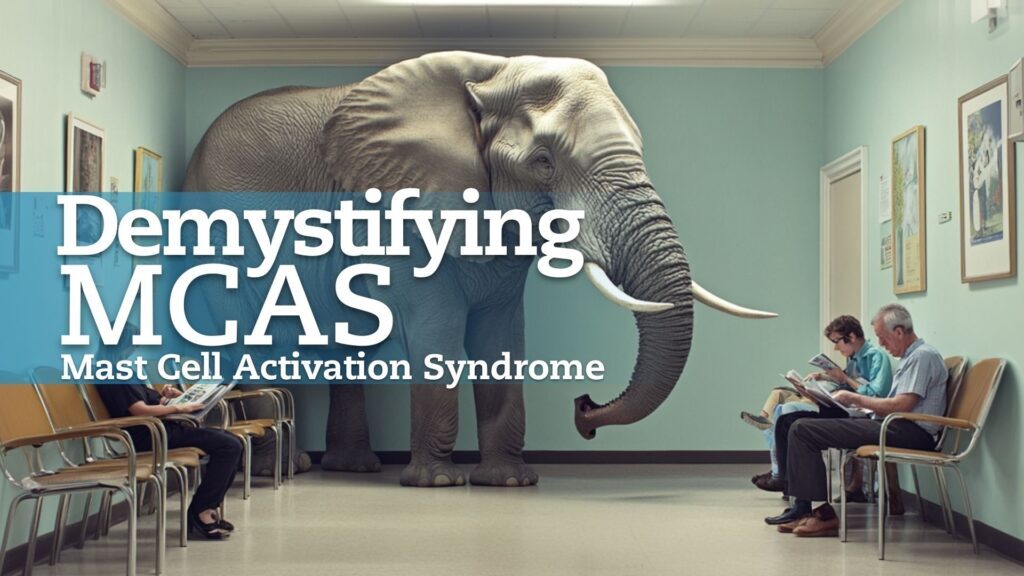
If ever there were an 8,000-pound invisible elephant in the medical profession’s waiting room, it’s this disease. Because again, every doctor has been seeing these patients. They just haven’t been able to recognize it.
I’ve been thinking about this statement from my recent conversation with Dr. Lawrence Afrin. In my own experience, it couldn’t be more accurate. For years, I’ve seen patients in my practice who presented with a dizzying array of symptoms—chronic inflammation, digestive issues, joint pain, and more. They had been to doctor after doctor, undergoing test after test, only to be told that nothing was wrong. And yet, they continued to suffer.
It wasn’t until I began to learn more about Mast Cell Activation Syndrome (MCAS) that I realized these patients had been right in front of me all along—I just didn’t know what I was looking at. Dr. Afrin also said, “Honestly, in the vast majority of these patients, you can trace at least some of their symptoms back to adolescence, and quite often to childhood—sometimes even infancy.” The disease had been quietly building for years without anyone connecting the dots.
In my recent interview with Dr. Afrin, one of the world’s leading experts on mast cell disorders, we dove into the complexities of this often-overlooked condition.
In this article, I’ll share some of the key insights from our conversation in the hopes of bringing more awareness to a disease that is affecting far more people than we realize.
The Ultimate Imitator
What Are Mast Cells & Why Should We Care?
 Mast cells play a critical role in your immune system. Dr. Afrin describes them as the body’s first-line sentinels. Located throughout every tissue in the body—particularly in areas that come into contact with the outside environment like the skin, respiratory system, and gastrointestinal tract—mast cells act as sentinels. When they sense a threat, such as an allergen or infection, they release potent chemicals called mediators (like histamine) which trigger an immune response.
However, in people with MCAS, this system goes haywire. Mast cells begin releasing mediators inappropriately, leading to a range of confusing symptoms—from chronic inflammation and allergic reactions to unexplained growth abnormalities. It’s no wonder I think of MCAS as one of the great imitators.
Why Is MCAS So Difficult to Diagnose?
One of the biggest challenges with MCAS is its variability.
Dr. Afrin explained that because mast cells are involved in so many bodily processes, the symptoms of MCAS can look vastly different from one person to another. One patient might struggle with gastrointestinal issues, another with skin problems, and yet another with neurological symptoms.
As Dr. Afrin put it, these patients “all just have different variants of the same root issue.”
Many of these patients have been misdiagnosed multiple times. What makes MCAS even trickier is that it can overlap with other conditions like:
How to Get Tested for MCAS
MCAS is diagnosed by catching it in the act. The main tests compare a sample taken during a flare with one taken on a calm day, so a single normal result between flares tells you very little.1
Before your next flare
- Ask your doctor: “Can I have standing orders for a serum tryptase during a flare and a baseline, plus a urine kit for N-methylhistamine, prostaglandin D2 metabolite and leukotriene E4?”2
- Keep the urine kit where you can grab it, and check the lab’s instructions for keeping samples cold.
- Find a lab or urgent care near you that will draw blood on an outside order without an appointment.
- Don’t stop any medication to get a clearer result unless your doctor tells you to.
During a flare
- If you have trouble breathing, throat swelling or you faint, get emergency care first. Testing can wait.
- Otherwise, get blood drawn within about two hours of symptoms starting, and collect urine as soon as you can.3
- Write down when it started, what you were doing or eating beforehand, your symptoms, any medication you took and the time of the draw. Photograph any flushing or hives.
What to bring to your appointment
- Your whole problem list, across every system, including things that seem unrelated. Dr. Afrin points out that a long list of inflammatory problems plus odd allergies suggests one underlying cause rather than many.
- A timeline back to childhood, marking when things got worse and what happened in the weeks or months before. He sees flare-ups follow major physical or emotional stress.
- Any antibody test that came back positive when the diagnosis never quite fit. He says MCAS can produce misleading positives and recommends repeating them over time.
- Your flare notes and photos.
An allergist-immunologist is usually the right specialist. If you’re told your results don’t meet the criteria, ask which criteria were used.4
The Pentad Super Syndrome: A Common Thread?
During our conversation, I brought up what I call the “Pentad Super Syndrome”, a cluster of five conditions:
If you’ve been following this blog, you’ve probably already been introduced to the interconnectedness of these conditions. Dr. Afrin believes that MCAS could be the underlying driver of all these conditions, acting as the common thread that ties them together, though he was clear that nobody has proof of that yet.
This resonated with me because I’ve seen the same pattern in my patients. It’s not uncommon for someone with MCAS to have multiple coexisting conditions, which only adds to the complexity of their diagnosis and treatment. Understanding MCAS as the root cause can be a game-changer in how we approach these complex cases.
Environmental Triggers & MCAS: What’s the Link?
One of the most fascinating parts of our discussion was exploring the potential role of environmental triggers in MCAS.
We talked about how modern environmental factors, from mold to chemicals and toxins, might contribute to MCAS. Dr. Afrin was careful here: he said the research is so early that “infancy” isn’t even the right word, more like embryonic.
These triggers can set off the body’s mast cells, leading to chronic inflammation and other symptoms. While research is still in its early stages, it’s becoming increasingly clear that our modern environment may be playing a role in the rising number of people diagnosed (and misdiagnosed) with chronic health issues connected to MCAS.

Personalized Care for MCAS: It’s All About the Individual
One of the most important takeaways from my conversation with Dr. Afrin is that no two cases of MCAS are exactly alike. The variability of symptoms, triggers, and genetic factors means that treatment must be highly personalized.
What works for one patient may not work for another, and it often takes time to find the right combination of therapies to stabilize the condition.
For patients, this can be a frustrating process, but it’s essential to remember that healing is possible—with the right approach. Identifying triggers, stabilizing mast cells, and adopting a personalized treatment plan can significantly improve the quality of life for those with MCAS.
Moving Forward: A Call to Action
If any of the symptoms or conditions discussed here resonate with you, I encourage you to explore the possibility that MCAS could be at the root of your health challenges. Many patients, like the ones Dr. Afrin and I see every day, have suffered for years without a clear diagnosis. But with increased awareness and science-backed solutions, we can offer hope and a path forward.
Dr. Afrin’s advice was to go to the source: reading the peer-reviewed medical literature “is probably the single best source.”
Notes
- Under the criteria most specialists use, the flare tryptase must be at least 20% above your baseline plus 2 ng/mL. The baseline is drawn at least 24 hours after symptoms fully settle. Sources: AAAAI Work Group Report, 2019; Valent, Akin & Arock, 2024. ?
- The prostaglandin test may be listed as 2,3-dinor-11?-prostaglandin F2? or 11?-PGF2?. Whether urine is a 24-hour or spot collection depends on the lab. Sources: Voelker & Pongdee, 2024; Weinstock et al., 2021. ?
- The best window for tryptase is 30 minutes to 2 hours after symptoms start; up to 4–6 hours can still be useful. Source: AAAAI Work Group Report, 2019. ?
- Consensus-1 criteria require episodes in two or more body systems at once, a measured rise in mast cell chemicals and a response to treatment. Consensus-2 criteria require a broad symptom pattern plus one supporting finding. Your doctor may also check for systemic mastocytosis (KIT D816V blood test) and hereditary alpha-tryptasemia (tryptase genotyping), especially if your baseline tryptase is 8 ng/mL or higher. Sources: AAAAI Work Group Report, 2019; Afrin et al., 2021; Afrin et al., 2026; Golden et al., Anaphylaxis Practice Parameter, 2024; NCCN Guidelines, Systemic Mastocytosis, 2026. ?