
Concussions | Part 3
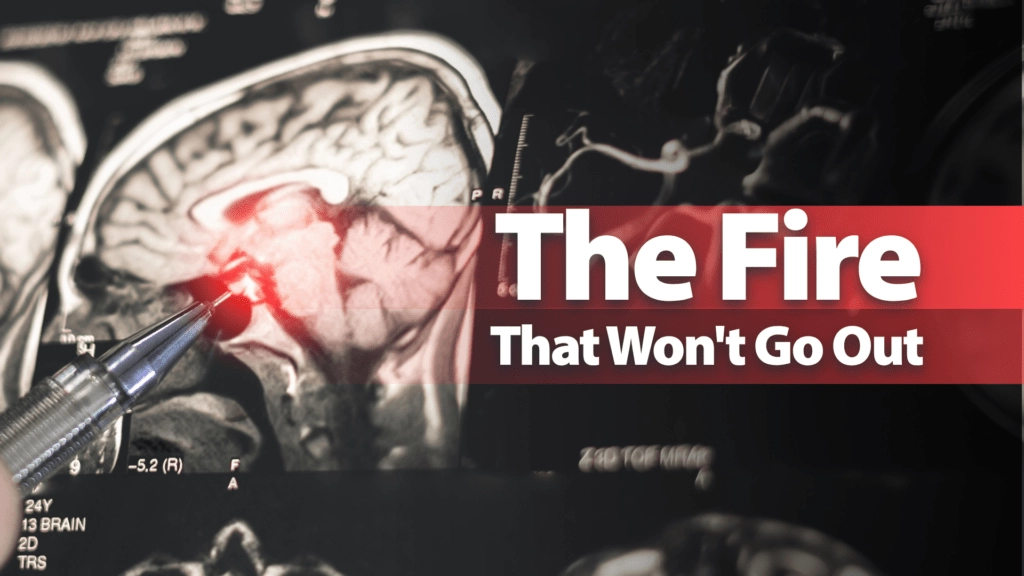
The Fire That Won't Go Out
Why You're Still Not Recovering From a Concussion (and the Road Back)

Aaron Hartman MD
August 5, 2026
Subscribe
Never miss out on new content from Dr. Hartman.
Almost seven years.
That’s how long the symptoms lasted in one group of a hundred people who came in for help with a concussion that wouldn’t resolve. Not seven weeks. Not seven months. As far out as 6.9 years, they were still living with the headaches, the fog, the wrecked sleep, the anxiety that showed up with the injury and never packed its bags.

If you’re somewhere on that timeline right now, a year past your concussion, three years, longer, still waiting for a switch to flip back, you already know the cruelest part of it. It isn’t only the symptoms. It’s the waiting. It’s doing everything you were told to do, resting, backing off, being patient, and watching the calendar turn while the person you used to be stays just out of reach.
The previous article in this series was about how a head injury spreads through the body along the vagus nerve. This one is about something else: why the fire won’t turn off once it’s lit.
The answer isn’t to just wait it out (for seven years). So what actually keeps a brain stuck, and what does it take to get it unstuck?
The fire that outlives the injury
Here’s the piece the standard model misses: for a lot of people, the brain was already smoldering before the concussion ever happened.

We just came out of a seventy-year craze of low-fat eating. One of the things that craze did was pull real fats out of the food supply and swap in seed oils, processed fats, refined carbs, and sugar. Every one of those drives inflammation, including in the brain. So a huge number of people are walking around with a low-grade brain inflammation they’ve carried for years. They feel basically okay. They’re compensating. And then an event comes along, a hit, a fall, a whiplash, an emotional trauma, and it pushes them right over the edge. Once you’re over that edge, the same terrain that set you up makes it very hard to climb back.
If you want to see how the modern plate primed that fire, I’ve laid it out in The Real Story on Fat and my kitchen oil investigation. The short version: the fuel was already there. The concussion was just the match.
The perpetuating causes nobody checks
When somebody stays inflamed for years, it’s almost never one thing. It’s a set of ongoing drivers, quietly feeding the fire, and the standard concussion workup checks none of them.
Ongoing leaky gut and leaky brain will do it. Bacterial overgrowth and gut dysbiosis will do it. Food reactivities will do it, so if you’re still eating the gluten, dairy, soy, or corn your body is reacting to, you’re relighting the pilot every single day.
Mold and mycotoxins are a big one. A lot of what we treat in our clinic is chronic inflammatory response syndrome, and if you’re still living or working in a water-damaged building, you’re not going to heal a brain. It feels like nearly every school around here in Richmond has some kind of mold problem. And it isn’t just the humid Southeast. We travel out to Arizona a lot, and even in the desert, building-envelope issues mean a shocking number of structures out there have mold too. This is the same cascade I write about in the Mold Wars series and in CIRS: The Poster Child of Mystery Illnesses.
Even your electromagnetic environment plays in. EMF exposure by itself can disrupt the blood-brain barrier. Down the road from my house there’s a home going up within a hundred feet of a cell tower, and the crew who’ll work the new car dealership nearby are getting bathed in EMF all day from the tower right behind it. One of my newer patients, in with autoimmune and inflammatory issues, lives right on a golf course, so she’s been getting routine pesticide and chemical exposure without ever thinking twice about it. These are the exposures that keep a leaky barrier leaky.
Then there are the internal drivers. Growth hormone tends to fall as we age, and growth hormone is one of the things that helps your body heal, so when it’s low, you stay stuck. Sleep deprivation. Chronic stress. Neurotoxins like the mercury in old fillings, the mercury in all that sushi, lead, pesticides, heavy metals. A comprehensive nutritional analysis, a heavy-metal panel, and an honest look at your environment can explain symptoms that have baffled everyone for years.
This is the through-line of everything I do: the same inflammatory cascade I see in mold and CIRS, in gut dysfunction, and in autoimmunity. A concussion is simply another way to trigger it. That’s why the person who “just had a concussion” and the person with a mystery mold illness so often end up in the same chair, with the same fire, needing the same kind of detective work. If you’ve been stuck long enough to wonder whether anyone will ever figure it out, When the Mystery Won’t Resolve was written for exactly that feeling.
The five loops that keep you stuck
There are five feedback loops that hold this perpetual brain inflammation in place. I think of them less as a checklist and more as five wheels, all spinning, all feeding each other.
The first is the inflammation loop itself, running on everything I just described. The second is stress. Low-grade stress and high cortisol can, all on their own, induce a leaky gut and a leaky brain. And most people don’t realize how much of their stress is self-inflicted through their environment. Screen light late into the evening is a perfect example. You don’t want blue light in your eyes within a couple hours of bed, because it drives cortisol at exactly the wrong time. Work stress, light stress, emotional stress, they all keep you locked in the non-healing lane. If your nervous system has been stuck in threat mode, The 3 Types of Stress, breathwork for stress relief, and When Trauma Blocks Healing are all part of getting those wheels to slow down.
The third loop is the gut. I won’t rehash the gut-brain axis here, but if your gut is off, it will keep your brain stuck. The fourth is hormonal and metabolic: mitochondrial damage, insulin resistance, low-level hypothyroidism, cortisol that’s either too high or too low, plain old nutrient deficiencies. The fifth is behavioral, the daily inputs of light, screens, and overexertion that keep the fire fed.
The problem is our healthcare system overlooks nearly all of it.
What standard care actually offers
The standard concussion protocol is rest. If rest doesn’t fix it, you get sent to a physical therapist who specializes in post-concussive work. And that’s kind of, sort of, the end of the road.
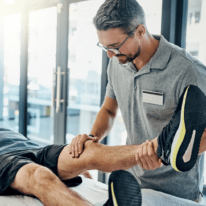
Part of the reason people slip through is that post-concussion syndrome gets diagnosed on symptoms alone. Not a blood test, not an inflammatory marker, not an anatomical scan, just a list of complaints someone matches against a checklist. So if your symptoms are the quiet, systemic kind, the gut and the hormones and the mood, they don’t look like a brain injury to the person holding the checklist, and the whole thing slides right past.
And nobody looks upstream. There’s no hormonal evaluation. No gut evaluation. No nutrient testing. Nobody checks your omega-3 levels, even though low omega-3s give you a pro-inflammatory phenotype, which means your whole system is primed to stay inflamed. When I was in the military, deployed to Landstuhl Regional Medical Center during the second Gulf War, we saw a lot of post-concussive injuries coming off IED blasts, and it was striking how much omega-3s helped those men and women bring the inflammation down. There’s good data on athletes showing the same thing. And still, in standard care, none of it gets looked at.
I’m not angry about this, but I’m tired of watching good people fall through a gap that doesn’t need to be there. The tools exist. The testing exists. Somebody just has to know to look.
The road back: get out of your body’s way
Now the part you came for. What does a real plan look like?
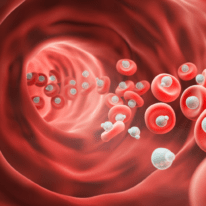
Everything I’m about to describe rests on one idea: your body was built to self-heal and self-repair. Give it what it’s lacking, remove the roadblocks in its way, and it will do what it was made to do. My job isn’t to force healing. My job is to clear the path.
When someone comes in acutely, one of the most powerful things we can do is hyperbaric oxygen, because it bypasses a lot of the blood-flow and metabolic problems the injury created and delivers oxygen straight to starving tissue. When hyperbaric isn’t accessible (and it often isn’t) sensory-deprivation float tanks are the next move, and most people in this country can get to one. I had a patient with uncontrolled diabetes who couldn’t afford hyperbaric. She’d been stuck with post-concussive symptoms for almost six months. We put her in a float tank twice a week for four weeks, and it was remarkable how quickly she turned the corner.
From there the plan moves in stages. I’m going to keep this in plain language rather than hand you a shopping list. None of it is meant to be done alone off a blog post. This is the work of a patient and a provider together.
Stage one is lowering the inflammation.
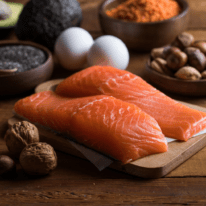
It starts with food. There’s an actual TBI diet, and at its core it’s an anti-inflammatory diet: gluten-free, dairy-free, soy-free, off the genetically modified foods, off the sugar and processed junk, and loaded with healthy fats, especially omega-3s. One detail most people miss is a fatty acid called C15, an essential saturated fat we used to get from full-fat fermented dairy. When we stripped the fat out of milk and cheese, we stripped this out too, and something like a third of Americans now run low on it. Getting real fats and enough clean protein back in, along with plenty of cruciferous and colorful vegetables and choline-rich foods like egg yolks and greens, does a tremendous amount of work. Alcohol comes out. And please don’t try to manage the anxiety with marijuana, because it actually slows the brain’s healing.
Stage two is stabilizing the barriers and the cell membranes.
When the brain leaks, the gut leaks, and toxins that should stay put start driving more inflammation. Tightening those barriers means fewer things getting through, and less damage from the things that do. This is also where correcting the boring, common deficiencies matters more than any exotic intervention.
- Vitamin D is the obvious one. Depending on which survey you read, somewhere between 40–60% of people are low, and I want my patients up in an anti-inflammatory range, not just barely inside “normal.”
- Magnesium is the other. 40–60% of Americans are deficient here also, and magnesium sits right on the NMDA receptor I walked through in the first article, helping shut down the feed-forward cascade that keeps the brain excited and inflamed. Early in my career at the Medical College of Virginia, before triptans and the newer seizure drugs existed, we’d bring people in with blinding migraines or full seizures and give them magnesium intravenously, and it worked so well it almost felt like cheating. It’s old school. It’s cheap. It’s about as safe as medicine gets. I go deeper on it in The Missing Mineral.
Stage three is restoring energy and then remodeling the brain.
The injury disrupts glucose metabolism, which is really an energy-production problem at the level of the mitochondria, so supporting the mitochondria is central to getting unstuck. This is the same energy machinery I call the One Ring in my piece on mitochondria and metabolic health.

Hormones get addressed here too, carefully and by a provider, because a 12-year-old, a 40-year-old, and a 60-year-old have completely different needs. With brain injuries we often see problems with growth hormone and sex hormones, and simply replenishing what’s low, testosterone or progesterone for instance, can free the brain to repair itself. Cortisol is its own lever, and when it runs high, which chronic stress and a chronic injury both push it to do, you can blunt some of that with adaptogenic herbs. Back in the 1960s, Russian athletes leaned on adaptogens to tamp down the inflammation from brutal training loads so they could recoup faster and keep training hard. I use the same class of herbs for a different job: helping a stressed, inflamed brain climb down out of fight-or-flight long enough to heal.
There’s a whole tier of more advanced, provider-directed tools beyond this, from peptides to specialized anti-inflammatory agents, and I’ve watched them help people who’d been stuck for years. But they belong in a supervised plan, dosed and monitored by someone who knows your case, never self-prescribed off an article. If you want the responsible background on that world, my peptide therapy and low-dose naltrexone write-ups walk through it. And because so much repair happens while you sleep, How to Detox Your Brain Without Doing Anything is worth your time.
The one lesson that changes everything: do less
If you take a single practical thing from this article, make it this.

The remodeling stage is where you finally get to be active again. Graded exercise, brain-training work, vestibular rehab if your balance and vision took a hit. But there’s a metabolic threshold, and the people who ignore it pay for it. Here’s the rule I give patients: if you do something and it takes you 2–3 days to recover from it, you did too much.
A good day, a good workout, should leave you feeling fine the next morning. For me that’s yard work. I wake up the next day and I feel good. If instead you wake up draggy, foggy, still recouping from yesterday, you pushed past your mitochondrial capacity, and you set yourself back. This is where young people get into the most trouble, because they start feeling better, they get excited, they push, and they crash. I’ve seen people make their brain injury worse over time by refusing to respect that threshold.
So the counterintuitive heart of recovery is this: for a while, healing means doing less, not more. You stay right below your line. You let the body catch up. That patience is the whole strategy.
Kindling

One more thing trips up a lot of people. A brain that’s been inflamed and overexcited for a long time can start to kindle: the amygdala, your alarm center, gets easier and easier to set off, until your emotional baseline just isn’t steady anymore. Small things spark outsized reactions. That’s not a character flaw, it’s a wiring problem, and wiring can be retrained. This is where nervous-system retraining earns its keep, whether that’s a structured program like DNRS or Primal Trust, or something as old as acupuncture to help settle the system down. It’s the same reason emotional trauma with no physical blow can leave you looking exactly like a concussion patient, and it’s why When Trauma Blocks Healing belongs on your reading list if this is where you’re stuck.
Protecting what you rebuild

Once you’re on the mend, the goal shifts. The brain that’s been hit once is more vulnerable to the next one, so part of the plan is making sure there isn’t a second, third, or fourth injury waiting to undo your progress. This is the long game: keep your omega-3 levels up, keep vitamin D and vitamin C where they should be, and give the brain steady fuel. Creatine is an underrated piece of this, because it helps your cells make energy, which is exactly what a recovering brain is short on. And that same magnesium keeps doing its job on the NMDA receptor, calming the feed-forward cascade before another jolt can light it up. None of this is exotic. It’s a floor you build, so one bad fall doesn’t send you all the way back to the beginning.
There are answers, and there is hope
I want to end where I always end with these patients, because I believe it and I’ve watched it happen with my own eyes: There are answers. There is hope.

I’ve cared for people with some really bad traumatic brain injuries, people who were stuck for years, who got their lives back once we stopped treating the injury as a closed case and started treating the whole person. The gut. The hormones. The environment. The metals and toxins. The sleep. The stress. One piece at a time, we cleared the roadblocks, and the body did the rest.
Because that’s the truth underneath all of it: your body was made to self-heal and self-repair. Give it what it’s lacking. Take away what’s standing in its way. It knows what to do. My daughter’s own healing is a big part of why I do this work, and I’ve told that story in how a serious biohacker helped his daughter heal and in how the incurable became hopeful. It’s the same story I tell at length in my book, UnCurable.
If you’ve been stuck, please hear me: the path back exists, even if no one has walked it with you yet.
This is where we stop waiting and start clearing the path.

You’ve now seen the whole arc: what a concussion is, how it spreads through the body, and why it can smolder for years. The last step is different for every person, and it’s the one I can’t fit in a single article: figuring out which loops are spinning in your case, which roadblock to move first, and how to do it safely with a provider. That’s what I walk people through every week in my newsletter, in plain language, one root cause at a time, where folks who were told there was nothing left to try are quietly getting better.
If you’re done being sent home with a piece and you want the whole picture, subscribe to the newsletter. I’ll meet you there, and we’ll find your starting point together.