What If We Were Wrong About Food?
The Unintended Consequences of Getting Nutrition “Right”

Aaron Hartman MD
February 18, 2026
Subscribe
Never miss out on new content from Dr. Hartman.
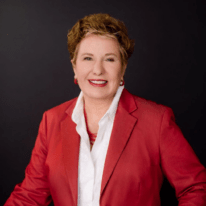
“The food guidelines, up until just now, I would call them genocidal. They lead to infertility, low fat, very high carb, high fiber, low salt, impossible to stay on. I call it the puritanical diet. People try to be puritans, then they can’t tolerate it any longer, and it shoves them right into the arms of the pornographic foods.”
The word genocidal lands hard. So does “pornographic foods.”
But Sally Fallon Morell isn’t afraid of bold claims.
I recently sat down with her just days after the federal government quietly announced changes to its food guidelines. Sally Fallon Morell is the founding president of the Weston A. Price Foundation and the author of Nourishing Traditions, a book that has shaped how generations of clinicians, parents, and nutrition researchers think about traditional diets and fat.
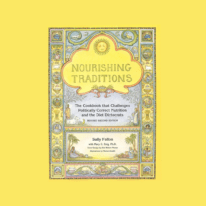 I’ve been reading her work for years, long before this interview, and invited her on to talk about REAL Food, fats, and the assumptions modern nutrition quietly rests on.
When she speaks this bluntly, she’s not describing a single bad recommendation or an outdated hypothesis. She’s pointing to a pattern that only shows up after decades of observation:
Dietary rules that demand restraint produce failure… then normalize the consequences of that failure.
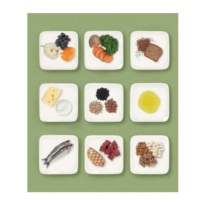 What she calls a “puritanical diet” isn’t just low fat or high fiber. It is a moral structure imposed on eating that frames appetite as something to suppress. In her telling, the result isn’t discipline. It’s backlash. The body looks elsewhere for relief.
The contradiction sits uncomfortably close to modern experience. If dietary guidelines were merely imperfect, we should expect gradual improvement. Instead, rates of metabolic disease, food intolerance, and compulsive eating have risen alongside increasingly restrictive advice.
The first crack in the story isn’t biochemical. It’s behavioral.
Why Willpower Didn’t Work
 If there’s one place where modern nutrition advice has failed most visibly, it’s in its reliance on willpower.
Experts told people what not to eat, then acted surprised when we still ate it. Cravings were framed as weakness. Relapse was treated as personal failure.
In our conversation, Fallon Morell rejected that framing. She doesn’t start with morality or discipline. She starts with chemistry.
“The addictions, whether it’s sugar, caffeine, chocolate, cigarettes, or alcohol, raise dopamine levels. That’s why they’re addictive. But guess what? Saturated fats raise dopamine levels. The best way to get off these addictions is to eat plenty of saturated fat.”
To make that point concrete, she noted an experiment she returns to often:
“There are studies where they addicted rats to sugar water, and then they fed them a diet that was 40% lard. The rats didn’t want the sugar water anymore. And the researchers were disappointed. They said the rats didn’t want the sugar water because they were on what they called the chronic high fat diet.”
This reframing shifts the conversation away from self-control. Addiction, in this account, isn’t primarily a failure of character. It’s a predictable neurochemical response to deprivation.
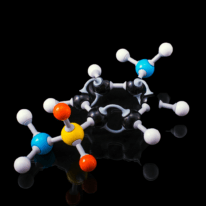
And the disappointment of the researchers is telling. The study worked… just not in the direction expected.
If that framing holds, it raises a destabilizing question:
What if the explosion of ultra-processed, hyper-palatable foods wasn’t an accidental excess layered onto an otherwise sound dietary framework?
What if it was the predictable response to removing the macronutrients that once regulated appetite from the inside?
Cholesterol & the Organ We Ignored
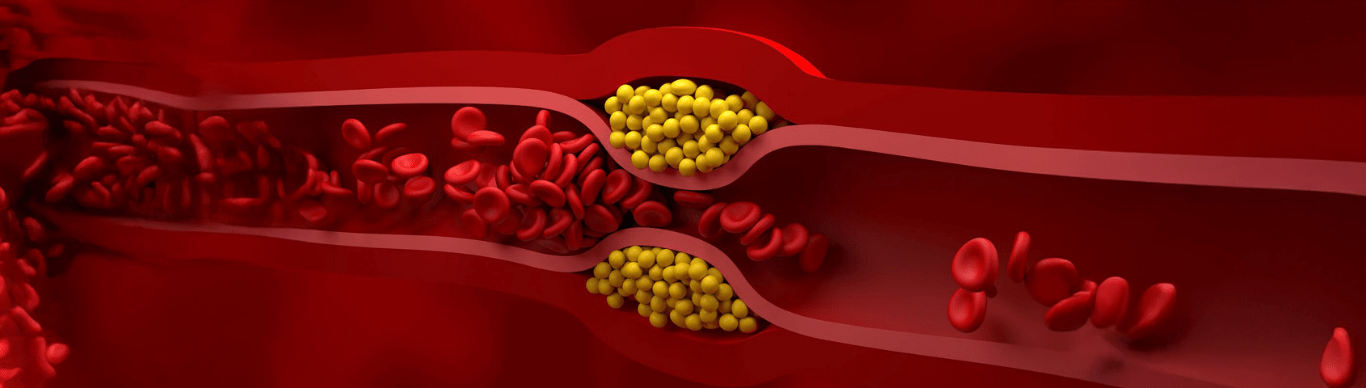
Once fat became suspect, cholesterol followed quickly behind it.
The story was simple enough to repeat (and terrifying enough to obey). Lower is safer. Less is better. But that story only works if you assume every system in the body responds the same way to reduction. Fallon Morell argues that’s not the case:
“What the studies have actually shown is that there’s no increase in heart disease at any level of cholesterol up to about 300, for women at any age, and for men over the age of 60. The higher your cholesterol, the longer you live.
Low cholesterol is a marker for cancer. It is a risk factor for cancer. And it looks like it is a risk factor for Alzheimer’s as well. The brain just can’t function without cholesterol. It’s more saturated than any other organ in the body.”
That oversimplification (lower cholesterol is always safer) depends on a narrow outcome lens: The heart is monitored. Other organs are assumed to follow.

But there’s another organ that’s kind of a big deal: the brain. And we ignore that at our peril.
Blood markers may respond quickly. Neural tissue does not. If cholesterol is structurally embedded in brain function, the consequences of chronic depletion may lag by years or decades.
This isn’t an argument that cholesterol is irrelevant to cardiovascular disease. But optimizing for one metric may quietly degrade another system that was never measured in the first place.
When “Safer” Food Becomes Harder to Tolerate
“Milk proteins are very fragile three dimensional objects. They have very precise electrical charges, and they’re extremely sensitive to heat. When you heat them, they warp and distort, and the body says, ‘I don’t know what this protein is,’ and mounts an immune response.
There are 20–30 deaths per year from anaphylactic shock to pasteurized milk. This isn’t illness. This is death. Pasteurized milk is a very dangerous food. Raw milk has antimicrobial components that kill pathogens. That’s why a calf born in the muck doesn’t get sick.”
Milk is often discussed as a binary. Safe or unsafe. Pasteurized or raw.
Fallon Morell approaches it as a structural problem: Proteins are complex shapes the immune system must recognize. Heat alters those shapes. The immune response that follows isn’t mysterious. It is defensive.
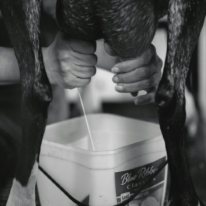
The irony is sharp. Processing intended to make milk universally safe may instead render it broadly intolerable. The body reacts not because it’s fragile, but because it can’t identify what it’s being asked to digest.
Whether or not we accept all of her conclusions, the mechanism she describes echoes a larger theme: Safety interventions that ignore biological structure often succeed on paper while failing in practice.
Toxins, Bile, & the Missing Exit Ramp
“The biggest weapon we have against toxins is bile. Bile sequesters the toxins we’re exposed to and takes them out of the body. But you don’t produce bile unless you’re eating fat.
So for me, the best way to deal with toxins, not necessarily the ones already stored, but the ones you’re exposed to every day, is to eat a high fat diet so they can be captured and eliminated in real time.”
The modern conversation around toxins often stalls at identification. Lists grow longer. Solutions remain abstract.
By centering bile, Fallon Morell shifts attention to elimination rather than avoidance. The body isn’t defenseless, but its primary detoxification mechanisms are conditional. They depend on inputs modern diets frequently restrict.
It’s striking how much modern health culture focuses on removing toxins while overlooking the systems designed to move them out.
This brings us back to where this story started: restriction.
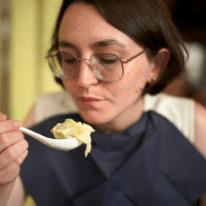 Fat isn’t just a source of calories or pleasure. It’s a functional requirement for digestion, neurological stability, and waste removal. When it’s removed, multiple systems strain at once.
Unintended consequences, without a clean resolution.
If taking foods away made us sicker,
what does it look like to choose food well?
Not based on ideology.
Not based on fear.
But based on how the body actually works.
That’s a journey I’ve been on for more than a decade.
If this is a new question for you, welcome to the beginning of it.
For readers who want to go further:
Watch Our Full Conversation on YouTube
Explore the work of Sally Fallon Morell and the Weston A. Price Foundation
WHERE Your Food Comes From Matters As Much As WHAT You Eat
Most health-conscious people focus on WHAT they eat... overlooking HOW that food was grown. Raised. Processed... BEFORE it reaches their plate.
This blind spot means you’re not getting the nutritional benefits you think you are, and might be introducing hidden toxins that undermine your goals.
Skip 2+ years of trial & error...
Get the answers in an afternoon.