Mystery Illnesses | Part 5
When the Mystery Won’t Resolve
Why You Can Check All the Right Boxes and Still Feel Stuck

Aaron Hartman MD
April 1, 2026
Subscribe
Never miss out on new content from Dr. Hartman.
If you’ve identified real drivers, addressed them, and still aren’t fully well… this article is for you.

You’ve done the work. You know something about infections, or environmental exposures, or immune dysregulation. Maybe you’ve treated them. For a while, it seemed to be working.
And then it stopped.
Not back to where you started. But not fully well either. Better than before. Still stuck.
That raises a different kind of question: If we’ve identified what’s wrong, why hasn’t it fully resolved?
When Progress Stops Making Sense
This may be the final reason these illnesses feel so mysterious. Not because the causes are unknown. Because the body doesn’t always return to baseline, even after those causes are addressed.
Dr. Jenski describes this moment clearly:

“You get to a point where you’ve done all the things, and they’re still stuck. They’re 60–80% better. You wash and repeat. Did the line pop up again? No. Did we really clean your house? … You do that 2–3 times. And what I’ve come to over this last couple years is that sticking point … is their nervous system.”
This isn’t a rare scenario. In fact, it’s one of the most consistent patterns seen in complex chronic illness. You can do all the right things: clean up the environment, treat infections, calm inflammation, and still be stuck.
That’s when you start realizing there’s another layer to this.
This Is Where Patients Get Stuck
“You have to keep in mind when you’re practicing medicine like this—especially in complicated patients, especially when treating mysterious illnesses—it’s rarely linear. It’s a lot of ups and downs.”

There are improvements. There are setbacks. There are moments of clarity followed by regression. But then there’s something else entirely. An impasse.
It’s Not You
When patients reach this point, the interpretation often turns inward: Maybe I missed something. Maybe I’m not doing enough. Maybe I’m doing something wrong.
Dr. Jenski addresses that directly.
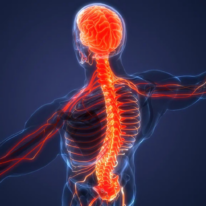
“But when they get stuck in the mud… if there’s an impasse to almost everything we’re trying. It’s not them. They wouldn’t be here if they didn’t want to get better. It’s the limbic system. It’s their neurovascular system. It’s the central nervous system. It’s that ‘stuckness’ that you have to then work through.”
This is a critical shift. The problem isn’t effort, or motivation, or compliance. It’s not even the original causes. It’s the “stuckness” itself.
What “Stuck” Actually Means
When clinicians like Dr. Jenski describe patients as “stuck,” they’re not speaking metaphorically. They’re describing a biological state.

“The mitochondrial cell danger response… is cell cycle arrest… it literally stops waiting for the body to get better to then start up again… and so clearly there has to be a signal there.”
The body shifts into a protective mode. It slows down. It conserves energy. It waits. Not for a treatment, but for a signal: Safety.
“The nervous system—once in a safe place—will signal the mitochondria… go back to business as usual… because you’re now in a safe place again.”
The implication is subtle, but important. If that signal doesn’t fully register, the system may not return to baseline.
A Word About What This Is (and Isn’t)
If the phrase “nervous system” just made something tighten in your chest, that’s worth naming. You’ve probably been told some version of “it’s just stress” more times than you can count. This isn’t that. What we’re describing isn’t psychological. It’s physiological. It’s real pathways, real signaling, real biology that has been shaped by real experience. The body adapts to repeated stressors by altering signaling, metabolism, and immune activity. That’s not a character flaw. It’s what bodies do.
The problem isn’t that it happens. The problem is when it doesn’t turn off.
When Illness Becomes Its Own Stressor
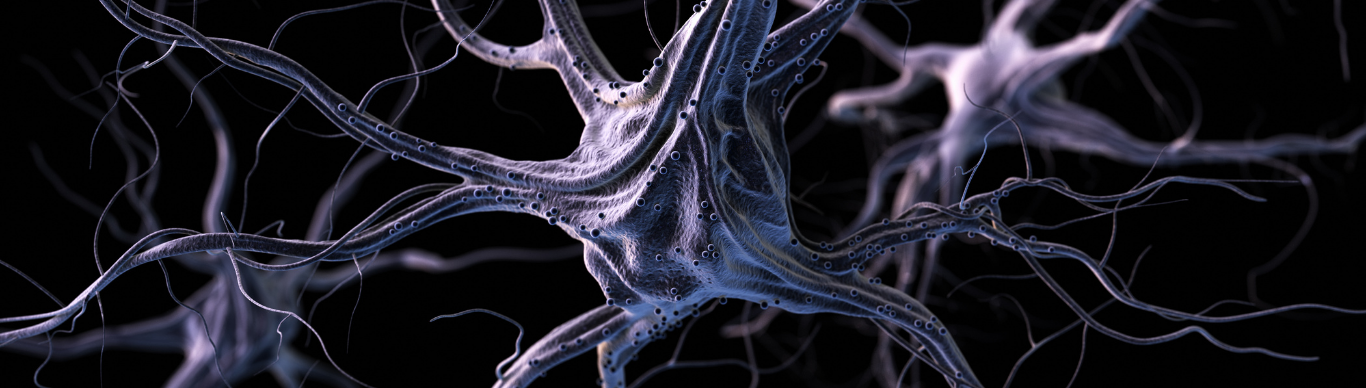
The nervous system isn’t just reacting to illness. It becomes part of the illness. It’s interpreting signals as threats and continuing to fire even when the original trigger is no longer there.
Dr. Jenski puts it plainly:
“Every CIRS patient has some degree of limbic dysfunction, just from having that disease, and the fear of am I ever gonna get better? Is every house gonna poison me? Is my home ever gonna be where it needs to be? Can I go anywhere? Can I get my life back? How is that not traumatic? Of course it is.”
That anxiety burden isn’t separate from the biology. It becomes part of it. At some point the body stops distinguishing between real danger and perceived danger. The system is just on. And once it’s on like that, it doesn’t take much to keep it there.
And when that happens, progress stalls.
Getting Unstuck: When the Nervous System Shifts to Safety
When this biological safety layer is addressed, something changes. Not instantly, but noticeably.
“It has to be done. Otherwise, they’re not gonna get unstuck. And as it gets done, you kind of see this light. They start to tolerate things. They couldn’t tolerate anything. Now, they can tolerate a little bit. Then a little bit more.”

The pattern begins to reverse. Reactivity decreases. Tolerance increases. The immune system starts to regain flexibility.
This is worth dwelling on for a moment, because it’s the part of the story that often gets skipped.
The work doesn’t fail when someone is still stuck after treating infections, clearing exposures, and calming inflammation. It was real work, and it mattered. The body needed it. But for many patients, the nervous system has been running a threat response for so long that it has to be directly addressed before the earlier work can fully land.
It’s not that the prior layers were wrong. They were incomplete.
Where the Mystery Resolves
We started this series by asking whether the word mystery belongs to the illness, or to the model used to interpret it.
Five articles later, the answer is clearer.
These illnesses aren’t random collections of symptoms. They’re layered processes, each one real, each one addressable, none of them fully resolved within a single framework. Infections matter. Environmental exposures matter. Immune dysfunction matters. Mast cell reactivity matters. And the nervous system, the system that coordinates all of the above, matters too.
For patients who have done everything right and are still not fully well, this is often the missing layer. Not a psychological explanation. A biological one.
The question shifts, from what is wrong, to what is still being signaled.
That’s where the next part of the work begins.
If This Resonates, Here’s Where to Go Next
If something in this article landed for you, there’s a good chance you already know which part. That recognition is worth following.
For those who want the full picture — including the story of how I came to understand all of this through my own patients and my own family — that’s what UnCURABLE is for.
And for those who are ready to stop reading and start working with someone, our membership programs at Richmond Integrative & Functional Medicine and Connected Health exist for exactly this kind of patient. You don’t have to keep figuring this out alone.

WHERE Your Food Comes From Matters As Much As WHAT You Eat
Most health-conscious people focus on WHAT they eat... overlooking HOW that food was grown. Raised. Processed... BEFORE it reaches their plate.
This blind spot means you’re not getting the nutritional benefits you think you are, and might be introducing hidden toxins that undermine your goals.
Skip 2+ years of trial & error...
Get the answers in an afternoon.