Concussions | Part 2
The Concussion Symptoms No One Connects to a Head Injury
Your Gut, Heart, Hormones, & Mood

Aaron Hartman MD
July 29, 2026
Subscribe
Never miss out on new content from Dr. Hartman.
You rested. You stayed off screens. Your doctor said you’d be fine in a couple of weeks, and the scan came back clean, so everyone moved on.

But you didn’t move on. Months later your sleep is still wrecked. Your stomach turned into a problem it never was before. Your heart races for no reason when you lie down at night. You’re anxious in a way that doesn’t feel like you, your memory drops words, and somewhere along the line you started to wonder whether you’re imagining the whole thing.
You’re not imagining it. And here’s the part almost no one tells you: those scattered symptoms… the ones that seem to have nothing to do with each other and nothing to do with a bump on the head… may all be tracing back to that head injury. Your gut, your heart, your hormones, your mood. One injury. One body. A dozen different-looking problems.
I want to walk you through why this happens. Because a symptom that isn’t a mystery is a symptom you can finally do something about.
These Are Not Psychological Symptoms
When someone comes in after a concussion, there’s a standard checklist that sorts symptoms into three buckets: somatic, cognitive, and emotional.

-
The somatic bucket is the stuff most people already associate with a head injury. Headaches. Fatigue. Dizziness. Nausea. Sensitivity to light and sound. Sleep disruption. Visual problems, hearing problems. The obvious ones.
-
The cognitive bucket is the thinking stuff. Reduced concentration. Memory trouble. You read a paragraph and realize you have no idea what you just read. Processing feels slow, like your brain is running through Jell-O. Complex tasks that used to be automatic take effort now. Students notice this fast because they go right back to a classroom that demands they learn new things all day. Adults sometimes miss it, especially if you’re an expert at what you do and you’re not learning much new. You’ve done the job ten thousand times, so the deficit hides.
-
The emotional bucket is anxiety, depression, irritability. At the severe end you get into PTSD and the chronic traumatic encephalopathy conversation.
Most experts recognize these three buckets, but here’s the part that gets lost: these are not psychological symptoms (or at least not “merely” psychological). You aren’t being dramatic, and this isn’t a character flaw. These are specific parts of the brain that got injured, and they throw off specific inflammatory symptoms. The depression that shows up after a concussion is a frontal lobe that took a hit, not a personality that changed.
I’ve talked before about medical gaslighting, and this is exactly where it shows up. A woman comes in with anxiety and emotional swings that got worse after a car accident, and the swings track with her cycle, so she gets told it’s premenstrual dysphoric disorder and sent home. Maybe it is. Or maybe there’s an old brain injury underneath it that nobody ever looked for, and the hormones are just the thing that makes it visible. We do this to women more than men. I’d like to tell you that’s changing quickly. It isn’t.
The Subtle Symptoms the System Misses
Underneath the standard three buckets is a layer of symptoms that only a trained eye catches. These are the ones that send people from specialist to specialist for years with no answers.
Vestibular Dysfunction
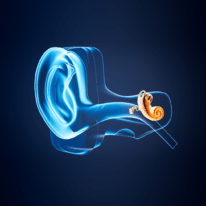
Vestibular dysfunction is a big one. Your vestibular organ is that little snail-shaped structure in your inner ear, and when a head injury disrupts it, your eyes and your balance stop cooperating. So you’re driving, watching the world move past the windows, and you get dizzy and lightheaded and have to pull over. You’re watching your kids run back and forth across a field and something feels off. Going up stairs, coming down, turning left, turning right, anything that pushes on those little loop-de-loop canals in your inner ear can set off dizziness. Sometimes a single movement triggers it out of nowhere. This isn’t anxiety. It’s a vestibular system that got knocked out of tune, and it runs straight into your autonomic nervous system, one of the most basic control systems you have.
Visual Dysfunction

Then there’s visual dysfunction, which is enormously common and almost always missed. After an injury your eyes don’t track as smoothly. Reading fatigues you. Focusing on something coming toward your face gets hard. If you look at a map of the brain, a huge share of it is dedicated to moving your eyes and processing what you see, and all that machinery is fragile. A small injury disrupts it. This is why the real concussion clinics don’t just have neurologists and physical therapists. They have specialized ophthalmologists running eye-training exercises, because you can lose the connection between your eyes and your organ of balance, and we humans move our eyes every waking second. It sometimes takes a neuro-ophthalmologist to even see the problem.
Brain Fog

The cognitive fog is real too, and it’s more specific than “I feel slow.” What breaks is task-switching. People call it multitasking, but nobody actually does two things at once. What you do is switch fast between task one and task two and task three and back to one, and that switching is what a brain injury takes away. Doctors call it dual-task failure. Women tend to switch better than men to begin with, so the loss can hit them especially hard. Some of this happens naturally with age. I’m fifty-three; I don’t switch the way I did at thirty-three. But with a brain injury it can happen overnight, and that’s the tell.
ADHD

I’ve seen people develop what looks like ADHD after an injury. They lose the ability to focus in a way they never had trouble with before. I had one patient, a psychologist in his fifties, who went under anesthesia for a procedure and came out without quite the same cognitive horsepower he’d had going in. The brain is more susceptible than we give it credit for.
Autonomic Dysregulation
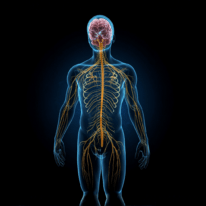
Underneath a lot of these is your autonomic nervous system, which I’ve been deep in lately with POTS and dysautonomia. A small brain injury can dysregulate it. What that means, and I know this sounds a little strange when you say it out loud, is that the system in charge of regulating your body gets its regulation knocked off. Anything that runs in the background without you thinking about it: hunger, feeling full, sleep, hormones, even your drive and focus, the dopamine side of things. When the regulator is off, all of that drifts, and it drifts in ways that look like a dozen separate problems.
Sleep

Then there’s sleep, and this one is a crisis within a crisis. So many people can’t sleep after an injury: they can’t fall asleep, they wake at 3 a.m. with their heart pounding, or they sleep eight hours and wake up feeling like they never slept at all.
Here’s why that’s worse than it sounds: Sleep is when the brain heals.
Deep sleep is when your neurons take out the trash, and REM is when you lock in new memories. So the injury wrecks the exact process that was supposed to repair the injury. And here’s the trap most people fall into. The medications we reach for to force sleep, the antihistamines like Benadryl and hydroxyzine, the benzodiazepines like Valium, the sleep drugs like Ambien and Lunesta, they’ll knock you out… but they also slow down brain healing. They can make the long-term symptoms worse while making tonight feel better. The thing you grab for relief can quietly work against the thing you actually need.
Disrupted Thinking & Feeling

The frontal lobe takes a particular beating, especially in younger people, because of the way a coup-contrecoup injury works. The brain is Jell-O in a hard box, and when the head snaps, that Jell-O slams front and back. The front is where your higher-order thinking lives, so you lose some of that. And your limbic system, the emotional generator, gets dysregulated, so small things start setting off big emotional responses.
I’ll give you my own example. In second grade I ran headlong into a pole and got a concussion, and my mom did exactly what you’re not supposed to do: brought me home and put me down for a nap. I developed migraines after that. And to this day I have terrible handwriting and a hard time picking words out of a noisy room, even though my hearing tests completely normal. That’s a parietal lobe signature, and I didn’t have it before I hit that pole. A childhood injury can leave a fingerprint you’re still reading decades later.
One Brain, One Body
Your brain is the master regulator of your entire body. Think of it as the CEO of a business, and the business is you.

When the CEO gets hurt, every department feels it. The accounting department, your metabolism, stops reading the books correctly. HR, your hormones, garbles the messages it’s supposed to send around the company. Security, your immune system, gets twitchy and sometimes starts attacking the building it’s supposed to protect. And operations, your gut and heart and lungs, falls out of rhythm. One injury at the top, disorder everywhere below.
This is the concept I lean on constantly when I look at a patient whose problems seem unrelated. It’s also, honestly, the reason I trained in functional neurology in the first place. A lot of what got me into this kind of medicine was taking care of my daughter, Anna, and the brain injury she had before she was born. Learning how the brain drives the entire body wasn’t academic for me. I needed it to help her heal. If you’ve followed us for a while, you know her story.
If you want the deeper physiology of how much your body runs on this brain-body connection, I’ve written about it separately in The 80% Solution. What I want to do here is narrower and more specific: show you the actual wiring that lets one head injury reach your heart and your gut, and why that explains the symptoms nobody connected.
The Nerve That Wires It All Together
The wiring has a name. It’s the vagus nerve.
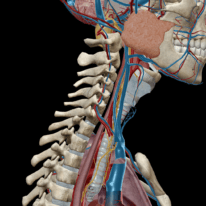
The vagus is long, and it runs from your brain down into almost every organ that keeps you alive. Your heart. Your spleen, which happens to be the largest lymph node in your body. Your kidneys. Your entire GI tract, top to bottom. There is a real, physical, anatomical cable connecting your brain to your heart and your gut. This isn’t a metaphor.
The ancients felt this without being able to name it. They talked about the gut feeling, the sense that emotion and dread and joy live somewhere below the neck. They actually thought the important stuff happened in the gut and the heart, and that the brain was mostly filler. They were wrong about the anatomy and right about the experience, because you really do feel these things in your chest and your belly. Now we can trace the cable.
So when the brain gets injured, the injury doesn’t stay in your head. It travels the vagus nerve out to everything the vagus touches.
Brain to Heart
One of the first things that goes after a traumatic brain injury is heart rate variability.
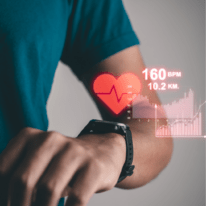
If you’re into biohacking or you’re an athlete, you already track this. Heart rate variability is one of the best windows we have into how well your heart and your nervous system are working together, and it’s a direct readout of vagal tone. After a brain injury it drops. That shows up as palpitations, as a heart that races when it shouldn’t, as a cardiovascular system that’s lost some of its regulation.
It also explains something that frustrates a lot of people trying to recover. Push your exercise too hard, too soon after a brain injury, and you can actually make things worse. This is why rest matters so much in the acute phase. And it’s the same crash pattern I see in chronic fatigue and fibromyalgia patients: “I pushed myself, and then it took me three days to climb back out.” If your brain-heart connection is off, exertion isn’t the medicine you think it is.
This is the autonomic dysregulation from earlier, showing up in the heart. It’s the same territory as dysautonomia and POTS, which I’ve written about in depth in the POTS series.
Brain to Gut
Now follow the vagus the other direction, down into your gut.
Most of your neurotransmitters aren’t made where you’d think. Around 75% of them are made in your gut. 90% of your serotonin (the one people call the “happy neurotransmitter”) is made in your gut. Half your dopamine (the focus and drive chemical) is made in your gut. So when a brain injury disrupts the gut, it’s disrupting a factory your mood and your focus depend on.

The disruption feeds on itself. A brain injury gives you a leaky brain, and it also gives you a leaky gut. A leaky gut releases toxins called endotoxins, or lipopolysaccharide, and those toxins are inflammatory to the brain. So the gut inflames the brain, the brain inflames the gut, and the cycle keeps turning. If your gut was already a little off before the injury, that first hit can push the whole loop into motion.
There’s more. Your gut bacteria make a short-chain fatty acid called butyrate, and butyrate is neuroprotective. It guards the brain. A brain injury can shift your microbiome so it makes less butyrate, which means less protection for the brain right when the brain needs it most.
You’ll also see motility problems: constipation, diarrhea, food that isn’t getting digested properly. Consider that about a quarter of your digestive enzymes fire off before you’ve taken a bite, just from looking at your food and thinking about eating it. That’s a brain function. Disrupt the brain and you disrupt digestion itself. This is why running a good gut test on someone after a head injury can be a window straight back into the brain. The gut is telling you what the brain is doing.
For the practical side of supporting the gut through all of this, I’ve put together nine gut lifehacks and written more on the gut and nervous system together.
Brain to Immune System

The same breakdown that opens the gut barrier opens an immune problem, because 80–90% of your immune system lives in your GI tract. Break down the barrier and the immune system starts seeing things it was never meant to see. People develop new sensitivities (like gluten). In the clinic we’ll run antibody panels: ANA, ANCA, thyroid antibodies, celiac antibodies. When those markers turn positive after an injury, that’s a real signal that a brain injury may have kicked off an autoimmune process.
It shows up on the skin too, through the gut-skin connection. I’ve had patients develop dry skin, eczema, and rosacea in the wake of a brain injury. And this is measurable, not hand-waving; we can look at markers like glial fibrillary protein and at microglial activation. There’s a test.
One patient of mine had something called aerotoxic syndrome, which barely gets discussed in the U.S. but is taken seriously in the U.K. She was a flight attendant. There was a ventilation failure on the aircraft, and she had a smoke exposure event. Her brain MRI came back looking like a traumatic brain injury, and she carried TBI-like symptoms out of it. A chemical hit to the brain, producing the same downstream cascade as a physical one. If you want the fuller picture of how immune overactivation and histamine drive symptoms like these, that’s the MCAS territory.
Brain to Hormones
Then there are hormones, and this connection runs in both directions.
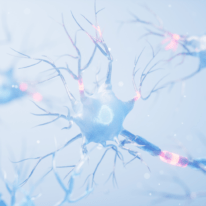
Your hormones are brain-protective. When they’re low, your brain is more vulnerable to injury and slower to recover. Progesterone in particular protects the brain in traumatic injury; there are protocols using it specifically to calm brain inflammation. Which is worth sitting with if you’re a woman in menopause dealing with sleep problems and anxiety, or a man whose testosterone has drifted down. Low hormones set you up to be hurt more easily and to heal more slowly.
The injury runs the other way too. Your pituitary sits at the base of the brain running the whole hormonal orchestra, and a head injury can disrupt it directly. One study of 80 adults after a TBI found that 80% had growth hormone deficiencies and about 16% had problems converting ACTH to cortisol. At the severe end you can develop a form of diabetes called diabetes insipidus, where you’re thirsty, you drink, and the water runs right through you. These can become long-term problems: growth hormone deficiency, low testosterone, thyroid trouble, adrenal insufficiency. So when your functional medicine doctor runs four-point cortisol testing and checks prolactin and finds everything scrambled, some of that scramble may trace back to a brain injury nobody ever connected to your hormones.
For the hormone side specifically, I’ve written about the hormone hierarchy, about progesterone, and about thyroid.
One Explanation. One Place to Start.
Step back and look at what we just did. Palpitations, dizziness, a wrecked gut, new food reactions, eczema, insomnia, anxiety, hormones in disarray. Nine different doctors for nine different problems, and each one sends you home with a piece.

Put them on the vagus nerve and they aren’t nine problems anymore. They’re one injured regulator broadcasting dysfunction to everything it’s wired to. That’s not a bleaker picture. It’s a more hopeful one, because scattered problems have no obvious starting point, and a single root cause does. If you’ve been carrying symptoms that don’t add up, and you’ve been told, gently or not, that it’s stress or age or your imagination, this is the reframe that lets the workup finally go looking in the right place.
So what do you actually do with all this? That’s the real question, and it’s the one everything so far has been building toward. Seeing that the symptoms are connected is the start. The road back is the next piece in this series.
Restore your health and hope, together. Every week I send out the science, the mechanisms, and the practical next steps behind exactly this kind of root-cause thinking, written for people whose symptoms were dismissed and who are done being sent home with a piece. If you’re ready for the whole picture, subscribe to the newsletter and let’s find the starting point together.

WHERE Your Food Comes From Matters As Much As WHAT You Eat
Most health-conscious people focus on WHAT they eat... overlooking HOW that food was grown. Raised. Processed... BEFORE it reaches their plate.
This blind spot means you’re not getting the nutritional benefits you think you are, and might be introducing hidden toxins that undermine your goals.
Skip 2+ years of trial & error...
Get the answers in an afternoon.