
Long COVID | Part 1
Why Are Long COVID Clinics Closing (and What Happens to Patients Now)?
Aaron Hartman MD
June 24, 2026
Subscribe
Never miss out on new content from Dr. Hartman.
Over the past couple of years, something quietly happened that I don’t think got nearly enough attention. The funding for long COVID clinics across the country started drying up. NIH Recovery, the billion-dollar federal research initiative, began winding down. Clinics that had opened to study and treat post-COVID illness started closing their doors, one after another, between 2023–2025.

And I found that really interesting. Because the patients are still in my exam room.
When the federal money ran out and the research centers folded, the people who’ve been struggling with fatigue, brain fog, pain, shortness of breath, and a dozen other symptoms that never went away didn’t get better just because the clinics closed. They’re still out there. There are somewhere between 17–23 million Americans who are still dealing with long COVID symptoms. That’s roughly 8% of the population.
So the research is done, but we have zero approved therapies to show for a billion-dollar initiative. And 17–23 million people are still sick.
Dr. Christian Jenski (my colleague and co-host, who trained in emergency medicine) put it plainly when we talked through this: the clinics never even got to the point of a diagnostic algorithm. No agreed-upon case definition, no objective testing criteria, no treatment pathways. “How can you say we’re done and shut it down if we’re not even at the point where we know how to diagnose it and what to do about it?”
Not to relitigate what went wrong. Understanding it tells you something important about what Long COVID actually is, and why it keeps slipping through medicine’s fingers.
What the Clinics Were Actually Doing
Let’s be honest about what those research centers were built to do. They were collecting data. Tracking symptoms. Watching how people felt over time. That’s legitimately useful: that’s how we learned that roughly a third of people with COVID still had symptoms a year later, and that 10–20% were still symptomatic two years in.
But collecting data isn’t treatment.

My first long COVID patient came to see me in May of 2020. It wasn’t called “Long COVID” or even “long haulers” yet (that term didn’t appear until August, and the WHO didn’t publish a formal clinical case definition until 2021). But this patient wasn’t recovering the way you’d expect. They were months out from their acute illness and still suffering.
What actually turned the corner for them had nothing to do with symptom management. Their home and their workplace were full of mold. COVID had been the trigger that pushed them over the edge, but the real driver keeping them sick was a chronic inflammatory response that the mold exposure had already been building. They didn’t start getting better until we started addressing that.
That’s not a story about COVID. It’s a story about a category of patient: someone whose body didn’t reset after the acute event passed. And the only way to help them was to look past the label and find what was actually holding them in place.
No amount of symptom tracking would have found the mold.
This Isnt the First Time
Long COVID is not a new disease. The pattern it represents (a post-infectious, post-event inflammatory response that outlasts the trigger) is something we’ve seen before. More than once. Going back well over a century.
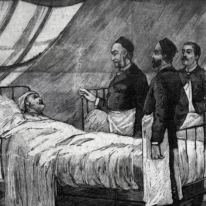
The Russian flu of 1889–1892 swept across the globe, and then roughly eight years later, something strange started happening. People were developing weird neurological problems. Parkinson’s-like symptoms. Unexplained tremors and motor issues. Physicians at the time didn’t have our modern vocabulary for it, but they noticed the pattern: clusters of neurological illness following the pandemic wave, running through the population years afterward.
Then the Spanish flu, starting in 1918. You probably know the acute story: catastrophic death toll, young adults hit hardest, military camps overwhelmed. What gets less attention is what came after. About 8–9 years later, there was a wave of encephalitis lethargica, bizarre neurological symptoms that didn’t fit neatly into any existing category. People couldn’t sleep, or couldn’t stay awake. Movement disorders. Personality changes.
Christian mentioned the numbers from the Spanish flu sequelae (the long-term or permanent medical conditions and complications that arise as a direct result of a previous disease). They’re shocking: a third of those affected died. A third were permanently disabled. Only one third recovered.
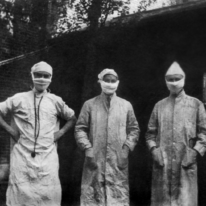
People were paying attention back then. Physicians of that era suspected (correctly I’d argue) that this was a post-viral phenomenon. They saw what was happening. They saw that it was running in parallel to the pandemic on a delayed timeline. And they put the pieces together as well as anyone could without modern tools.
My question when we talked through this was whether we’re in that window now. COVID hit hard in 2020 and 2021. If the historical pattern holds, we’d be entering the years where secondary neurological effects might start showing up. We don’t know yet. But I don’t think we should close the clinics and stop asking the question.
Aspirin had just become widely available during the Spanish flu and was being used aggressively in sick patients. Some of the pathology from people who died, the liver involvement, the lung presentation, made some historians wonder how much of the severity was aspirin toxicity rather than influenza itself. That’s speculation, and I’m not ready to plant a flag on it. But it’s the kind of thing that makes you think about the ways a new drug used without restraint can compound a crisis in ways nobody sees clearly until later. We’ve been around that track more than once.
Same Patient, Different Label
Medicine doesn’t just have a Long COVID problem. It has a category problem.
Long COVID is the latest entry in a long list of post-infectious, post-event inflammatory syndromes that have been cycling through medicine for decades. Different names, same face.
Chronic Lyme disease. Post-concussive syndrome. ME/CFS, myalgic encephalomyelitis, or chronic fatigue syndrome, depending on when and where you were diagnosed. Fibromyalgia. POTS and dysautonomia. Mast cell activation syndrome (MCAS). Mold-related chronic inflammatory response syndrome (CIRS).


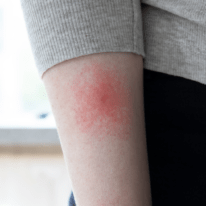
I’ve been practicing functional and integrative medicine for a long time, and what I’ve watched happen with each of these conditions follows a recognizable script. A trigger event (an infection, a toxin exposure, a physical trauma) sets something in motion. The acute phase passes. But a subset of patients don’t recover. Their bodies stay in a kind of inflammatory overdrive even after the original threat is gone. They keep cycling through the medical system: normal labs, normal imaging, referred to specialist after specialist. Maybe they get a diagnosis, maybe they don’t. Either way, they rarely get better.
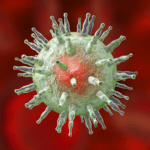
We called them chronic Lyme patients in the nineties. We called them fibromyalgia patients in the 2000s. We’ve called them chronic fatigue patients for years, though that name does such a bad job of describing how sick these people actually are. Now some of them are Long COVID patients. The label changes. The person in the exam room doesn’t.
As of 2026, what I’m still seeing in my Long COVID patients looks a lot like what I see with Epstein-Barr, with Lyme, with CMV, with post-concussive syndrome, with mold exposure. Dysautonomia. POTS. Chronic fatigue. Brain fog. Residual pain. Not so much the heart and lung stuff at this stage. That’s consistent with what we see with other post-infectious syndromes as the acute sequelae settle. The immune dysregulation underneath it is still there. And it doesn’t care what we called the original trigger.
Why I Recognized It Fast
When I looked at my first Long COVID patients in the spring of 2020, I wasn’t starting from scratch. About 80% of what I was doing for those patients was what I’d already been doing for years. I’d been working with this category of patient, under other names, long before the pandemic arrived.
I was looking back at what had worked. And a lot of it still worked.
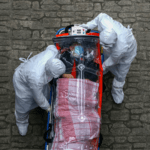
I’d been checking and optimizing vitamin D levels since 2003 and 2004, long before COVID made it a talking point. I was working with mast cell patients and mold-related CIRS and chronic Lyme. So when patients started showing up in 2020 who weren’t recovering the way they should have been, it wasn’t a mystery to me what category of illness I was looking at.
Nobody had it figured out. We were all working in the dark in those early months. But the functional medicine world recognized the pattern early, and I think that’s because we’d spent years with these patients.
Probably my first actual COVID case (before I even knew what I was looking at) might have been a patient from November 2019. They’d been hospitalized for pneumonia and came back to see me still coughing, still wheezing, still wiped out eight weeks later. I saw them around December and honestly didn’t know what I was dealing with. We now know COVID was circulating in the U.S. as early as March 2019. So it’s possible, maybe even likely, that patient was an early case. At the time I just knew something wasn’t resolving the way pneumonia normally does.
Christian’s first case came from the ER, and it’s a harder story. It was a young guy in the military, incredibly fit, no known health problems, non-smoker. He came in in respiratory distress and they couldn’t keep his oxygen up no matter what they did. Intubated. ECMO. Eventually a lung transplant. He barely survived. It was only months later, when COVID was finally named and people started recognizing the bilateral pneumonia presentation, that Christian thought back to that case and put it together: “Oh my God, that guy was a COVID case.” Neither of them knew at the time. Nobody did.
That’s how early it was. The disease was ahead of us, and it took pattern recognition, not protocol, to start finding these patients.
The Institute for Functional Medicine started running educational series for practitioners around August 2020. Groups like the FLCCC were publishing what they were finding on repurposed drugs. Individual physicians were comparing notes informally. I was on calls where someone would say, “In Brazil, they’re doing IV vitamin D at very high doses when people come into the hospital, and no one’s dying.” Small numbers, no randomized trial, but people boots on the ground comparing notes.
And yes, at the same time, we were pariahs. Scoffed at. “What’s your evidence for that? What’s your data?” The Pepcid and Zyrtec approach for mast cell involvement, combining a histamine H2 blocker with an antihistamine, was something my mastermind group was talking about early on. It eventually became standard in hospitals: you come in with COVID, you get Pepcid and Zyrtec. But for a while, talking about it put you in the crosshairs.
That’s a familiar feeling for anyone who’s practiced in this space long enough.
The Patients Remain

A Tale of Two Cities: opens with “It was the best of times. It was the worst of times.” I’ve been using that frame for a while when I talk about integrative and functional medicine versus the conventional medical world. There are really two different realities running in parallel. One group is caring for these patients, figuring things out, having good outcomes. The other is asking who’s responsible, whose specialty this is, what the approved protocol should be, and when can we close the program.
The Long COVID clinic closures look like the end of something. I’d argue they’re the latest episode in a very long story. How medicine handles a particular kind of patient: one whose illness doesn’t fit an organ system, doesn’t resolve on the expected timeline, and doesn’t respond to the standard treatments.
The history tells us this isn’t unusual. The Russian flu left a neurological trail for years. The Spanish flu left a population of people with encephalitis lethargica that medicine struggled to understand for decades. Post-viral syndromes have been cycling through the clinic under different names since before any of us were practicing. The trigger changes. The category doesn’t.
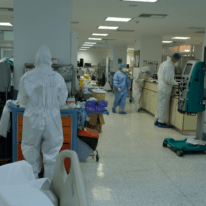
And the patients aren’t going anywhere.
Long COVID just made this category impossible to ignore for a few years, because the scale was so enormous. Millions of people who wouldn’t otherwise have ended up in this situation found themselves in it, and suddenly the question of how medicine handles post-infectious chronic illness was front-page news instead of a niche concern for functional medicine practitioners and their patients.
Now the funding has moved on. The news cycle has moved on. But the 17–23 million Americans who are still sick haven’t moved on. They’re still looking for answers, still bouncing through a system that doesn’t have a diagnostic algorithm for what’s happening to them, still being told by some practitioners that there’s not much to be done.
There’s something more to the story, and it starts with understanding why all these conditions rhyme. Long COVID, CIRS, ME/CFS, chronic Lyme, fibromyalgia: same patient, different label, over and over again. What’s the biology that keeps showing up regardless of what triggered it?
The clinics closed. The research funding moved on. We’re still here, still seeing these patients, and still writing about what we’re learning. If you want to stay in the loop, subscribe to Made for Health — our newsletter on the medicine that doesn’t make the headlines.