Subscribe
Never miss out on new content from Dr. Hartman.
The more I read historically (both inside and outside of medicine) the more I see how we get stuck in our thinking. I’m a big fan of science. It undergirds everything I do. But doctors and scientists can get stuck in older paradigms (models of thinking).

Here’s a big one:
The idea that genes cause disease is very 20th-century thinking.
We’ve been taught (implicitly and explicitly) that our DNA is destiny. That a diagnosis rooted in genetics is a kind of life sentence.
 Every time you sit down in a new waiting room and check those boxes on a medical history form, you’re being trained to believe that if something “runs in your family,” it’s only a matter of time before it runs through you too.
But that story is incomplete.
And in many cases, it’s simply wrong.
Humans have roughly 23,000 genes. That’s really not that many. Some nematodes (worms) have up to 20,000 genes. Frogs? They have 20,000–26,000 genes. We’re not that much more genetically complex than worms or frogs.
 BUT… anyone who has ever raised a child, navigated grief, healed from illness, or watched a body change over time knows that biology is anything but simple.
So where does that complexity come from?
It turns out the most important part of the story lives above the genes.
The Layer We Were Never Taught to Look At
For most of modern medicine, genes were treated like fixed instructions. Immutable. Deterministic. If something was “genetic,” the conversation often stopped there.
But genes don’t actually do anything on their own.
They respond.
They change their behavior based on what’s happening around them. The system that controls how they respond is called epigenetics.
And once you understand epigenetics, the entire conversation about health changes.
Your environment talks to your genes. Your nutrition talks to your genes. Your gut microbiome talks to your genes. Stress, sleep, infections, toxins—these all influence expression.
Even more humbling: you are not just human DNA walking around. You carry millions of microbial genes from the bacteria in your gut, and a meaningful percentage of your genetic material comes from ancient viral insertions that are still active today.
This isn’t fringe science. It’s basic biology that simply hasn’t made its way into most exam rooms. We’re still stuck in the 20th century.
A Detour That Matters: The Dutch Hunger Winter
 One of the most sobering examples of epigenetics comes from a famine, not a laboratory.
During the Dutch Hunger Winter at the end of World War II, food was scarce. Women who were pregnant during this period gave birth to children who, decades later, showed higher rates of obesity, diabetes, and cardiovascular disease—even when food availability normalized.
Here’s the part that still catches my breath every time I think about it: Some of the grandchildren of those women were affected too.
 Why? Because the eggs that would one day become those grandchildren were already present in their mothers’ bodies during the famine. The environment didn’t change the DNA sequence … but it changed how those genes were programmed to respond to abundance and scarcity.
That’s epigenetics in the real world. No supplements. No protocols. Just biology responding to context.
Why “Genetic Risk” Keeps Changing
If genes alone caused disease, genetic risk wouldn’t drift over time.
But it does.
 Take the BRCA gene often associated with breast cancer. In the mid-20th century, it carried a much lower associated risk than it does today. The gene didn’t change. The environment did.
The same pattern shows up in conditions we label “purely genetic,” like Down syndrome. Some individuals live full, productive lives with minimal cognitive decline. Others develop early dementia. Same chromosomal diagnosis. Very different outcomes.
Genes load the gun. Environment pulls the trigger.
The Small Levers That Actually Matter
 This is where the conversation often goes sideways.
People hear “genes aren’t destiny” and assume that means genes don’t matter. They do. They matter a lot. But they matter the way blueprints matter—not the way final outcomes do.
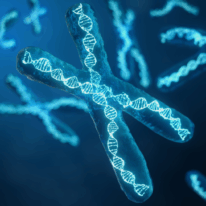
One of the most practical examples of this is something called SNPs (single nucleotide polymorphisms). Think of them as small genetic typos. Many are inconsequential. Some create bottlenecks.
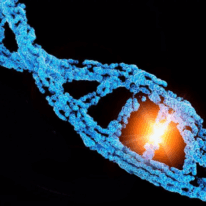 A well-known example is the MTHFR gene, which affects how efficiently the body processes folate. If that pathway runs at 30–40% efficiency instead of 100%, downstream effects can show up over time: cardiovascular issues, neurological symptoms, immune dysregulation.
Here’s the important part: these are often nutritionally addressable. Not cured. Supported. Bypassed. Compensated for.
This is not about chasing perfection or obsessing over testing. It’s about understanding where the body struggles—and giving it what it needs to function more normally.
A Brief Personal Note
I’ve seen this play out most clearly in my own family.
 My daughter Anna was born with profound neurological injuries. Early on, one of the first things I learned was where her genetic vulnerabilities were—and how targeted nutrition could change how those genes were expressed.
Over time, her phenotype changed. Cognition improved. Vision improved. Function improved. Not because her DNA was rewritten, but because the environment supporting her biology changed.
I share that not because her story is unique, but because it illustrates something universal: biology is responsive.
And no, you don’t need a rare diagnosis for this to matter.
Back to the Boring (and Important) Stuff
Here’s where people often want to skip ahead to the “advanced” strategies.
That’s a mistake.




The strongest epigenetic signals are still the least glamorous ones:
- Real food
- Adequate sleep
- Stress regulation
- Clean environment
Supplements, testing, and precision tools only work on top of these foundations. Without them, you’re trying to tune a piano that’s missing strings.
Diet alone is one of the most powerful modifiers of gene expression we know of. Not because food is magic. Because biology pays attention to what it’s given.
“Diet alone is one of the most powerful modifiers of gene expression we know of. Not because food is magic. Because biology pays attention to what it’s given.”
So What Do You Do With This?
First, let go of the idea that you’re broken.
 Second, stop confusing diagnosis with destiny.
Third, recognize that health is not about hacking your genes—it’s about creating an environment where your biology can do what it was designed to do.
If you want a structured way to understand this—without getting lost in fear, gimmicks, or endless testing—that’s exactly why I created Foundations of Functional Medicine.
It’s not about fixing everything at once. It’s about learning how the system actually works. And then making changes that matter.
Because your genes are listening.
And they always have been.
Primary Next Step
Foundations of Functional Medicine
Learn how environment, nutrition, and biology actually interact.
Discover the full story behind Dr. Hartman’s methods.
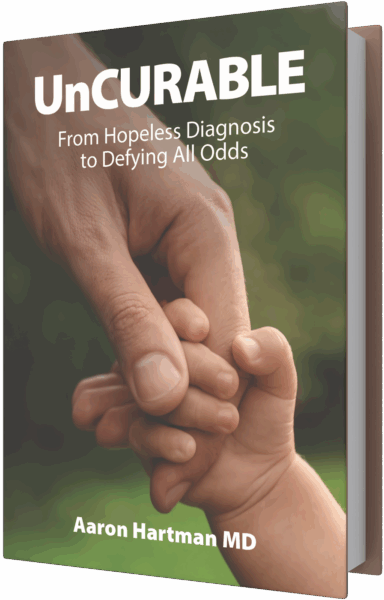
His new book, UnCURABLE: From Hopeless Diagnosis to Defying All Odds, reveals the principles that helped thousands of patients — and his own daughter — heal when the system had no answers.