UnCURABLE | Part 5
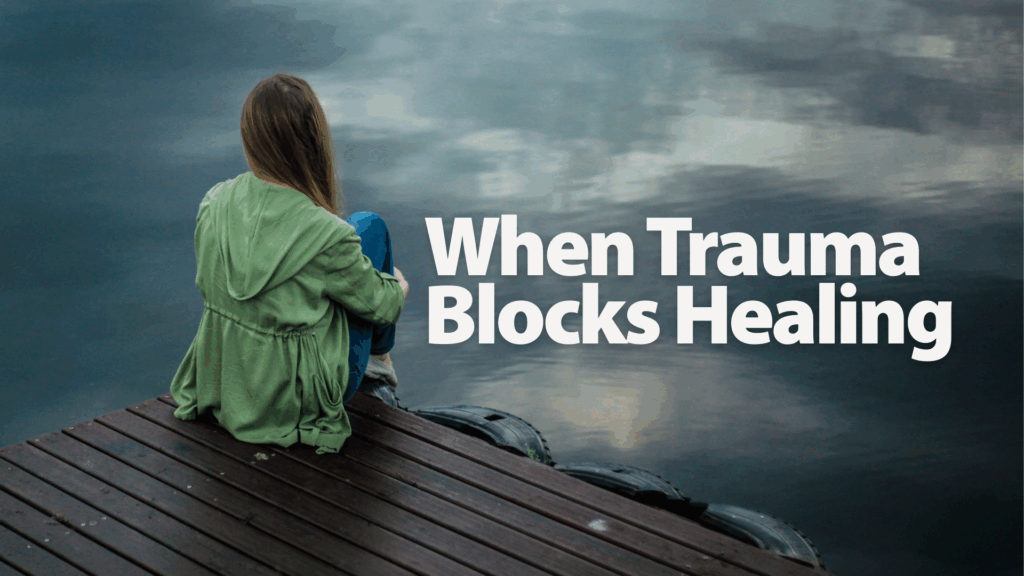
When Trauma Blocks Healing
Why Your Nervous System Might Be the Missing Link
Aaron Hartman MD
December 3, 2025
Subscribe
Never miss out on new content from Dr. Hartman.
Most people don’t think of themselves as “traumatized.” They think of trauma as the big events: the car accidents, the medical crises, the deployments, the moments that split life into a before and after.
But after more than two decades of practicing medicine, I’ve learned: it’s often the quiet, unrecognized forms of stress that keep people sick. The kinds of experiences we minimize, adapt to, or simply learn to live with … until the body can’t compensate anymore.
What we call symptoms are rarely just random malfunctions. They’re signals from a nervous system that has been carrying more than it was ever meant to carry.
And if no one has ever explained that to you — you’re not alone.
The Kind of Trauma Most People Miss
Trauma isn’t only what happened to you. It’s what happened inside your body in response.
 In medicine, we often talk about “Big T” trauma: the obvious events we all agree on: abuse, violence, near-death experiences, medical emergencies. But there’s another category that is just as biologically real: “little t” trauma: the chronic stressors that accumulate drop by drop until they reshape the nervous system’s baseline state.
Things like:
- Being a caregiver for a sick parent
- Navigating a child with special needs
- Living with a partner who is unpredictable or emotionally volatile
- Years of undiagnosed illness
- Chronic pain that no one takes seriously
These don’t make headlines or lead to a dramatic diagnosis. But inside the body, they can have the same cumulative effect: a nervous system stuck in survival mode.
I was reading a book about the Battle of the Somme, where soldiers would step off the boards into the mud and sink so slowly that they’d lose their minds before their bodies gave out. That image stuck with me because many of my patients describe their illness the same way.
I know it’s an odd comparison, but that story helped me understand how ‘little t’ trauma works: not dramatic … but relentless.
Why Your Body Can’t Heal When It Feels Unsafe
I wish I could tell you I always recognized this early in my career. I had to stumble into it, one patient at a time: Your nervous system’s first job is survival. Healing is something the body does only when it perceives safety.
Every system connected to recovery and repair depends on this:
Gut: Stress changes the microbiome, slows motility, increases permeability, and disrupts digestion.
Hormones: Cortisol shifts, estrogen/progesterone imbalances, thyroid changes — all downstream effects of a chronically activated stress response.
Sleep: When the body is bracing for threat, deep restorative sleep becomes physiologically impossible.
Cellular Repair: Processes like apoptosis — the controlled recycling of damaged cells — halt when the nervous system is in “fight or flight.” This is part of the “cell danger response,” a survival mechanism the scientific literature is now describing with increasing clarity.
What looks like “mysterious symptoms” to physicians often makes perfect sense once you understand how stress physiology works.
You cannot heal in a state of threat.
And trauma (big or small) keeps the body in that state long after the threat is gone.
A Story I’ve Seen Again & Again
 In my clinic, I often see patients who begin to progress. They clean up their diet, take the right supplements, support their gut and hormones. They sleep as well as they can. And they do improve … but only to a point. Then they plateau.
Patients often hit a ceiling that nothing biochemical could explain. The missing piece was often the same: Their nervous system was stuck. In other words, trauma.
Sometimes the trauma isn’t a moment — it’s a person. I’ve worked with patients whose biggest stressor wasn’t a diagnosis, but the emotional whiplash of living with a narcissistic parent or partner.
When we finally addressed the trauma layer, patients finally broke through that plateau.
Why Medicine Misses This Completely
I remember catching myself thinking, ‘Wait… how is this the piece I missed for so long?’ It wasn’t in any textbook I’d ever studied. 
In UnCURABLE, I write about blind spots — the parts of healthcare that we assume are settled, but aren’t. One of the biggest blind spots is the mind–body connection itself.
Many physicians still see trauma as a psychological footnote, not a physiological driver.
Yet trauma changes our brain blood flow, immune responses, hormonal signaling, gut motility, mitochondrial function, and long-term gene expression (epigenetics). 
But because none of this is part of standard training, trauma gets labeled as “emotional,” “subjective,” or “not medical” (even though it’s profoundly biological).
Early in my training, intuition was dismissed as ‘emotional thinking.’ Now we know that your gut instinct is often your nervous system recognizing patterns before your conscious mind catches up.
The result? Patients spend years chasing symptoms that have nothing to do with willpower and everything to do with the nervous system’s sense of safety.
How to Tell If Your Nervous System Is Stuck
 You might notice:
- Chronic fatigue that doesn’t match your labs
- Gut issues no specialist can explain
- Pain without a clear mechanical cause
- Hormone chaos despite good treatment
- Reactivity to minor stressors
- Feeling overwhelmed “for no reason”
- A sense that your body is bracing even when life is calm
One of my patients, a woman with chronic Lyme, would feel amazing … until she got a mild headache. Her mind would go straight to: ‘Am I going back to how bad it was?’ That single moment of fear would flare her symptoms more than the headache itself.
So What Actually Helps?
Healing starts with creating safety inside your body, not forcing it to do more. That’s why I’m always hammering away at foundational concepts like food, sleep, relationships, simple movement. Your body has to feel safe. The foundations can make the difference.
Here’s where I recommend beginning:
1. Foundations First
Real food, quality sleep, low-toxin environment, gentle movement.
These are the pillars of the Triangle of Health I teach in Connected Health.

2. Somatic Reset Techniques
Breathwork, grounding, vagal toning, and other nervous-system tools signal safety more effectively than logic alone ever can.
3. Trauma-Informed Therapies
Solutions like:
- EMDR
- Somatic Experiencing
- Tapping
- Family systems work
- Neurofeedback
I’m not going into any of these in detail. They’re worth a google. Each works through the body, not just the mind — which is why they’re so effective for chronic illness.
4. Advanced Nervous System Support (when appropriate)
- PEMF
- LLLT
- Neuromuscular stimulation
- Hyperbaric oxygen
All of these have shown the ability to influence neuroplasticity and cellular repair — but only on the foundation of safety and stability.
It’s Not “All in Your Head.” It’s All in Your Body.
If your healing has stalled, it could be because your body is waiting for the signal that it’s finally safe enough to let go.
For many, that signal never comes — not because they don’t want to heal, but because no one ever taught them how to speak the body’s language.
The good news?
You can learn it.
And when you do, your body often responds more quickly than you’d ever expect.
Discover the full story behind Dr. Hartman’s methods.
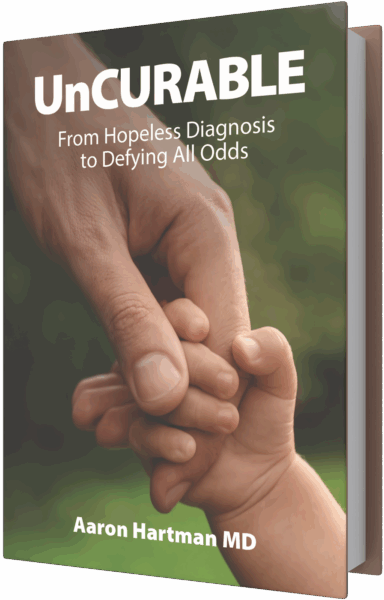
His new book, UnCURABLE: From Hopeless Diagnosis to Defying All Odds, reveals the principles that helped thousands of patients — and his own daughter — heal when the system had no answers.